
We explain what the PLO is and what the Arab-Israeli conflict is about. In addition, how is your fight and its main achievements.
What is the OP?
The Palestine Liberation Organization (PLO) is an organization formed in 1964 from the union of different political movements that struggled for the rights of the Palestinian people. This organization was created within the framework of the Arab-Israeli conflict, initiated with the creation of the State of Israel in 1948 and the expulsion of the Arab population of Palestine in 1949.
The PLO was founded with the fundamental objective of recovering the territories on which the State of Israel was founded. During the 1960s, 1970s and 1980s, he faced through the armed struggle against the Israeli army.
Since 1974 it is considered by the Arab League and by the United Nations Organization (UN) as The only legitimate representative of the Palestinian people . In 1988, the PLO declared the independence of Palestine and established a government in exile and leader Yasser Arafat as its elected president.
Since the 1990s, LOlp abandoned the armed struggle and focused on diplomatic route . In 1993, after long negotiations he achieved the signing of the Oslo agreements, in which the state of war between the state of Israel and the OLP was ended, and the Palestinian National Authority (ANP) was created for the Government of the Palestinians in Israel.
However, some factions of the organization opposed the abandonment of the struggle. After Arafat's death, the OLP leadership was in charge of Fatah Mahmud Abbas and the organization remains an important force in Palestinian politics due to its popular support, its capacity for mobilization and its economic resources.
The Arab-Israeli conflict
The creation of the Palestine Liberation Organization is understood in the framework of the Arab-Israeli conflict: the confrontation between the Jewish-Israelite nation and the Arab-Palestinian nation by the dispute of the territories that belonged to the mandate of Palestine and that since 1948 are controlled by the state of Israel.
When the state of Israel won the First Arab-Israeli War (1948-1949), it appropriated almost 80 % of the territories that corresponded to the British Palestine mandate. After the war, the Arab population was expelled and had to exile in neighboring countries. In this way, the neighboring Arab nations (Syria, Egypt, Jordan and Iraq) that were part of The Arab League declared the permanent confrontation against Israel until the return of the territories to the Palestinian people.
Throughout the second half of the twentieth century, the conflict generated different armed clashes. Among the most important are the First Arab-Israeli War (1948-1949), the Suez Canal (1956), the Six Day War (1967) and the Second Arab-Israeli War (1973).
In addition, different organizations (including the PLO) carried out armed actions against the Israel government.
Creation of the Palestine Liberation Organization
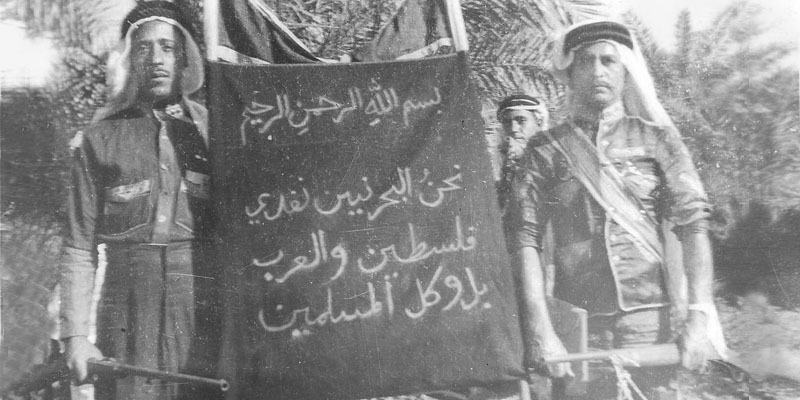
By 1960, there were different political associations and paramilitary groups that fought for the Arab-Palestinian cause. The Palestinian people were scattered among the different Arab countries to the state of Israel and did not have a central organization or a reference that leads the Palestinian struggle and politics.
In May 1964, the Palestinian National Council met for the first time . The meeting was held in East Jerusalem and was attended by more than 400 representatives of the Palestinian communities in exile settled in Egypt, Syria, Jordan, Bank, the Gaza and Lebanon strip (among other countries).
The goal was create a group that will function as the government of the Palestinians refugees and coordinate the struggle for the recovery of the territories . With this mission, the Palestinian National Council created the Palestine Liberation Organization. In addition, he created the Army for the Liberation of Palestine (ELP).
Activities of the Palestine Liberation Organization

In the OLP Founding Charter it was established The explicit mission of eliminating Israeli sovereignty in Palestine and destroying the state of Israel . However, during the first years his capacity for action was very limited. In political terms it depended on the support of neighboring countries. In this first stage, the activity of the OLP was especially linked to the political, economic and military support of Egypt.
During the first years, the Army for the Liberation of Palestine (ELP) It worked as a body within the national armies of the Arab countries . And, on the other hand, many Palestinian guerrilla groups continued their fight in parallel to the activity of the PLO.
After the six -day war, the political scene changed. The state of Israel defeated Egypt and occupied the territories of the Sinai Peninsula, the Golán Altos and Gaza Strip and the West Bank. In the eyes of the Palestinian people, this meant that Egypt could not defend their interests.
The activity of the OP began to gain autonomy in its fight against Israel and the most important Paramilitary Palestinian groups (Fatah, the Popular Front for the Liberation of Palestine and the Democratic Front for the Liberation of Palestine) achieved more influence within the PLO.
On the other hand, two positions began to be differentiated within the organization. A more radical line supported the need to destroy the State of Israel to replace it with a secular government in which the rights of Muslims, Jews and Christians were respected equally. On the other hand, a more moderate faction was willing to negotiate with the state of Israel to achieve the recovery of some territories and establish the creation of a Palestinian national state.
Guerrilla activity of Palestinian paramilitary groups
During the 1960s, Fatah (a political-military group founded by Yassir Arafat) had carried out a series of guerrilla attacks against Israel from Jordan. However, the growth of the group and the reprisals of Israel against Jordan led King Hussein to expel the guerrillas from his country, during the so -called black September.
In 1969, the OP appointed Yassir Arafat as its president, the Fatah leader. During the 1970s, Fatah guerrillas settled in Lebanon. From there they continued their fight against Israel and the PLO was directly involved in this guerrilla activity.
In that context, the relationship between the PLO and the Lebanese government became more complicated and more violent, and the PLO was involved in the Lebanese Civil War (1975-1990). ANDN 1982, Israel invaded Lebanon with the aim of destroying the OP and its bases. The Israeli army Sitió Beirut (the Lebanese capital) and, finally, the OLP forces were evacuated to other Arab countries (Syria and Tunisia) and had to leave Lebanon.
Diplomatic Activity of the PLO
In 1974, Yasser Arafat began working for the recognition of the rights of the Palestinian people by diplomatic route . In principle, he focused on the recognition of the PLO as the legitimate representative of the Palestinian people and its main governing body. In that sense, he achieved that the countries of the Arab League accept the PLO as the only sovereign organization of the Palestinians and, in 1976, their entrance to the Arab League.
During the 1980s, diplomatic activity was difficult in the context of the Lebanese Civil War and the defeat of the PLO on the Beirut site. In addition, this affected Arafat's leadership and his legitimacy as president of the PLO.
In 1987, the Palestinian population of the Gaza Strip and the West Bank (the areas occupied by Israel after the six -day war) rose against the Israeli authorities. This survey is known as “The first Intifada” or “The Revolt of the Stones” and was a spontaneous demonstration against the Government due to the hard living conditions imposed on them.
In its origin, this fact was not led by any political organization and the PLO remained on the sidelines. However, with the development of events, The Palestinians of the uprising created the unified national command to organize the local struggle and the PLO was directly involved. In that context, the population that lived in the Palestinian territories reaffirmed popular support for the PLO and legitimized Arafat's activity and its position within the PLO.
Palestine State Foundation
At the end of the 1980s, Arafat focused the OLP's attention to the international recognition of the rights of the Palestinian people to self -determination and sovereignty over the territories. With that objective, the PLO accepted resolutions 242 and 338 of the General Assembly of the United Nations Organization. These resolutions had been published in 1967 (after the six-day war) and in 1973 (after the Second Arab-Israeli War) and established the demand for peace between the state of Israel and the Palestinians .
By accepting these resolutions, the PLO was recognizing the State of Israel and its right to occupy part of the territories in dispute. In this way, the OLP definitively abandoned the radical path of destroying the State of Israel and replacing it with a secular government. The path of negotiations for the existence of two separate states was taken: one Israeli and another Arab-Palestinian . With this diplomatic movement, Arafat achieved international recognition.
On the other hand, The PLO began secret negotiations with the Israel government . The result of these negotiations were the 1993 Oslo agreements, in which the conditions were established for the Gaza Strip to be occupied by a new government under Palestinian authority.
This should be done gradually and within five years. The Palestinian authority was legally and with international recognition as the government of the new State. However, at that time the internal policy of the State of Israel changed dramatically and the agreements were finally not respected.
In 2000 The second intifada of the Palestinian population in Israel began against Israeli authorities for the harsh living conditions and constant repression. During this movement, more extreme positions and some guerrilla organizations (such as Hamas) were legitimized. On the other hand, in 2004, Yasser Arafat died and the OLP leadership went to Mahmoud Abbas.
In the following years, Hamas and the OL played the representation of the Palestinian people and the National Palestinian authority. Today these conflicts continue. Although there is international recognition of the Palestinian State, the territory of Gaza is in dispute and the Israeli government seeks to annex it again.
Continue with:
References
- Beinin, J., & Hajjar, L. (2014). Palestine, Israel and The Arab-Israeli Conflict. Middle East Research and Information Project.
- Britannica, The Editors of Encyclopaedia. (2023). “Palestine Liberation Organization”. Britannica Encyclopedia.
https://www.britannica.com/ - Palmowski, J. (2000). “Palestine” and “Palestinian Liberation Organization”. To Dictionary of Twentieth-Century World History. Oxford University Press.
- Van Dijk, R., Gray, WG, Savranskaya, S., Suri, J., & Zhai, Q. (eds.). (2013). “Palestinian Liberation Organization.” Encyclopedia of the Cold War. Routledge.


