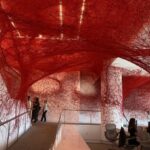
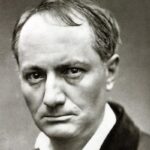
We explain what avant-garde is, its origin, its main manifestations and its characteristics. Also, its representatives and main works.
(Klee, P. (1922). The firmament over the temple).
What is avant-garde?
The avant-garde or avant-garde (in French and other languages) It is the artistic trend marked by innovation, rupturism, experimentation and in general the expansion of the limits of what is accepted by a society in a certain era . It is a term mostly used in art, but applicable with the same meaning in politics, sociology, philosophy and other areas.
The term avant-garde comes from the military word vanguardwhich designates the soldiers who take the lead in the formation. The original word in French avant-garde It could be translated as “front guard.” Its use in the artistic field became popular thanks to the idea that new forms of art should combat traditional nineteenth-century and academic models, that is, the models of the nineteenth century, which followed the forms imposed by the Academy of Fine Arts in Paris.
The avant-garde, even that which has not been defined under that name, has been a trend present in all times and in all the arts although in some periods it has had a much more conscious, clear and defined character. So, has been the driving force behind the evolution of artistic forms throughout history .
At the beginning of the 20th century, a set of aesthetic, philosophical and political movements emerged known as avant-gardewho sought to take artistic language to unknown limits, with revolutionary ideas and novel practices. In this context, one can speak of avant-garde as a general movement that gave rise to the different currents of the avant-garde, including cubism, expressionism, dada and surrealism.
Origin of avant-garde
The avant-garde as a movement emerged in the first quarter of the 20th century in the midst of a time of violent changes in the world political configuration and distrust in the positivist ideas of order and progress that the previous century had proposed as a model for human evolution.
The First World War (1914-1918) dragged the great colonial powers of the time into a brutal and devastating conflict, which involved almost the entire planet and cost millions of lives. In this context, the Russian Revolution overthrew the Tsarist regime and established the first socialist republic in history (which later became the Soviet Union), which offered the idea that there were alternatives to the known socioeconomic models.
Disappointment with positivist ideas was reinforced by the Great Depression of 1929, a global economic crisis that lasted throughout the 1930s. This economic debacle contributed to the rise of political models such as fascism and Nazism, which later led to to World War II.
Meanwhile, automobiles and new technologies flooded the market, predicting an industrial society never seen before, capable of offering telecommunications, electrification and daily flights throughout the planet. It was a time of tensions and hopes
In the artistic world , There had been a first break at the end of the 19th century, in which the impressionist painters rebelled against the taste of the time and planted what would later become an entire aesthetic current opposed to the classical forms of art.
Fauvism (1904-1908), Cubism (1907-1917) and Expressionism (1910-1933) were the first avant-garde movements. Shortly after, Futurism (1909-1944) was the first to publish a manifesto, that is, a declaration of artistic and philosophical intentions.
This process of collectively generating new art forms and communicating their principles through poetic or philosophical texts became a trend among new movements. Thus, the manifestos of surrealism, Dada and other groups appeared, and currents that proposed their own ways of making and understanding art.
In the period after the Second World War, new groups and tendencies emerged that were dissident from the direction that art had taken. These currents, among which were Fluxus, situationism, informalism, tachism and arte povera, were called “second avant-garde”.
Characteristics of avant-garde
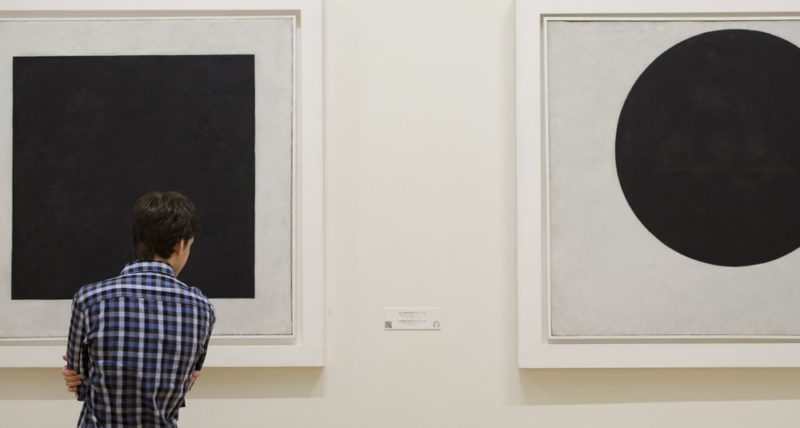
The avant-garde of the 20th century was characterized by the following features:
- understood a diverse set of isms that is, of specific artistic movements, endowed with a meaning, a group policy, a set of aesthetic principles and several members.
- It was classified into two major trends : the historical avant-garde or first avant-garde, from the beginning of the 20th century, and the second avant-garde, after the Second World War, which ended in the 1970s.
- He showed a provocative, defiant and combative attitude which used to be expressed emphatically in the manifestos of each current.
- He opposed traditional forms and valued experimentation free expression, audacity, spontaneity, irony and insolence.
- He embraced a political sense of art often in the form of social criticism, but also as an organized ideological movement (as happened in the second phase of surrealism).
- He proposed new metaphors, images and techniques expressive, and explored the limits of what was known to expand the notion of art.
- He defended subjectivity, self-expression , the originality and the unrepeatable gesture as ways to reach other forms of art and life.
Main manifestations of avant-garde

(Kandinsky, V. (1913). Composition VII).
Historical avant-garde (1874-1939)
Among the currents of the first avant-garde movement, expressionism, fauvism, cubism, futurism, dada and surrealism can be mentioned, in addition to other more specific ones such as suprematism, ultraism or stridentism.
- Impressionism (1860-1910). Although in most classifications of the avant-garde Impressionism is usually left out because it belonged to the 19th century, it was the first artistic movement that rebelled against the traditional taste of the time and set out to represent reality based on light and the impression it leaves. To do this, he changed the outline and the way of perceiving the work, in such an influential way that it spawned an entire anti-academic movement.
- Fauvism (1904-1908) Fauvism emerged in France and was one of the first movements to break with academicism, that is, the form of artistic representation governed by classical norms. He proposed this rupture through an arbitrary (non-realistic) use of colors, an energetic and spontaneous brushstroke and a search for intense expressiveness.
- Cubism (1907-1917). Cubism proposed a particular way of looking at the world, in which objects could be seen in their three dimensions at the same time. Based on the pictorial innovations introduced by Pablo Picasso (1881-1973) and Georges Braque (1882-1963), he broke with the traditional Renaissance perspective and the realistic mode of representation. He moved away from impressionism and its photographic accuracy, and valued the subjective perspective of things.
- Futurism (1909-1944) . Futurism emerged from the proposals of the Italian writer Filippo Marinetti (1876-1944). He aspired to imitate the vertigo of the machine, the speed, the technology and other industrial aspects that, in his view, were not valued in their aesthetic dimension. Furthermore, it influenced the development of later avant-garde movements.
- Expressionism (1910-1933). Emerging in Germany, expressionism was an important artistic movement, especially pictorial, poetic and cinematographic, which defended the work as a reflection of the artist's inner and emotional reality, rather than a replica of the real world. He used exaggerations, deformations and violent strokes to externalize the internal and subjective world.
- Dada (1915-1922). Dada was the most radical of the avant-garde movements. He was born in the Cabaret Voltaire hall in Switzerland, where refugee artists from the Second World War gathered, and his name comes from a random search in the dictionary. He embraced anarchism as an alternative to any moral, social, poetic or aesthetic convention and defended pure, free creation, capable of expressing itself through unprecedented and astonishing paths. He was a great influence on later avant-garde artists and his legacy continues.
- Suprematism (1915-1919). Suprematism emerged in Russia at the hands of Kazimir Malevich (1879-1935) and was a pictorial exploration in search of a new and pure plastic language. He adopted geometry and abstraction as an escape from imitating the real, with special use of black and white and not very bright colors. It was one of the main movements of abstract art.
- Ultraism (1918-1927). Ultraism appeared in Spain after the First World War and was a movement that renewed poetic writing. He defended free verse and metaphor, against anecdote and rhyme. Among its greatest exponents were Vicente Huidobro (1893-1948), Guillaume Apollinaire (1880-1918) and Jorge Luis Borges (1899-1986).
- Stridentism (1922-1927). Estridentismo was born in Mexico as a mixture of other avant-garde movements and had a modern, cosmopolitan, urban, nonconforming and irreverent literary spirit, which rejected everything old. Its greatest antecedent was futurism, in its Soviet aspect.
- Surrealism (1924-1939) . Surrealism emerged amid the instability of the interwar period, with the help of the French poet André Bretón (1896-1966), and soon moved into painting. Each discipline tried to explore in its own way not the visible reality, but the dream reality: that which can only be accessed in dreams or through unconscious mechanisms. That is why involuntary or non-conscious creation methods, such as automatic writing or the exquisite corpse, were valued. He cultivated himself in letters, cinema, painting and sculpture.
Second avant-garde (1945-1970)
The avant-garde movements of the second half of the 20th century are called “second avant-garde”. Currents such as informalism (which gave rise to tachism and influenced later abstract expressionism), arte povera and Fluxus, among others, belong to this group.
- Informalism (1945-1960) Informalism was a broad and diverse movement of gestural and abstract currents from Austria, France, Spain, Italy, Germany and Switzerland. It expanded to America, especially the United States and Argentina.
- Tachism (1940-1950) . Tachism belonged to informalism. It was a type of abstract painting made based on stains (its name comes from the French cross out: “stain”) and emerged as a reaction to cubism. He used scribbles, thick, messy strokes, and had links to American Abstract Expressionism.
- Arte povera (c. 1960-1977) The term arte povera It comes from Italian and means “poor art.” It was named this way by the critic Germano Celant (1940-2020), because its artists used humble, non-industrial materials, such as grease, ropes, canvas bags, earth, logs and other similar materials. The result was works that deteriorated quickly due to the decomposition of their elements.
- Fluxus (1958-1966) . Fluxus was an international artistic movement that was characterized by using play and experimentation. It proposed total creative freedom and the integration of art and life through accessible, ephemeral and participatory actions and objects. It was founded by George Maciunas (1931-1978) and had among its ranks artists such as Yoko Ono (1933-) and Joseph Beuys (1921-1986). It has had a great influence on contemporary art.
Authors and representatives of the avant-garde

(Duchamp, M. (1917). Fountain).
Some representatives of avant-garde movements are:
- Claude Monet (1840-1926) He was a French painter, co-founder of impressionism. His work Print, rising sun, 1872, gave its name to the movement.
- Pierre-Auguste Renoir (1841-1919) He was a great impressionist painter. His works are more sensual and ornate than those of other impressionists, with a luminous palette and an optimistic view of reality.
- Edvard Munch (1863-1944) He was a painter and engraver of Norwegian origin, considered a precursor of expressionism. His works explore themes such as anguish, passions, death and loneliness.
- Pablo Picasso (1881-1973) He was a Spanish painter and sculptor who, together with Georges Braque (1882-1963), created cubism. He is considered one of the greatest artists of the 20th century and his work has influenced art around the world.
- Guillaume Apollinaire (1880-1918) . He was a French poet, novelist and essayist, famous for his calligrammatic poetry, which sought to generate new meanings through typography and the distribution of text on the page. He was the first to use the term surrealism in 1917, as the subtitle of one of his plays.
- Marcel Duchamp (1887-1968). He was a French artist, considered the precursor of contemporary art. He is known for his readymadescommon objects presented in an artistic medium. He questioned and transformed the codes of art and his legacy was decisive in history.
- Fritz Lang (1890-1976) He was an Austrian filmmaker who developed his work in Germany and the United States. He is considered one of the great exponents of cinematographic expressionism. After emigrating to the United States and joining Hollywood, his career took a turn towards film noir.
- Tristan Tzara (1896-1963) He was a Romanian poet and essayist of Jewish origin, co-founder of Dada and one of its greatest exponents. He wrote in 1927 the Seven Dada manifestos. He is one of the great avant-garde artists of the 20th century.
- André Bretón (1896-1966) He was a poet and essayist, father of surrealism and one of its greatest exponents. Before her breakup with Tristan Tzara, she was part of Dada.
- Luis Buñuel (1900-1983) He was a Spanish film director, whose work was mostly produced in Mexico and France due to Franco's censorship in his country. He was a cultist of surrealism and collaborator of Salvador Dalí. He is considered one of the most important film directors in history.
- Salvador Dalí (1904-1989) He was a Spanish painter, sculptor, engraver, set designer and writer, considered one of the greatest surrealists. His works are famous throughout the world for their dreamlike and distorted scenarios. He collaborated with film directors such as Alfred Hitchcock and Walt Disney.
Avant-garde works
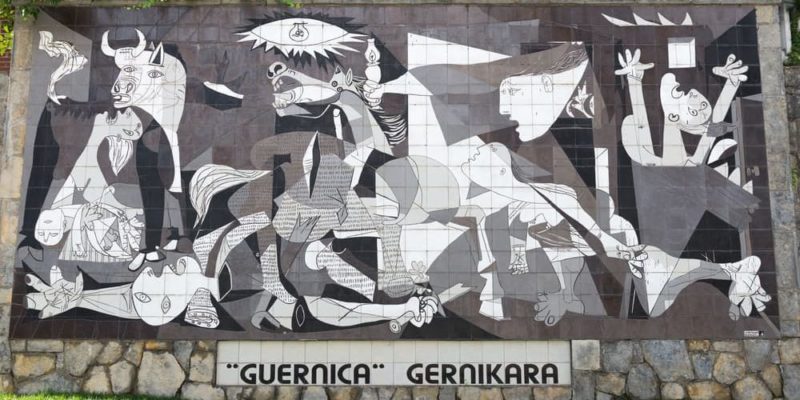
Some emblematic works of the 20th century avant-garde are:
Paint:
- The scream (1893), by Edvard Munch.
- The ladies of Avignon (1907), by Pablo Picasso.
- The great masturbator (1929), by Salvador Dalí.
- Guernica (1937), by Pablo Picasso.
- The Temptation of Saint Anthony (1946), by Salvador Dalí.
Literature:
- Futuristic manifesto (1909), by Filippo Tommaso Marinetti.
- Ultraist manifesto (1921), by Jorge Luis Borges.
- Seven Dada Manifestos (1924), by Tristan Tzara.
- First surrealist manifesto (1924), by André Breton.
- Fluxus manifest (1963), by George Maciunas.
Cinema:
- Metropolis (1927), by Fritz Lang.
- mechanical ballet (1924), by Fernand Léger and Man Ray.
- An Andalusian dog (1929), by Luis Buñuel.
- M, the vampire of Düsseldorf (1931), by Fritz Lang.
- The discreet charm of the bourgeoisie (1972), by Luis Buñuel.
References
- Bürger, P. (2000). Avant-garde theory. Peninsula.
- Larousse. (sf). Avant-garde. Encyclopédie. https://www.larousse.fr/
- The Editors of Encyclopaedia Britannica. (sf). Avant-garde. Encyclopedia Britannica. https://www.britannica.com/