We explain everything about chocolate, its characteristics, stories and how it is made. In addition, we tell you how to take advantage of its benefits.
What is chocolate?
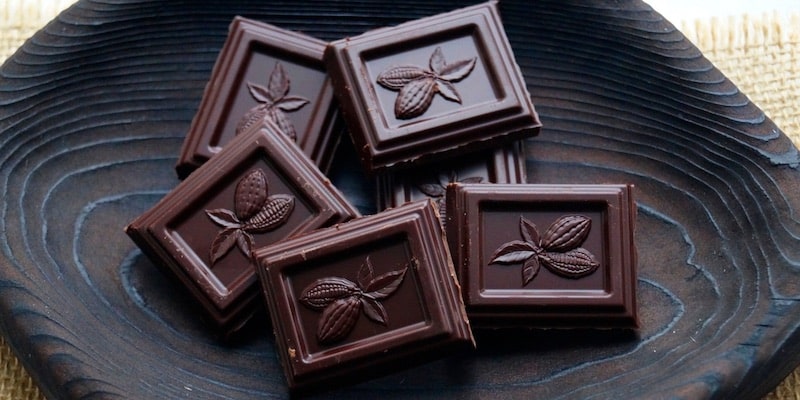
The chocolate It is a food produced by mixing sugar and cocoa fruit (specifically, the dough and cocoa butter), as well as other ingredients such as milk, nuts, among others. It is a very popular food in the world, used in different gastronomic recipes, especially in baking and the preparation of drinks and sweets.
Although it is known that the origin of this food is Mesoamerican, the origin of the word “chocolate” is uncertain. According to some scholars, it is an adaptation of the Nahuatl word xocoatl (“sour water”), even though this word does not appear in any written record of the Aztecs before the Spanish conquest.
Another hypothesis maintains that the word arose due to the lack of knowledge of the Spanish conquerors, who mixed the Mayan language and the Aztec Nahuatl as if it were the same language, and thus merged the word Mayan. xocol and the aztec word atl (“water”). In any case, the word “chocolate” arose as a result of the colonization of America and spread, along with the product, to the entire world.
The chocolate It is a food rich in fats and carbohydrates, and therefore high in calories whose chemical composition includes alkaloids such as theobromine and caffeine, which give it a stimulating effect. Its intake has been linked to different biochemical effects on the human body, some of which produce a pleasant and even aphrodisiac sensation, while others could have beneficial effects on the cardiovascular system, depending on the concentration of cocoa in the consumed product.
Origin of chocolate
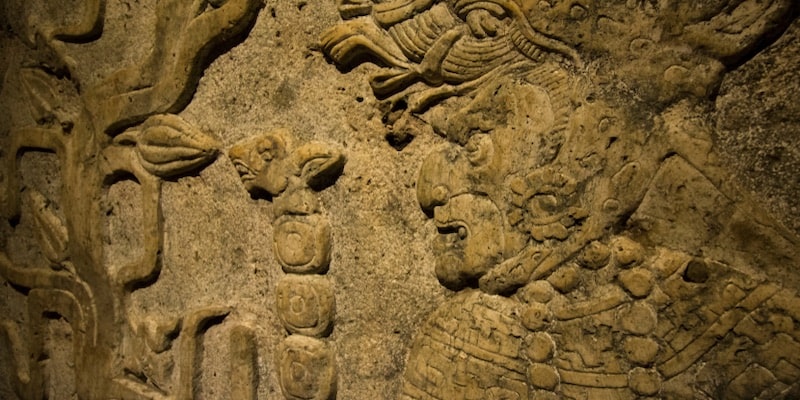
The first records of the preparation of chocolate date back to the Mesoamerican cultures of 3,000 BC. c specifically to the Olmecs, who consumed it as a liquid, after roasting, fermenting and grinding the cocoa beans. Often this drink was mixed with chilies and other foods, or consumed after foaming it, pouring it from one container to another. Liquid chocolate was so popular in the region that cocoa beans were used as currency among the Mayans and, later, among the Aztecs.
Western culture learned about chocolate after the conquest of America in the 16th century and she soon fell in love with its flavor and properties. He continued to consume it as a drink, similar to tea and coffee, until In the mid-19th century, the hydraulic press was invented and the exploitation of cocoa butter became possible usable for endless culinary preparations. This is how solid chocolate emerged ideal to be transported to more distant destinations, such as China on the Silk Road, or Asian markets through the Philippines.
The commercial value of chocolate was such over the centuries that soon American production could not cope and the cocoa tree was taken to geographies other than the tropical belt in Africa and Asia, specifically Martinique, Guadeloupe, Ghana, Nigeria, Ivory Coast, New Guinea, Samoa, Java and Sumatra. However, the modernization of chocolate manufacturing, i.e. Its manufacturing as it is understood today, had its origin in Europe in the 19th century thanks to the studies of the Dutch Coenrad Johannes van Houten (1801-1887), among other European chocolatiers.
The science of chocolate began in 1841, thanks to modern chemical knowledge that allowed us to better understand its composition and properties. Throughout the 20th century, chocolate became a common and highly demanded ingredient in industrial confectionery especially when in 1966 the Procter & Gamble company discovered the crystalline phases of cocoa butter. This also allowed us to know the different degrees of adulteration to which cocoa was subjected, especially when combining it with other food ingredients (such as milk), which reduced the percentage of cocoa and minimized its original properties.
types of chocolate

There are different types of chocolate, depending on several factors. There are, for example, two types of cocoa beans (strong and soft, depending on the bitterness of the bean), which produce chocolates with a more intense or milder flavor. However, the usual classification of chocolate depends on the percentage of cocoa that each preparation contains, as well as the other ingredients with which it is combined. Thus, the main types of chocolate are:
dark or black chocolate
It is the variant that has the highest percentage of cocoa, since it is made from the fruit paste and a low addition of sugars and other ingredients. This type of chocolate is classified, in turn, into two:
- bitter dark chocolate . With an intense and bitter flavor, it has minimal (or no) sugar content, and a high cocoa content (60 to 80%).
- Semi-sweet dark chocolate . This is a toned down and sweetened version of bitter dark chocolate, which still has a high unmixed cocoa content (40 to 55%).
White chocolate
It is a food with little cocoa content, made from powdered milk, sugar and cocoa butter (20%), so it is not technically a chocolate. Because of this, the natural bitterness of cocoa is practically non-existent.
Milk chocolate
It consists of a mixture of cocoa paste (whose purity ranges between 25 and 40%), sweetened with sugars and diluted with milk, whether powdered or condensed. There are, however, variants gourmet endowed with much higher cocoa content.
Pink or ruby chocolate
This is a very recent type of chocolate (2017), made from ruby variant cocoa beans (cultivated in Ecuador, Brazil and the Ivory Coast), through a little-known mechanism. According to its producers, this variant retains its original properties and its characteristic flavor and color.
How is chocolate made?

In general terms, the production of chocolate involves three fundamental ingredients:
- The cocoa paste solid, usually powdered.
- Cocoa butter composed of fatty acids.
- The sugars commonly sucrose, fructose and glucose.
Many others can be added to these ingredients, such as milk, nuts, cookies, liqueurs, among others. However, to obtain the three essential ingredients, cocoa treatment is required, which consists of the following phases:
- Harvesting and fermentation . The cocoa fruit is collected directly from the plants and fermented in open-air boxes or mountains covered with banana leaves, since the flavor and properties of chocolate arise from this process. The grains destined to obtain butter, on the other hand, are separated at this stage and later pressed.
- Drying . Once fermented, the cocoa is dried to prevent the appearance of molds and other fungal organisms. For this, the grains are housed in covered spaces and are periodically removed with shovels. Typically, a moisture percentage of about 6% is allowed in each grain.
- Roasted and shelled . The cocoa is subsequently classified by size and transported to the factories, where it is placed in ovens at temperatures ranging between 110 and 140 °C, for periods of between 45 minutes and one hour. This roasting prevents contamination with microorganisms and attenuates the bitterness of the cocoa. Then the cotyledon of the fruit (where the grains are) and the shell that contains them is separated.
- Ground . This stage aims to separate the mass and cocoa butter, obtaining particles of around 30 microns in diameter. For this, the grains are ground several times, depending on the type of mill used. A portion of cocoa butter is added to the resulting mixture and a homogeneous mass called liqueur of cocoa.
- Pressing . Once the cocoa is ground, the resulting liquor is pressed to obtain and separate the butter. The mixture is subjected to about 40 to 50 MPa of pressure to extract the cocoa fats. The resulting mass (technically chocolate) is usually reduced to 20% of its original weight after the butter has been removed.
- Ground . After extracting the butter, the chocolate is ground again, along with the ingredients that you want to add to the mixture: such as sugars or milk. This second grinding process reduces the mixture to even smaller particles, which allow the chocolate to obtain its typical smooth texture. Later, the cocoa butter is added to the mixture.
- shelled . The final process of obtaining chocolate involves a method invented by the Swiss chocolatier Rudolf Lindt (1855-1909) in 1879: conching, that is, the mechanical stirring of the mixture so that the butter is distributed homogeneously and a product is obtained. smooth, uniform. Thus, the chocolate is ready to be packaged and sold in its different presentations.
Benefits of consuming chocolate
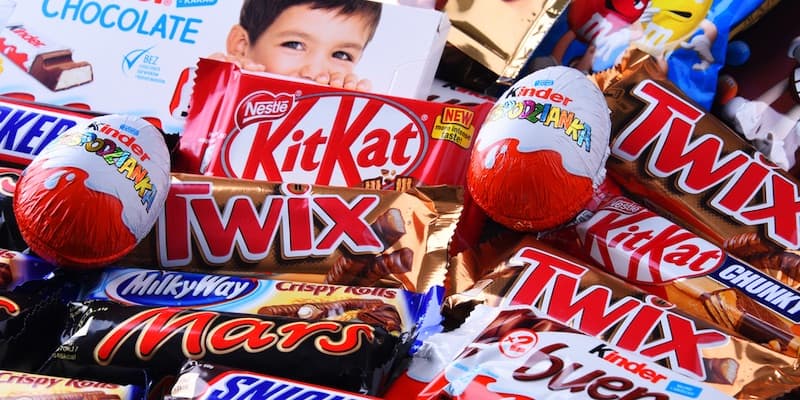
There is a lot of debate around the benefits and risks of consuming chocolate. This is because, on the one hand, the effects of the energetic and antioxidant compounds of cocoa are known, but at the same time the percentage of cocoa present (and its purity) in most commercialized chocolates is low, so It ends up being a product composed mostly of sugars and fats.
This means that the consumption of chocolate (especially white chocolate) contributes to the appearance of metabolic diseases and weight gain, which in turn leads to cardiac and vascular risks. Likewise, it is a food with a non-negligible percentage of lead, so its intake should be moderate. The consumption of chocolate by animals is not recommended, since its theobromine content makes it a highly toxic food for most pets.
On the other hand, the frequent but moderate intake (since it is a high-calorie food) of purer variants of dark chocolate have shown benefits in the human body, such as:
- It has an effect antioxidant due to its high polyphenol content.
- Reduces blood pressure and facilitates vasodilation.
- Therefore, reduces the risk of heart attack .
- Stimulates the central nervous system due to its caffeine content.
- Reduces cough especially the persistent or chronic one.
- It has effects antidiarrheals .
- It is thought that it could be aphrodisiac .
References
- “Chocolate making” on Wikipedia.
- “History of chocolate” at Nestlé Family Club.
- “The history of chocolate” (video) in Ticmas Educación.
- “What we know about the earliest history of chocolate” in Smithsonian Magazine.
- “Chocolate (food)” in The Encyclopaedia Britannica.