
We explain what the oceanic climate is and what its characteristics are. In addition, their climate subtypes, and examples of flora and fauna of their environments.

What is oceanic climate?
The oceanic climate is a type of climate characterized by high levels of humidity and precipitation and moderate temperatures . It is found in coastal regions with a temperate climate, close to seas and oceans.
In the oceanic climate, rainfall is usually abundant due to its proximity to humid winds coming from the oceans, and without a marked seasonality, although winters tend to be a little rainier than summers.
According to the Köppen climate classification, oceanic is a subtype of temperate climate which, in turn, has two subtypes: the typical oceanic climate and the cold oceanic climate.
The flora and fauna that the oceanic climate presents are adapted to high atmospheric humidity and abundant rainfall . Biomes usually consist of humid forests, with dense and varied vegetation, with animals typical of these forests such as squirrels and moles.

Characteristics of the oceanic climate
The characteristics of the oceanic climate are:
- It is a type of temperate climate that is close to the coasts.
- It has mild summers and cool winters.
- It usually has abundant rainfall.
- It has no dry season, although winters are a little rainier than summers.
- It has two subtypes: typical oceanic and cold oceanic.
- Its characteristic biome is the humid forest.
- It is found in north-central Europe, in some temperate regions on the coast of the Pacific Ocean and in southern Chile and Brazil in South America and in some regions of Australia, New Zealand and Papua New Guinea in Oceania.
Types of oceanic climate
According to the Köppen climate classification, there are two subtypes of oceanic climate:
- Typical ocean climate . The temperature of the warmest month does not reach 22 °C but for four or more months of the year it exceeds 10 °C. The moderating influence of sea temperatures means that summers are not very warm and winters are not very cold either. Due to its proximity to the sea, it has high rainfall with a slight dry season in the summer.
- cold ocean climate . The main difference with the typical oceanic climate is that it has less than four months with average temperatures above 10 °C. It also has abundant atmospheric humidity and high rainfall, which is mainly concentrated in winter.
The Köppen climate classification distinguishes five major types of climates: tropical climate, dry climate, temperate climate, continental climate and polar climate, each with its respective subtypes and particularities. Oceanic climates are classified as temperate subclimates.
Ocean climate location

The oceanic climate is distributed on the planet as follows:
- Typical ocean climate . It is found on the Atlantic coast of Western Europe in countries such as Portugal, Spain and France, and in northern Europe in countries such as Great Britain, the Netherlands, Denmark and Norway. Also in some sectors of the Pacific coast in the United States and Canada, in some sectors of the Pacific coast of Venezuela, Colombia and Ecuador, in the south of Chile and in the south of Brazil in America and in the southeast of Australia, south of Papua New Guinea and New Zealand in Oceania.
- cold ocean climate . It is a very rare climate. It is found only in the coastal regions of northern Europe, in countries such as the Faroe Islands, Iceland, Norway and Scotland, and in some regions of Alaska in North America.
Flora and fauna of the oceanic climate
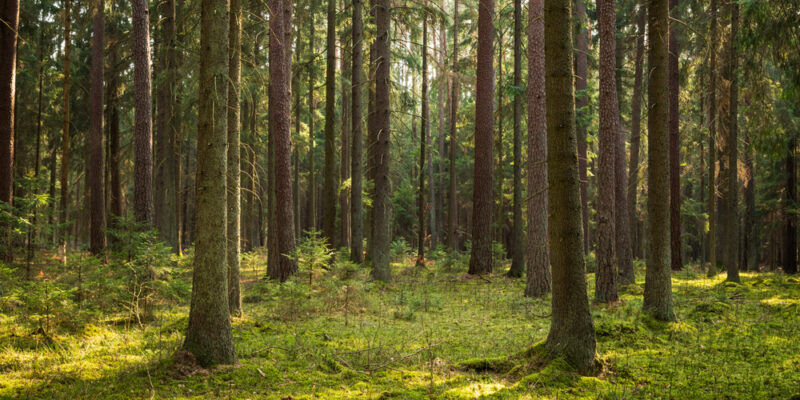
The vegetation of the oceanic climate is abundant and varied . Thanks to the mild temperatures and regular, intense rains, in areas subject to the action of the oceanic climate often humid forests with great biodiversity develop . These forests are characterized by dense vegetation, with tall trees, shrubs and grasslands with herbs and mosses.
As for the fauna, There are mammals and rodents typical of forested areas such as foxes, squirrels, deer and different varieties of bears. Maritime fauna is also very important with species such as seals and sea lions. Also significant is the great variety of bird species that inhabit these regions.
References
- Gtush (sf) oceanic climate. https://www.gtush.com/
- Network meteorology (sf) Temperate climate. https://www.meteorologiaenred.com/
- Terrasa, D. (2018) Köppen climate classification. https://geografia.laguia2000.com/
- Valera, K. (2022) Temperate climate. https://enciclopediadebiologia.com/
})


