
We explain what reverse sublimation is, under what conditions it occurs and various examples. Also, what is progressive sublimation.
What is reverse sublimation?
The process of changing the phase or state of aggregation of matter is known as deposition, desublimation, inverse sublimation or regressive sublimation, according to which a substance in the gaseous state passes directly into the solid state without first going through the liquid state.
This It is a thermodynamic process of type exothermic that is, it releases energy. This is the exact opposite case to sublimation.
Sublimation, whether reversed or not, is a phenomenon of nature to which any pure substance can be subjected. This requires very specific temperature and pressure conditions, which is why it is not often observed with the naked eye, but rather in laboratories or in particular environments such as Antarctica, the summits of snowy mountains, etc.
Reverse Sublimation Examples
Some examples of reverse sublimation are:
- The transformation of atmospheric water vapor directly into ice in the polar or circumpolar regions, because the cold prevents the formation of liquid water first.
- The deposition of snow or frost in the frozen wastelands and on the mountain peaks, since the temperature in the atmosphere is such that rainwater does not have time to become liquid.
- The formation of dry ice in laboratories, which is done by freezing the CO2 and subjecting it to enormous pressures.
- According to current cosmological theories, the solid planets They would have been formed by planetary accretion from gases, which is more or less a form of reverse sublimation.
Progressive sublimation
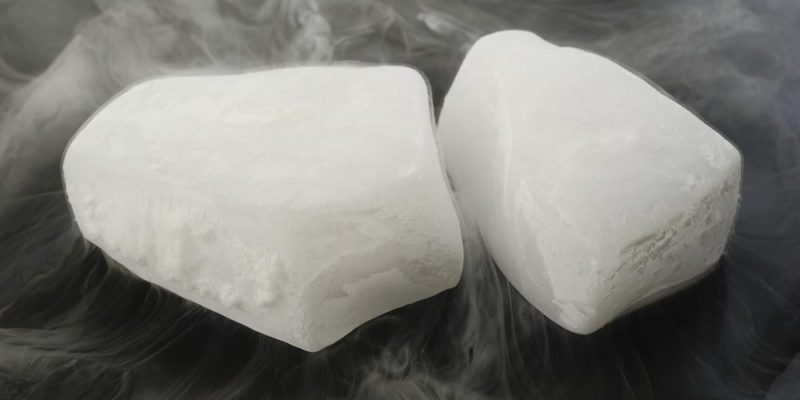
The term progressive sublimation It is the exact and complete term of sublimation, that is, they are synonyms. The addition “progressive” is used to differentiate it from regressive, according to the terms “forward” (progressive) or “backwards” (regressive).
Progressive sublimation will be the process of phase change of matter in which a solid passes into a gaseous state without first transiting the liquid state. This occurs with certain forms of ice (such as dry ice made from CO2constantly emitting steam) or in places so cold and dry that liquid water is impossible.
References
- “Deposition” on Wikipedia.
- “Progressive and reverse sublimation” on Colormake.com.
- “Sublimation” in ICT Resources.
- “Inverse sublimation” in Ask a Scientist!.
- “Sublimation” in The Encyclopaedia Britannica.


