We explain what a sketch is, its characteristics, function, how to do it and its differences with a sketch. Also, various examples of sketches.
What is a sketch?
A sketch is a simplified, schematic drawing done quickly without much technical precision and without using measuring instruments, which serves to capture the general idea of an object. It is often used in architecture, urban planning, arts, design, engineering, education and even social sciences.
Sketches can consist of representations of real objects or ideas that will be materialized. They are a more or less general approximation that is done with loose and quick strokes, and Its purpose is to capture and communicate shapes in a simple and straightforward way .
In some cases, sketches can have artistic value in themselves, as is the case with the studies or sketches of great artists and designers.
Characteristics of a sketch
Broadly speaking, a sketch has the following characteristics:
- It is simple and schematic . It shows simple, clear lines, basic shapes and few details.
- It is done freehand . It is done with quick strokes and does not usually use drawing tools or instruments such as squares or compasses.
- It is a form of communication . It is used to transmit information, to explain processes and concepts or to present designs.
- It is complemented with signs and annotations . It usually includes amendments, annotations and indications that are not shown in the final drawings.
What is a sketch for?
The sketch is, fundamentally, the preview of a project, which allows us to see broadly what the work consists of . It is the preliminary step to the plan and can be used in very diverse areas, such as:
- Architecture and urbanism to present the design of works such as buildings, infrastructures, bridges, urban elements and others.
- Engineering to show elements such as mechanical parts, electrical circuits, user interfaces, data structures, machinery layout, production processes and so on.
- industrial design as a way to present concepts of parts and products.
- fashion design to design and present clothing and accessories.
- Education as a way to graph concepts to facilitate learning.
- social sciences to record fieldwork observations, represent regions, spatial patterns or archaeological sites, identify social interactions, communicate symbols or reconstruct events.
How to make a sketch?
To make a sketch, you need to follow certain steps:
- Observe the object to be represented in as much detail as possible or the image we have in mind.
- Take notes and notes and keep the purpose in mind. For example, the sketch of an architectural design will be very different from that of a minimal piece of machinery.
- Draw the exterior lines of the object focusing on its essential elements and paying attention to proportions, which can be achieved by taking surrounding objects as a reference.
- Choose the specific details to represent with the objective that the drawing communicates the final concept in a schematic and simple way.
Throughout the process, the necessary notes, suggestions, warnings and measurements must be incorporated to approximate the final version in the best possible way.
Differences between sketch and sketch
The terms “sketch” and “sketch” are often used interchangeably. Although both are preliminary or preparatory drawings, there are differences that must be defined. The main ones are:
- While the sketch can be free, fleeting and spontaneous, the sketch is usually prepared with more time, to better communicate the project.
- The sketches are not intended to be precise. Sketches, although they do not require millimeter precision, do usually take into account the proportions and measurements of the actual design.
- The sketch is made with the purpose of capturing a very general idea, as quickly as possible. The sketch is a later stage, which communicates more specific information.
- The sketch is usually the first step and is used in direct observations, quick studies and as a first creative approach to more elaborate drawings, paintings, sculptures or designs. The sketch is an intermediate stage before the final plan of a piece of art or an architecture, design, engineering, social sciences or education project.
Examples of sketches
Some examples of sketches are the following:
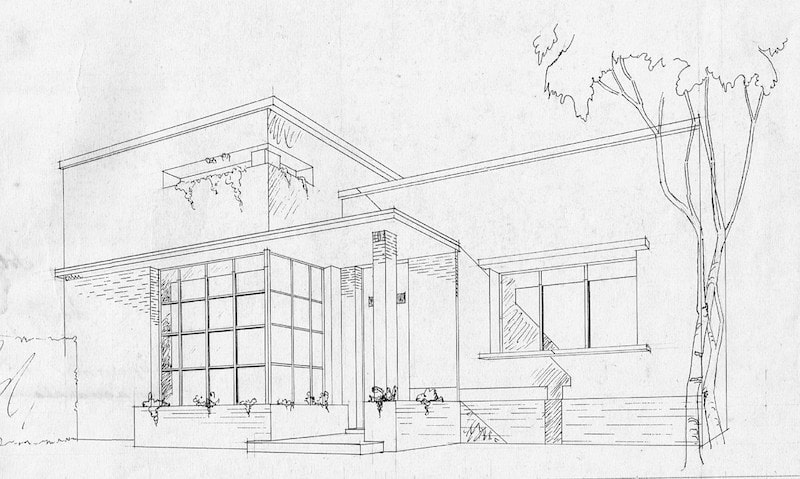
1. Sketch of the facade of a house
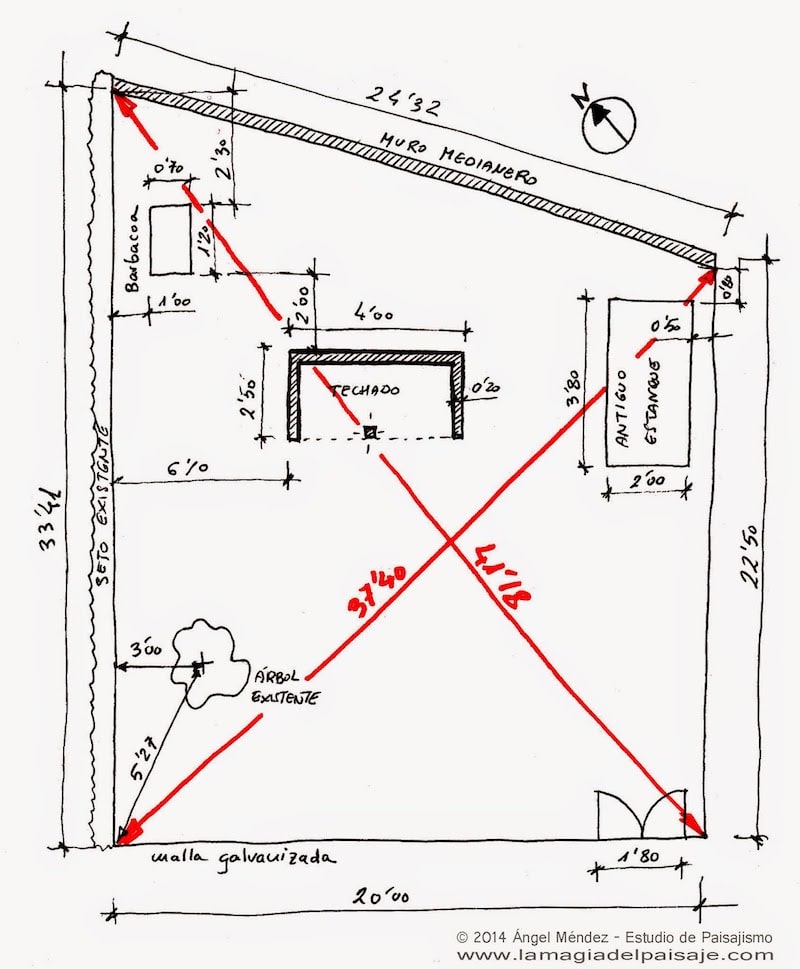
2. Sketch of a topographic plan
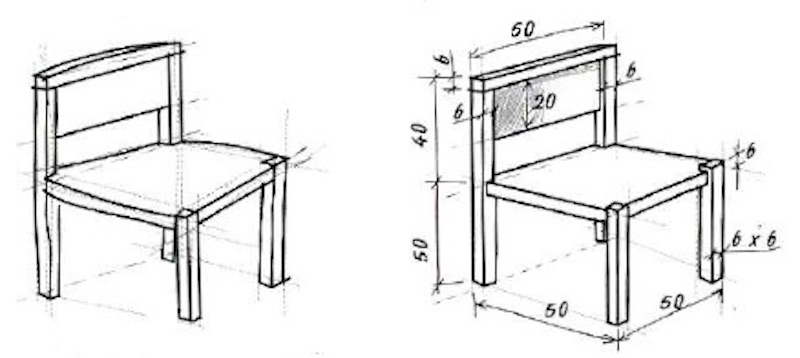
3. Sketch of a chair
References
- Arco Díaz, J. (sf). The sketch. University of Granada. https://www.ugr.es/
- Domínguez, F. (sf). Interpretation and expression of the sketch. Archimaster. https://www.arquimaster.com.ar/