We explain what a territory is, its types, characteristics and its relationship with the population. Also, what is the national territory.

What is the territory?
When we talk about territory, we generally refer to a portion of the earth's surface that belongs to some type of jurisdiction or administration, such as a nation, a province, etc.
The term also used to refer to the area that a wild creature dominates in which it imposes its dominance over other predators or other competitors of its species.
Territories are a notion coming from geography, especially political geography, since in general States exercise sovereignty over a specific territory, including its rivers, lakes and seas. However, the territory should never be confused with the nation, nor with the government. All of the latter can change, without the territory changing in the slightest.
In this way, the term territory refers to the physical part of a political-social order, that is, of a nation or a State, and therefore its limits are considered to be the borders between one country and another. Those born in a territory are generally citizens of the country that administers it.
Characteristics of a territory
Every territory is characterized by:
- It constitutes the physical part of a sociopolitical order (country, nation, State, etc.), based on which its borders and therefore its area of authority are delimited.
- It is finite, has clear limits that mark its beginning and/or end.
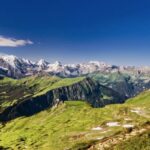
- Generally covers a portion of the earth's surface along with its geographical features (mountains, rivers, lakes, seas, etc.).
- It is administered by a political entity which internally determines its organization, division, identification, etc.
Types of territory

Generally the territory is classified according to the type of space it contains:
- terrestrial territory Although it may seem redundant, given that both words come from Latin earth (“land”), is the continental portion that corresponds to a State.
- Maritime territory Similarly, it refers to the portion of the sea that corresponds to a State, conventionally calculated from the position and proportions of its land territory.
- aerial territory It denotes the portion of the atmosphere that corresponds in shape and dimensions to the terrestrial territory of a State. This is what is usually called “airspace”.
- Lake and river territory They are less used terms, which denote the total surface area covered by lakes and rivers respectively, which are part of the land territory of a State.
Territory and population
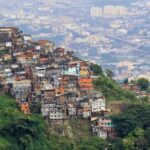
The territory of a nation is the soil on which the population lives. of said country. In other words, one is inseparable from the other, since the people born on said soil will be the national citizens of the country, generally acquiring nationality and educationally a sense of belonging with which come obligations and rights.
The population of a country can leave the territory without losing their nationality becoming foreigners or emigrants. Generally they can return to their homeland under much more lax immigration rules than those applied to tourists or foreigners.
Foreigners must temporarily reside in the national territory and then leave, or in any case demonstrate that they are eligible for a residence permit (settlement). All of this depends on the laws that apply within the specific territory of each nation.
national territory
The territory is an element of the State, as is the population or the cultural identity of its inhabitants. In this case, Territory is the portion of the Earth that a nation is legally responsible for administering taking into account the soil, the subsoil, the waters present therein and the air space.
Everything constitutes a territorial unit that is commonly called “national territory.”
References
- “Territory” in Wikipedia.
- “What is territory?” (video) at Pontifical Catholic University of Peru.
- “Relationship between territory and population” (video) in UNFPA Latin America and the Caribbean.
- “Territory” in the Language Dictionary of the Royal Spanish Academy.
- “Territory (political unit)” in The Encyclopaedia Britannica.