We explain what types of breathing exist and what internal and external breathing are like. Also, plant respiration.

What is breathing?
Breathing is a vital process by which the living beings exchange gases with the external environment or atmosphere . In general, this process allows oxygen to enter the body and carbon dioxide to be expelled to the environment.
This process is essential for the life of aerobic organisms, since it provides them with the oxygen necessary to keep their metabolisms functioning. However, it can be carried out through very different mechanisms depending on the complexity of each living being and the habitat in which it lives.
External respiration is the perceptible phase of a more complex physiological process, known as internal or cellular respiration. This process occurs in every cell of the body, where oxygen is used to oxidize simple sugars (like glucose). In exchange, chemical energy is obtained in the form of Adenosine Triphosphate (ATP) molecules. However, some living beings do not require oxygen to carry out cellular respiration.
Both processes (external respiration and cellular respiration) complement each other, but should not be confused with each other. The types of breathing that exist for each of these processes are described below.
Types of internal breathing
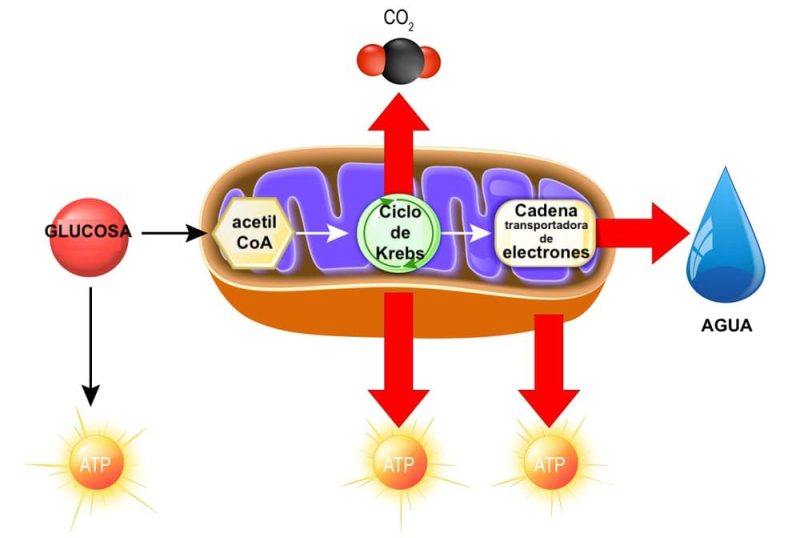
It is called cellular respiration or internal respiration to a set of oxidation-reduction chemical reactions that occur within cells and that allow organisms to obtain energy from a sugar (generally glucose). This energy is what they need to survive, grow and reproduce, that is, to carry out all vital functions.
Depending on whether cells use molecular oxygen (O2) or other chemical compounds in this metabolic process, there are two types of cellular respiration: one of them is aerobic respiration and the other is anaerobic respiration.
aerobic respiration
Aerobic or aerobic respiration is that which uses oxygen captured from the external environment to oxidize glucose or other similar sugars. More precisely, oxygen participates as the final electron acceptor in the last step of aerobic respiration.
Throughout this process, glucose is completely oxidized or degraded, yielding water and carbon dioxide as byproducts. The latter is discarded through external respiration.
The animals, the floors the fungus and most of the microorganisms ( protists and bacteria) have aerobic respiration. This is because this metabolic process has been favored throughout evolution.
Firstly, due to the availability of oxygen in the environment. And secondly, because it is more profitable than anaerobic respiration in energetic terms (it produces more ATP molecules per glucose).
Anaerobic respiration
The anaerobic or anaerobic respiration is one that does not use oxygen as the final electron acceptor . Instead, nitrates, sulfates, carbon dioxide or other chemical compounds are used. Consequently, the byproducts of this metabolism are also different (nitrites, sulfides, methane, etc.).
This metabolic process is not as efficient as aerobic respiration in terms of obtaining ATP molecules, because glucose is not completely oxidized.
Some bacteria and archaea that live in places with little or no oxygen have anaerobic respiration. There are also living beings that are facultative anaerobes, such as yeasts. In the absence of oxygen, these organisms can continue to oxidize glucose by other mechanisms, known as fermentation.
Types of external respiration
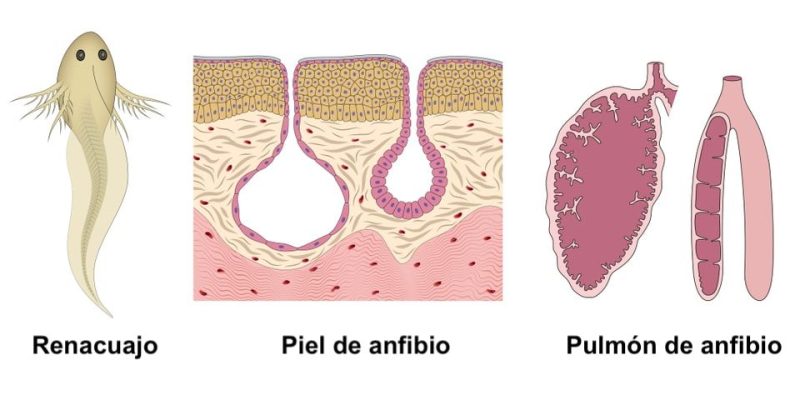
The exchange of oxygen and carbon dioxide between a living being and the environment is called external respiration (or simply respiration). In very small organisms, such as protists and some tiny animals, this occurs by diffusion.
In animals, four types of respiration are recognized according to the mechanism that allows gas exchange with the environment. Some are typical of animals from aquatic (or very humid) environments and others are typical of animals from terrestrial environments (although there are exceptions).
Skin respiration

Cutaneous respiration is what occurs through the surface of the body, where gases diffuse. It is typical of simple aquatic animals, such as poriferans and cnidarians, and also of some terrestrial animals that live in very humid areas, such as flatworms and annelids.
This type of breathing also occurs in amphibians and in some reptiles and fish (such as water turtles and eels). In these animals, the skin is highly vascularized (that is, it has many branches of the bloodstream) so that gas exchange between the blood and the outside world can occur. Generally, this mechanism complements lung or gill breathing.
gill respiration

Gill respiration is respiration that occurs through gills. These thin, filament-like organs are highly vascularized, allowing gas exchange between the circulatory fluid (blood or hemolymph) and the surrounding water.
This respiratory system is the most effective for life in water. Some aquatic animals have external gills, such as starfish, marine worms, and aquatic amphibians (axolotls and tadpoles in the first stage of life). Others have internal gills, such as fish, mollusks, and crustaceans.
tracheal breathing
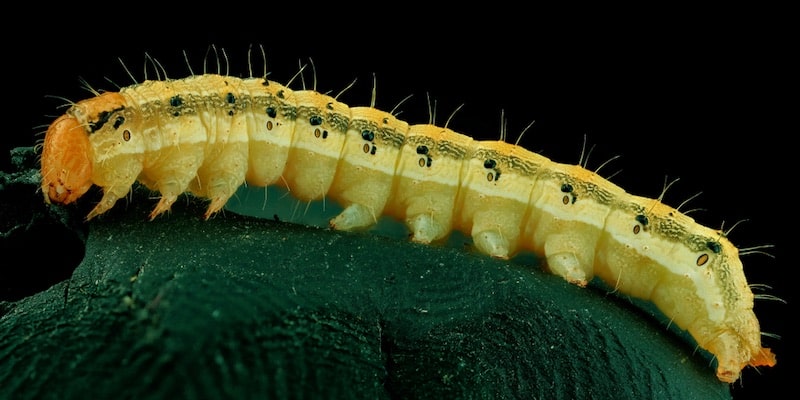
Tracheal breathing is breathing that occurs through tracheas. These are a set of tubes that branch throughout the body and that communicate the outside with each cell .
Oxygen-laden air enters the tracheal system through the spiracles, openings along the body. From there it spreads to every cell in the body. For its part, carbon dioxide takes the opposite path towards the outside. This makes tracheal breathing independent of the circulatory system.
This type of breathing is typical of terrestrial arthropods, such as insects, myriapods (centipedes and millipedes) and some spiders. However, Most arachnids have a particular structure, called the “book lung.” which is not related to the lung of vertebrate animals.
lung breathing

Pulmonary respiration is that which is carried out through the lungs. These organs are highly vascularized internal cavities where gas exchange between air and blood occurs . The entry and exit of air is done through muscular movements.
Once gas exchange has occurred in the lungs, the animal's circulatory system is responsible for transporting oxygen to the body's cells. In turn, it collects the carbon dioxide generated by the cells and carries it to the lungs.
the lungs are specialized organs for life on earth . They are present in all terrestrial vertebrate animals, with a greater or lesser degree of complexity. Some invertebrates also have lungs, such as many spiders and scorpions, some snails, and small crustaceans. However, these are not the same as those of vertebrates.
Do plants also breathe?
Plants are autotrophic organisms, that is, they are capable of producing their own food. They do this through a complex process called photosynthesis, in which they use water, carbon dioxide, and sunlight to synthesize organic sugars rich in chemical energy (such as glucose and starch).
In this process, plants consume carbon dioxide (CO2) and release oxygen (EITHER2) to the environment, so it can be considered the opposite and complementary mechanism to respiration.
However, plants also breathe, like any other living being. In this process, they degrade sugars made to generate energy (ATP molecules). And like the rest of the organisms with aerobic respiration, use oxygen to oxidize glucose (or other simple sugar).
Although plants need sunlight to carry out photosynthesis, breathing can occur at any time of the day, even during the night . To do this, they use part of the oxygen they produce in photosynthesis and also incorporate it through the stomata and lenticels. The opening and closing of these holes regulate gas exchange and water loss.
References
- Curtis, H., Barnes, N.S., Schnek, A., & Massarini, A. (2008). Biology. (7th ed.). Panamericana Medical Editorial.
- Hickman, C.P., Roberts, L.S., & Parson, A. (2000). Comprehensive principles of zoology. (10th ed.). McGraw-Hill / Interamericana de España.
- Nabors, M. W. (2006). Introduction to botany. Pearson Education.