
We explain what happened in the twentieth century, war conflicts and revolutions. In addition, its social characteristics, scientific, technological advances and more.
What happened in the twentieth century?
The twentieth century was the one hundred years that began on January 1, 1901 and ended on December 31, 2000. It was a time of huge jumps in Technological matter , scientific and medical, as well as deep social and political changes that modified the international panorama. One of his characteristic features was the “conquest of space” and the arrival of the human being to the moon.
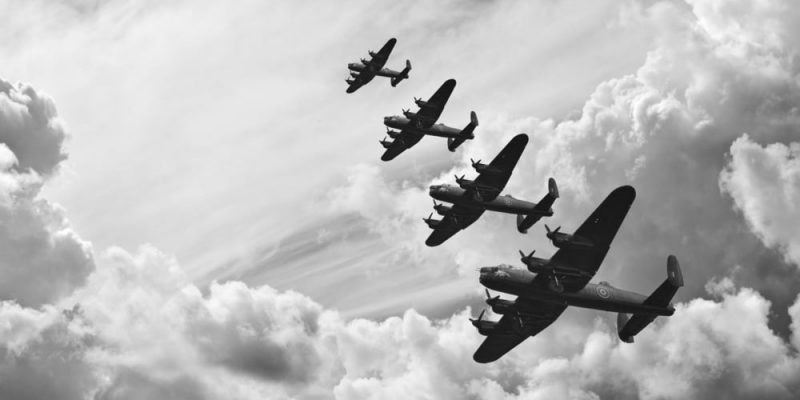
It is considered One of the most violent centuries in history of humanity, crossed by two world wars that caused dozens of millions of dead through the military use of technological advances (including the atomic bomb). In addition, there were other war and genocide conflicts that increased the number of victims.
It was also An expansion stage of the world market economy known as globalization, of the signing of international agreements that resulted in the creation of the UN (United Nations Organization) and the development of international humanitarian law to mitigate the negative effects of wars.
The world at the end of the 19th century
The situation in the world at the end of the 19th century was largely determined by the technical and technological innovations of the second industrial revolution . While this revolution was focused on Western Europe, the United States and Japan, expanded its influence beyond and influenced the economy of most of the world. The technological and economic changes of the twentieth century were possible thanks to this process initiated in the previous century.
On the other hand, the world order at the end of the 19th century and the beginning of the 20th century It was governed by ambitions Imperial of the great European powers that they had established colonies on other continents (such as the distribution of Africa). This configured the subsequent division of the world between developed or industrialized countries and underdeveloped or developing countries, belonging to the so -called Third World.
The great imperial powers at that time were the United Kingdom, Germany, France, Italy, the Netherlands, Belgium, Russia, Japan and the Ottoman Empire. Much of this situation changed at the end of World War I (1914-1918), which meant the end of the German, Austro-Hungarian, Russian and Ottoman empires. World War II (1939-1945), on the other hand, left the path open to decolonization and strengthened the role of the United States and the Soviet Union such as the new superpowers.
Latin America, on the other hand, was at the end of the 19th century a set of young nations independent for less than a hundred years, who struggled to organize in the midst of internal conflicts. Many had started a path to modernization and integration into the new world economy.
The revolutions of the twentieth century
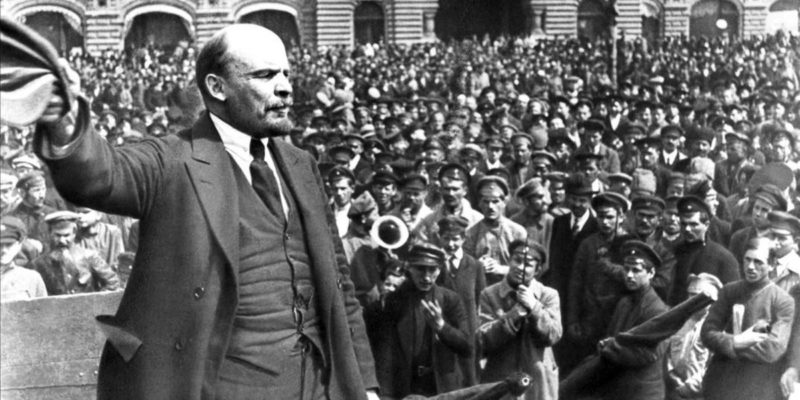
The twentieth century housed revolutions that They sought to change political, social and economic structures of their countries. Many of these revolutions led to civil wars and changed the form of organization of their nations.
The most important revolutions of the twentieth century were:
- Mexican Revolution (1910-1920) . It was a prolonged conflict that caused the fall of the Porfirio Díaz regime (Porfiriato) and that involved liberal politicians and the poor peasant classes of postcolonial Mexico.
- Russian revolution (1917) . It was a series of events framed in the tensions of the First World War that first led to the overthrow of the Russian monarchy (February revolution) and then to the establishment of the first communist government of the world (October revolution), which in 1922 gave rise to the Union of Soviet Socialist Republics (USSR).
- Chinese Revolution (1949) . It was the result of a civil war between the Chinese nationalist government, headed by Chiang Kai-Shek, and the Chinese communist guerrillas, directed by Mao Zedong, which led to the triumph of communism and the establishment of the People’s Republic of China. A resurgence stage took place during the Cultural Revolution (1966-1976), when it sought to revive the revolutionary impetus and eliminate the alleged influence of Western and capitalist values within the regime.
- Cuban revolution (1959) . It began in 1953 with a failed attack against the Fulgencio Batista regime, which later resulted in a guerrilla war. He brought to power the revolutionaries led by Fidel Castro, Ernesto “Che” Guevara and Camilo Cienfuegos, among others, who established the first socialist regime of Latin America, aligned since 1961 with the Soviet Union.
- Islamic revolution in Iran (1979) . It was the overthrow of the pro-western monarchy of the SAH of Iran, after several months of protest manifestations, and its replacement with a theocratic regime headed by Ayatolá Jomeini (Religious leader of the Shiite clergy). The religious character of the Islamic Republic of Iran founded by Jomeini implied the imposition of fierce cultural controls on the population and promoted the expansion of radicalized Islamism in other parts of the world.
World Wars and Spanish Civil War
In the first half of the twentieth century the first and Second World War were fought, two major conflicts that involved all the powers of the time and affected most of the world. Their human and material costs were devastating and reconfigured the political landscape of nations.
- World War I (1914-1918) . He faced two coalitions of countries headed respectively by the United Kingdom, France, Russia, Italy and the United States (entente) and the Austrohungal Empire, the German Empire and the Ottoman Empire (central empires). In this war, 1 % of the world’s population of the moment lost his life (almost sixteen million people between combatants and civilians). It resulted in the victory of the entente and the disintegration of the great empires.
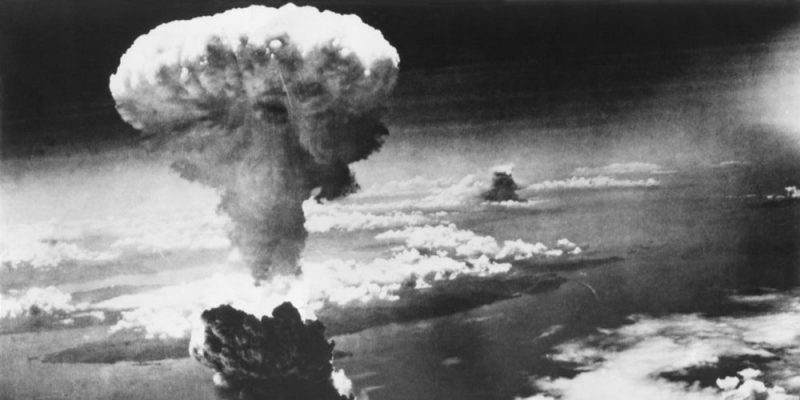
- Second World War (1939-1945) . It was the most destructive war confrontation of the century. He faced the powers of the axis (Nazi Germany, the fascist Italy and the Empire of Japan) with the allies (headed by the United Kingdom, France, the Soviet Union, the United States and China). It was a war of total destruction in which the holocaust occurred (systematic extermination of European Jewish population) and two atomic bombs on Hiroshima and Nagasaki were thrown in Japan. The balance of the dead was 2.5 % of the world’s population (between forty and seventy million people, military and civil). After the war there were decolonization processes in Asia and Africa.
In addition, in the interwar period a civil war in Spain took place that marked its history.
- Spanish Civil War (1936-1939) . He began as a result of a military uprising against the Second Spanish Republic and faced the “national” or rebel forces (led by Francisco Franco) with the republican troops and militias (composed of Republicans, Democrats, socialists, communists and anarchists). Nazi Germany and fascist Italy militarily helped the rebels, who won in 1939 and established a dictatorship led by Franco (1939-1975).
The genocides of the twentieth century
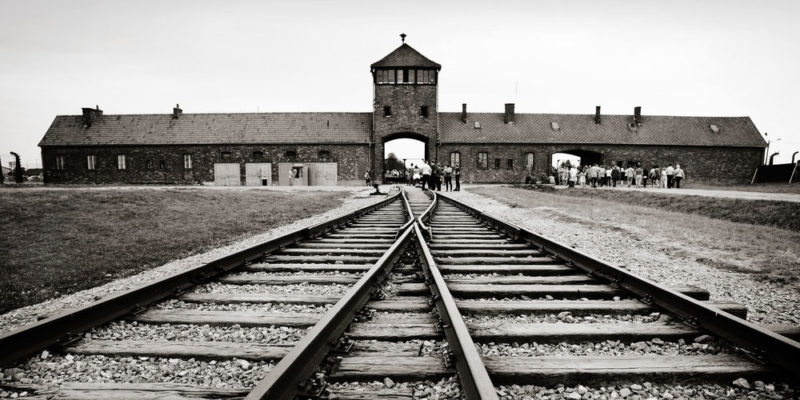
During the twentieth century there were a series of genocides, that is, the systematic extermination of people motivated by ethnic, national or religious reasons . The main genocides of the twentieth century were:
- Armenian genocide (1915-1923) . It was the campaign of deportation and murder of Armenian civilians perpetrated by the Ottoman Empire during World War I, mainly between 1915 and 1916, although it continued during the first post -war years. It is estimated that it cost the lives of hundreds of thousands of Armenians, although the Turkish government denies that it has been a systematic extermination plan.
- Holocaust (1933-1945) . It was the systematic extermination of population of Jewish origin carried out by the Nazi regime that left a balance of six million dead. The persecution and segregation began with the rise of Adolf Hitler to the power of Germany in 1933 and led since 1941 to the construction of extermination fields in territories of Eastern Europe to apply what was called the “final solution.” Other victims of Nazism were the gypsies, Slavs, Afro -descendants and various forms of political opposition. The Holocaust was an impulse for the creation of the State of Israel in 1948.
- Camboyano Genocide (1975-1979) . It was the extermination of more than one million people (almost a quarter of the population of Cambodia) led by the Maoist regime of the Red Jamers in Cambodia. It consisted of the persecution, torture and mass execution of people suspected of being opponent or of being influenced by Western culture. In addition, it meant the forced evacuation of cities and the imposition of forced labor, which caused numerous deaths from diseases and malnutrition.
- Rwanda Genocide (1994) . It was the Tutsi (minority) population annihilation campaign of Rwanda promoted by the Government administered by leaders of the Hutu population (majority). For about a hundred days, Hutus civilians motivated by government propaganda participated in the murder of eight hundred thousand tutsis (and moderate Hutus), to which approximately two million exiles were added.
The cold war
At the end of World War II, Western Europe powers were devastated and World hegemony was in the hands of Two new faceful superpowers: United States and Soviet Union .
Each tried to promote in the other countries of the world its own political-economic model: capitalism and socialism. This implied a period of political, economic, diplomatic and cultural conflict that was called a cold war and that also had some indirect military episodes and situations that threatened to trigger a war between both powers.
Among these events they stood out:
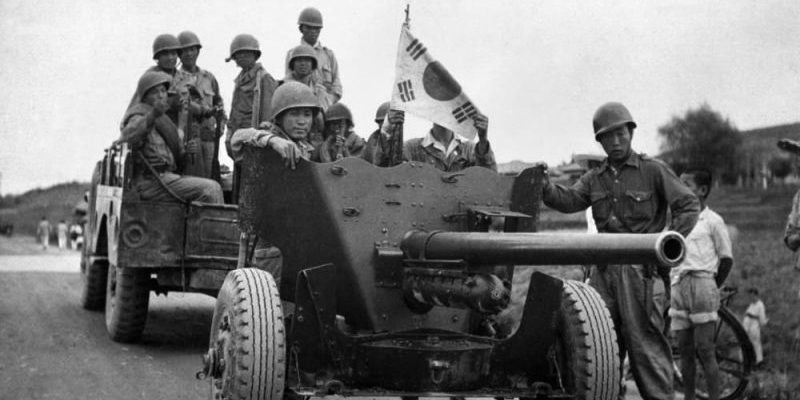
- The Korean War (1950-1953) . He faced the Republic of Korea (South Korea), supported by the United States, and the Democratic Popular Republic of Korea (North Korea), supported by the Soviet Union and the People’s Republic of China.
- The construction of the Berlin Wall (1961) . It was built by the Government of the German Democratic Republic, belonging to the eastern bloc led by the Soviet Union. It was sought to avoid the migration of the population to the western zone, administered by the Federal Republic of Germany and the Allied forces.
- The missile crisis in Cuba (1962) . When the Soviet Union installed nuclear missile bases in Cuba, whose revolutionary government had been politically aligned with the Soviet regime, the United States government imposed a blockade to the island. The world was on the verge of a nuclear war until negotiations between the United States and the Soviet Union promoted the withdrawal of missiles.
- The Vietnam War (1955-1975) . He faced Southern Vietnam and the United States with North Vietnam and Viet Cong (the communist guerrillas of South Vietnam), supported by the Soviet Union and the People’s Republic of China. This war caused a deep rejection in American public opinion and ended with the victory of Northern Vietnam.
- The Soviet invasion of Afghanistan (1979-1989) . In 1978, a group of pro-Soviet Afghan military gave a coup d’etat and formed a new government. Given the resulting political instability, the Soviet Union invaded Afghanistan in December 1979 and began a military conflict between the Government of the Democratic Republic of Afghanistan, supported by the Soviet Union, and the Afghan Mujahideins, guerrilla groups that had the support of various countries and were in some cases trained by the US.
- The fall of the Berlin Wall (1989) . In 1989 there were revolutions and processes of change in central and eastern Europe that led to the fall of the communist bloc. The most characteristic fact was the fall of the Berlin Wall in 1989, followed by Germany’s reunification in 1990. The Cold War concluded with the dissolution of the Soviet Union in 1991.
Follow in: Cold War
Social struggles of the twentieth century
The second half of the twentieth century was the scene of numerous social struggles that in many cases opened the doors to significant changes in societies. For example, The Civil Rights Movement In the United States, which contributed to the recognition of equal rights for African Americans, or the movement for free sexual orientation.
In the United States, manifestations of protest against US intervention in the Vietnam War which were linked to the appearance of the hippie movement. In Europe there were political protest movements that connected with a criticism of bourgeois culture, such as The French May of 1968, and in Latin America there were student demonstrations with workers’ claims, such as Cordobazo in Argentina in 1969.
Other social movements They had to do with The feminist struggle in various parts of the world (mainly in the western world), with The claim of indigenous identity (especially in America), with environmentalism and with anti -capitalist and anti -globalization movements.
Scientific and technological innovations of the twentieth century

Science and technology made a significant leap in the twentieth century. Some of the main innovations were:
- The car and the plane . The development of the internal combustion engine allowed to manufacture these means of transport that were popular throughout the century and radically changed the ways of moving.
- Television and telecommunications . In the context of societies increasingly characterized by mass consumption, inventions such as the telephone were developed and disseminated (already patented in 1876), radio and television.
- Antibiotics and other advances in medicine . Medical science experienced profound changes with the discovery of penicillin and other antibiotics, the development of various vaccines, the birth of genetic engineering and the application of technological novelties such as laser, magnetic resonance, computed axial tomography or the pacemaker, among many other advances that extended life expectancy.
- Nuclear energy . Although the origins of nuclear energy are associated with the atomic bombs thrown by the United States on the Japanese cities of Hiroshima and Nagasaki at the end of World War II, nuclear fission subsequently extended to obtaining electricity through the construction of nuclear reactors.
- Computer science . One of the most vertiginous advances in the second half of the twentieth century occurred in the field of computer science, which in half a century went from large computers or binary calculators to the development of integrated circuit plates (chips) and personal computers, the Internet and cell phones.
The arrival of the human being to the moon
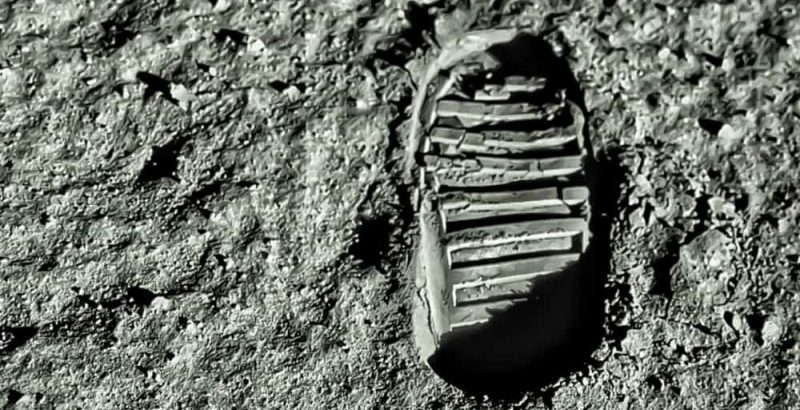
One of the characteristics of the Cold War was The space race, starring the United States and the Soviet Union . Among the most significant facts starring the Soviets are the launch of the first artificial satellite (Sputnik 1), The first living being sent to the outer space (the laika bitch in the Sputnik 2), both in 1957, and the first human being to travel to outer space (Yuri Gagarin) in 1961.
For its part, the United States starred The arrival of the human being to the moon in 1969 . This was the Apollo 11 mission, operated by NASA (National Aeronautics and Space Administration), whose commander Neil Armstrong became the first man to step on the lunar surface on July 20, 1969.
XX CENTURY ART AND CULTURE
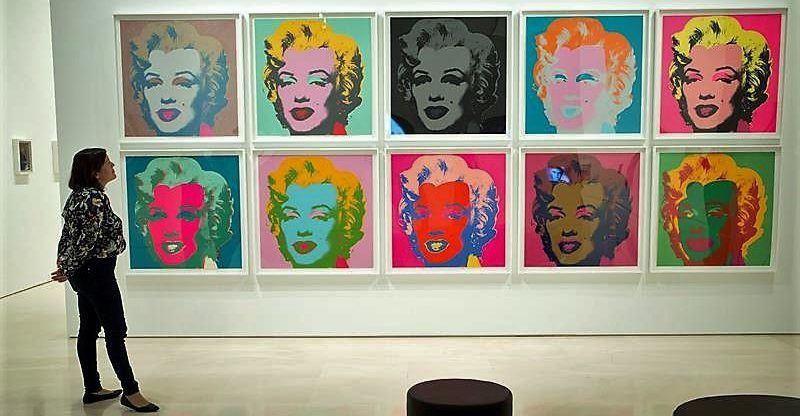
Art and culture changed at an accelerated pace in the twentieth century. This was motivated by political and technological changes or by the need to express the uncertainties of the period.
In plastic art (painting, sculpture, architecture) the artistic avant -garde and other changing trends, such as Fauvism, Expressionism, Dadaism, Surrealism, Cubism, Futurism, Bauhaus, Abstract Art and Minimalist Art . Unpublished expressive possibilities also appeared that brought new materials and new technologies: Photography, video art, pop art, kinetic art, conceptual art and others.
Two areas of artistic expression especially relevant in the twentieth century were cinema and music. Hollywood European cinema and industry In the United States they reached a world audience, while in the field of music, rock broke out, which led to transformations into fashion and youth attitudes, especially in Western countries.
The 20th century literature was generally crossed by concerns Before world conflicts, social problems or the desolation of the human being and was characterized by the experimentation of forms. In Latin America, the work of worldwide importers, such as Jorge Luis Borges and Silvina Ocampo, or the representatives of the Latin American boom (Gabriel García Márquez, Julio Cortázar, Carlos Fuentes and Mario Vargas Llosa, among others).
Globalization
One of the characteristic features of the twentieth century was globalization, which supposed The economic, political and cultural integration of the world . This was largely possible thanks to the new communication and transport technologies and the generalization of economic liberalization policies that facilitated the interconnection of markets and finance.
One of the milestones of globalization was Internet development and other innovations of the so -called third industrial revolution . The national borders ceased to be barriers to business and Multinational companies and relocation were generalized (the installation of factories and workshops in less developed countries to reduce costs).
Globalization generated as a reaction a series of protests of organizations known as anti -globalization movement . This movement began to denounce the enrichment of large multinational companies, the precariousness of some relocated industries and the alteration caused by global capitalism in the environment and in the life forms of populations.
Continue with:
})
References
- AA.VV. (1996). 20th century history. Salvat
- Gilbert, G. (2002). History of the Twentieth Century. William Morrow.
- Lukacs, J. (2014). Minimum history of the twentieth century. Turner
- McDougall, WA (2023). 20th-Century International Relations. Britannica Encyclopedia. https://www.britannica.com/


