We explain what the acronym LGBT means, what its flag is and its rights. In addition, we tell you the history of this movement.

What does LGBT mean?
The acronym LGBT (sometimes LGBTQ+ or even LGBTTTQI+) is used to refer to the set of people with sexual orientations different from the traditional heterosexual, or with different gender identities to the traditional binary identity (man/woman). This acronym is composed of the initial of lesbians, gays, bisexuals and transsexuals to which we can also add the initials of transvestite, transgender, queer, intersex, agender and even a symbol + which refers to any other identity or sexual orientation other than the traditional one and that is not included in the acronyms described.
The use of these acronyms became popular in the 1990s in English-speaking countries, but soon spread throughout the world. Initially, it was a term to refer to the homosexual population (LG) and its movements of demand and social struggle for civil rights, to which more initials were later added in order to make visible the rest of the sexually diverse communities that aspired to recognition and social organization.
Over time, the acronym LGBT has become a collective social marker, to the point of being used to identify everything that has to do with sexual and gender diversity, such as LGBT literature, LGBT cinema, among others. Furthermore, there is no single or correct way to organize the acronyms of this group, so LGBT can perfectly be GLBT or other similar acronyms.
Meaning of the acronym LGBT
The acronym LGBT, LGBTQA or LGBTTTQI+ and their possible variations refer to gender identities and/or sexual orientations that are different from the traditional (that is, cisheterosexuality). These gender identities or sexual orientations are:
- Lesbians . It refers to female homosexuality, that is, the sexual and romantic attraction of one woman towards another.
- Gays . It refers to male homosexuality, that is, the sexual and romantic attraction of one man to another.
- Bisexuals . It refers to bisexuality of both sexes, that is, to people who, regardless of their sex, are attracted to both men and women.
- Transsexual or transgender . It no longer refers to a sexual orientation, but to a gender identity, that is, to people who psychologically identify with the opposite sex to the one they were born with: people born with a female body who identify themselves as men. (trans men), or people born with a male body who identify themselves as women (trans women). A distinction is often made between transgender people (who identify with the opposite gender to their biological sex) and transsexual people (who medically and pharmacologically modify their body to conform to their gender identity).
- Transvestites . It refers to people who enjoy dressing in the clothes and assuming the traditional social roles of the opposite sex: women who dress and act socially as men or men who dress and act socially as women.
- Intersex . It refers to people born with a congenital condition traditionally called hermaphroditismand which consists of having sexual organs corresponding to the female and male sex simultaneously. This makes it difficult to identify gender in binary terms.
- Agender . It refers to people who do not identify with any gender identity, that is, who do not feel represented by the binary categories of “man” and “woman.”
- Asexuals . It refers to people who do not express any type of sexual and romantic orientation, that is, who are not interested in sexual relationships.
- queer . It refers to all those sexual orientations and gender identities that go beyond strictly LGBTIA, such as pansexuality, polyamory, etc.
History of the LGBT movement
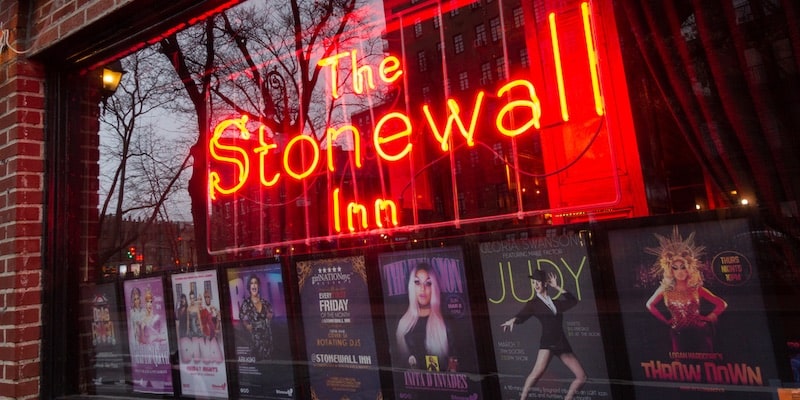
The LGBT movement It had its beginnings in the so-called LGBT Liberation Movement, which emerged in 1969 in New York USA. It was a movement made up of sexually diverse people who aspired to change the laws of marriage, adoption and even the criminalization of homosexuality in the West and the world, to move towards a society in which the law equally protected people without distinction of age. their sexual orientation.
In this context, the Stonewall riots of June 1969 occurred in the New York neighborhood of Greenwich Village in which sexually diverse people who went to the Stonewall Inn bar, frequented by transvestites, transsexuals and transgenders, were arrested and harshly repressed. This event was the foundation stone for the LGBT liberation movement that demanded the right to freely express a non-heteronormative sexuality and the abolition of laws that criminalized homosexuality.
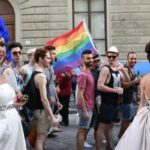
Various movements were born in the wake of the Stonewall riots: the Gay Liberation Front (Gay Liberation Front), the Alliance of Gay Activists (Gay Activist Alliance), among others. One of the great achievements of their efforts was the establishment of the homosexual pride parade which is celebrated in commemoration of what happened at the Stonewall Inn.
Since then, the LGBT movement has been gaining ground in the West and the world, and has had successes in civil rights such as the recognition of homosexual marriage legislation for adoption by homosexual couples, and international condemnation of laws that criminalize homosexuality in a few fundamentalist countries.
LGBT flag

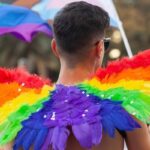
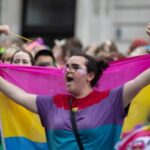
The LGBT community has created its own flag, which It serves as a visual symbol of identification of their struggle and has been used since 1978 . It is common to see it in LGBT pride marches and parades, and for that reason it is also known as the pride flag (in English pride flag).
The LGBT flag is rectangular and consists of six thin, horizontal bars, each a specific color of the rainbow: red, orange, yellow, green, blue and violet (in that order). These colors represent the diversity of the movement and for that reason later versions with seven or eight colored stripes have emerged, to the extent that sexually diverse groups have been incorporated into the movement.
LGBT rights
In most modern nations, LGBT people have all the rights attributed to cisheterosexual people, including:
- Receive decent treatment and respectful of others.
- Play a useful job to society and fairly rewarded.
- Do not be a victim of discrimination of any kind, neither violent acts and hate crimes nor persecution for the simple reason of their sexual orientation or gender identity.
- Have full access to health, educational and civil services .
- Relating sexually and emotionally with the person who wishes, and freely form a family that has the protection of the law.
- Express, associate, meet and demonstrate publicly without running any risk of persecution, silencing or discrimination.
References
- “LGBT Movement” on Wikipedia.
- “LGBT flag” on Wikipedia.
- “What is the LGBTTTIQ+ population?” at the State Human Rights Commission of Jalisco (Mexico).
- “Basics about being LGBT” in Lambda Legal.
- “Lesbian, gay, bisexual, transgender, and queer community” in The Encyclopaedia Britannica.