
We explain what alchemy is, its history, relationship with chemistry and famous alchemists. Also, what is the philosopher's stone.
What is alchemy?
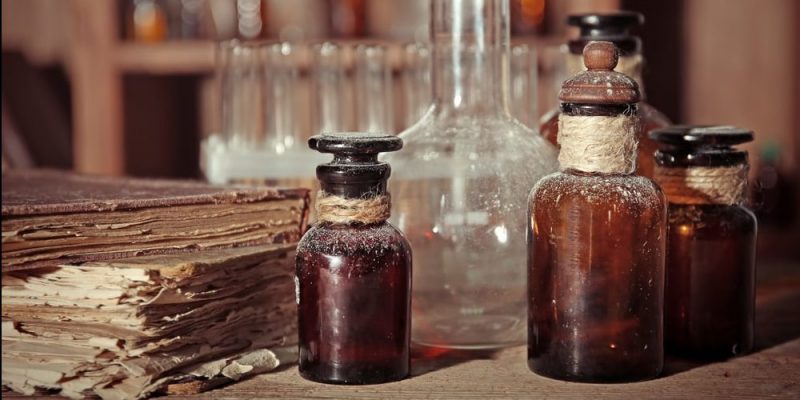
The alchemy is an ancient philosophical discipline and form of speculative thought protoscientific type. It was practiced from Antiquity until the 18th century, when it was displaced by the emergence of chemistry.
Its practice was common in territories as diverse as ancient Mesopotamia, Egypt, Persia, India, China, Greece and Rome, but especially in the Islamic Empire (632-750 AD) and in medieval Europe. It encompassed a vast and complex network of schools and watersheds throughout almost 4,000 years of history.
The alchemy It was closely linked to astrology. since ancient man sought a correlation between the affairs of earth and those of heaven, and aspired to learn to manipulate them for his own benefit.
In that sense, the interests of alchemy included those of the modern disciplines of chemistry, metallurgy, physics, medicine and semiotics, but also mysticism and art. It was both a proto-scientific discipline and a spiritual discipline .
The name alchemy comes from Arabic al-khimiyafrom which the word “chemistry” also emerged. This Arabic term probably comes from the Greek word khumeia (“pour together”, “weld” or “alloy”) or from Persian kimia (“gold”), since it was a common goal of alchemy to transform ignoble elements into precious metals, such as gold.
Another explanation suggests the Egyptian voice as the origin of the term. kemewhich was used as the name of Egypt. From there came the oldest alchemical texts “on the art of manufacturing gold and silver,” in the words of the Roman emperor Diocletian (244-311), who ordered their burning in a decree in the year 300.
Alchemy had a bad reputation for much of its history. In some places it used to be the art of deceivers and charlatans, and in medieval Christian Europe it was considered a source of occult knowledge, witchcraft and cabalism.
history of alchemy
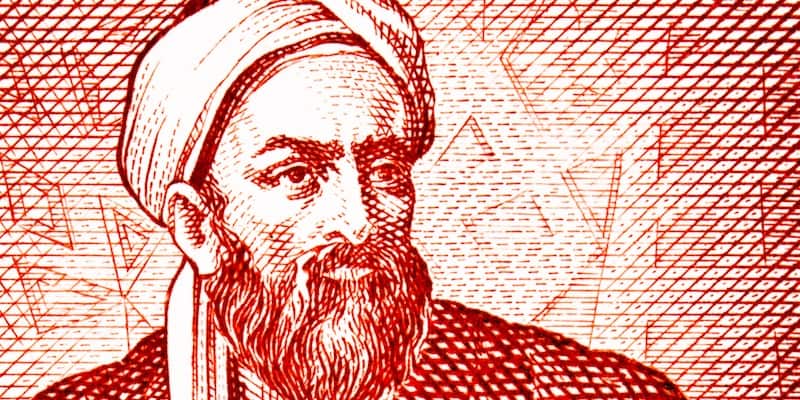
The history of alchemy is long and covers three different continents: Africa, Asia and Europe. It is a complex story with many points of intersection and influence, but not easy to trace, since the practitioners of this knowledge were devotees of cryptic and symbolic language, making their texts particularly hermetic.
Broadly speaking, two great alchemical traditions can be identified: the eastern and the western.
Eastern alchemy It originated in China and India. The first was closely linked to Taoism, and has its largest bibliographical set in the body of texts of this ancient religion. It has important coincidences with traditional Chinese medicine, Chinese astrology and Feng Shui.
Unlike the Western variant, focused on materials, Chinese alchemy was a kind of proto-pharmacology. It is possible that gunpowder was one of his great discoveries, and the search for the elixir of immortality his great task.
As to the indian variant of alchemy is a much less known tradition, which was defined as “the art of obtaining juice or nectar” (Rasa) of things, Rasayana. With this sought to heal the sick and rejuvenate the old .
His objective was to obtain the moksa: perfection, liberation or immortality. For this reason, it is frequently related to Ayurvedic medicine and other metaphysical traditions.
Besides, western alchemy was born in Egypt, at the beginning of the Hellenic period (c. 300 BC), in the Greek city of Alexandria, where the famous library later emerged. It was the result of the Egyptian hermetic heritage (whose central figure was Hermes Trismegistus, a fusion of the Egyptian Thoth and the Greek Hermes).
The Hermetic tradition was reinterpreted in the light of the Greek Pythagorean, Ionist and Gnostic visions, which respectively proposed the explanation of the universe based on numbers, the concentration of natural phenomena and the worship of an imperfect cosmos.
The theory of the four elements belongs to this aspect, which saw in all existing matter a variable proportion of earth, air, water and fire. This tradition was later transmitted to the Roman Empire where it was practiced until the emergence of Christianity, which saw in much of it a set of pagan and heretical knowledge.
Much of the alchemical knowledge was practiced in medieval Europe, during the Dark Ages. However, after the fall of the Roman Empire, it was the Islamic world where these arts flourished, free from Christian religious persecution.
In fact, The Islamic Empire was where medieval alchemy really flourished. adding great contributions to the tradition that was sustained in the texts translated from the Greek of Plato and Aristotle: an important contrast with the West, where many alchemical texts were lost forever.
Later, Islamic alchemy was responsible for reintroducing its knowledge to the West, where laid the foundations for the later birth of chemistry .
The Philosopher's Stone
One of the most famous common places in the alchemical tradition is that of the Philosopher's Stone. It was about a legendary substance whose unique properties allowed metals to be transmuted that is, converting lead into gold or silver.
According to other traditions, it also led to immortality or the elixir of rejuvenation. It was the most coveted treasure of alchemists for centuries. and the attempts to find it were known as Opus magnum (“Great works”).
In the mystical and hermetic language of alchemy, in which symbols abound, the philosopher's stone occupies a central place as an emblem of perfection, illumination and celestial happiness. According to this tradition, the stone was given by God to Adam himself, and was responsible for the longevity of the biblical patriarchs.
famous alchemists

Some of the most famous alchemists in history were:
- Zosimus of Panópolis (3rd – 4th centuries BC). Greek alchemist born in Upper Egypt, author of the oldest known alchemical texts, irretrievably lost at some point in history. Its existence is known thanks to translations into Syrian or Arabic, or from citations in other texts in its original Greek.
- Ge Hong (283 – c.364). Chinese scholar of the early Jin dynasty, he was an alchemist and creator of first aid in traditional Chinese medicine. He was also a Taoist thinker and martial arts practitioner, becoming a central figure in Chinese culture at the time.
- Jabir ibn Hayyan (721-815). Known in the West as Geberwas a Muslim polymath and alchemist, considered the remote founder of chemistry. His identity and the extent of his work are a matter of debate from the 10th century to the present day. He is wrongly attributed with the discovery of different chemical substances, since a later alchemist assumed his name as a tribute, being known today as the Italian or Spanish Pseudo-Gerber.
- Al-Razi (c. 865 – c. 925). Physician, philosopher and alchemist of Persian origin, known as Rhazes or Rasis in the West. He was the author of more than 184 texts on medicine, chemistry and physics, and is credited with the discovery of sulfuric acid and ethanol, key components in modern chemistry.
- Al-Biruni (973-1048). Persian thinker, dedicated to alchemy and mathematics, physics, philosophy, pharmaceuticals, and also history. He was one of the greatest thinkers of the Islamic world, author of more than 150 texts on varied topics, of which only a fifth survives, unfortunately.
- Nicholas Flamel (c. 1330 – 1418). Traditionally considered the French alchemist par excellence, he was a very wealthy and famous bourgeois who was said to have obtained his wealth through the practice of “hermetic philosophy”, that is, alchemy. However, this belief was disproved much later, despite the fact that in later centuries various proto-scientific works were attributed to him. Flamel really dedicated himself to public notary and being a copyist.
- Paracelsus (1493 – 1541). Swiss alchemist, physician and astrologer, also known as Theophrastus Paracelsus or Theophrastus Bombast von Hohenheim. He was credited at the time with having transmuted lead into gold, but his greatest contributions are actually in the area of pharmacology and toxicology, the latter discipline of which he is considered a founding father. He also gave his name to zinc (zincum).
Alchemy and chemistry
It is striking that al-kimiya In modern Arabic it is translated “chemistry”, evidencing the close link between this scientific discipline and the alchemical tradition. The latter sought to understand the dynamics of materials to transform (“transmute”) one into another and obtain not only treasures, but also remedies and potions.
In fact, In the 17th century, alchemy was considered a science more or less serious. Thinkers such as Isaac Newton devoted enormous portions of their time to its study, as did other early Western scientists.
It could be said that chemistry was born from the appendices of traditional alchemy thanks to its reinterpretation at the hands of rationalism. Thus, much more successful results were achieved by applying the scientific method than by insisting on the ancient Hermetic tradition.
With the birth of chemistry, alchemy was relegated to a corner of the history of science, or the history of thought. However, more than a century passed before the formal separation of both names took place, since until then they were practically synonymous.
References
- “Alchemy” on Wikipedia.
- “Philosopher's Stone” on Wikipedia.
- “Emergence and history of alchemy” in The Chemistry Guide.
- “7 curious facts about alchemy and its long history” in Vix.
- “Alchemy: History of science” (video) on Crash Course.
- “Alchemy” in The Encyclopaedia Britannica.


