We explain what cell theory is, its postulates and principles. Also, the history of his background and how it was verified.

What is cell theory?
The cell theory is one of the most important and central postulates in the field of modern biology. It states that absolutely all living beings are made up of cells . This includes all organisms on our planet.
This theory, furthermore, describes the role of cells in the evolutionary history of life on the planet . From this it explains the main characteristics of living beings.
Cell theory forever revolutionized the way humans understand life and organize it. Consequently, he opened numerous fields of specialized knowledge and resolved many of the questions about his body and that of animals, which had accompanied him since ancient times.
From his demonstration, This theory shed light on the origin of life and reproduction . Furthermore, it allowed us to understand the dynamics and processes of what is today considered the most basic physiological unit of biology: the cell.
What is cell theory?
Cell theory, as we said before, focused the efforts of biology on the cell as the minimum structure of life . Understand that all forms of life are based on the cell, meaning that all tissues of plants, animals and fungi can be decomposed into individual cells, although unique and differentiated.
However, animal cells, plant cells or cells of single-celled organisms are very different from each other. Furthermore, this perspective allowed us to understand the gigantic cellular diversity that exists not only among primitive and single-celled life forms, but even within our own body.
On the other hand, all studies regarding the basic processes of life, such as being born, growing, reproducing and dying, can not only be traced to the cellular level of the organism, but also occur, in turn, in each of the organisms. the cells of the body.
History of cell theory
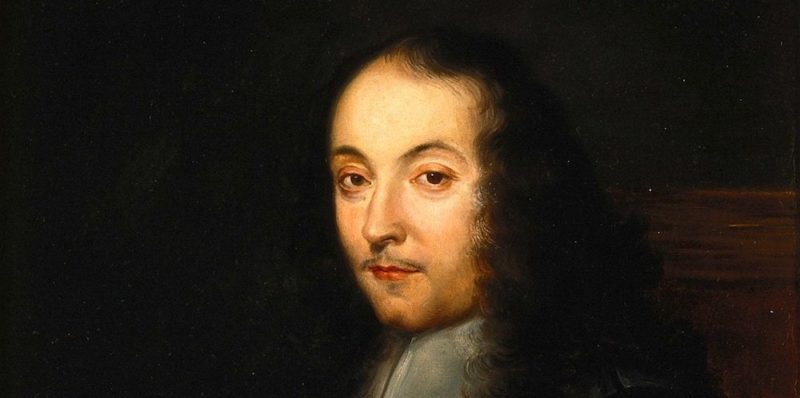
Cell theory has its roots in a long history of studies of life that began in ancient civilizations. However, recently With the invention of the microscope, plant cells could be observed in the 17th century as did the Italian biologist Marcello Malpighi (1628-1694).
It was then that the debate began regarding what exactly these structures were. Later, the English Robert Hooke (1635-1703) named them cellulaefrom the Latin “cell” from his observations of cork cuts.
Later, the Dutchman Anton van Leeuwenhoek (1632-1723), considered the father of microbiology, began to use various microscopes of his own creation to observe the quality of the fabrics he traded. But then he devoted himself to the observation of other substances.
Thus, van Leeuwenhoek was the first to observe bacteria, protozoa and sperm themselves. In this way he also gave the first blows to the prevailing theory regarding the spontaneous generation of life.
Other later scientists made significant contributions to the emergence of the Cell Theory. For example, the French Xavier Bichat (1771-1802) was the first to define a tissue as a set of cells with similar form and function.
On the other hand, the Germans Theodor Schwann (1810-1882) and Matthias Jackob Schleiden (1804-1881) formulated the first principle of cell theory: all living beings are made up of cells and their secretions. Then the German Rudolf Virchow (1821-1902) was the first to demonstrate cell bipartition that is, cells come from other cells.
Despite these discoveries, the cell theory was debated throughout the 19th century. Finally, into French Louis Pasteur (1822-1895) fully verified this theory with his experiments to demonstrate that life does not generate spontaneously.
Principles of cell theory
The principles that govern cell theory are, roughly, the same as those of modern biology. This implies the distinction between the living and the inert: living matter is capable of metabolizing (nurturing) and self-perpetuating (reproducing) for which it must have the necessary structures present inside the cell.
Another important principle is that of inheritance: the transmission of biological information to descendants allows the persistence of a species. This process also depends on important cellular structures, such as the cell nucleus, where the DNA of the entire species is contained.
Finally, cells come together in multicellular organisms to form tissues which are larger and homogeneous structures of cells of the same type. In doing so, they obey important diversification criteria, such as those that separate nerve, muscle, and liver cells, etc.
Postulates of cell theory
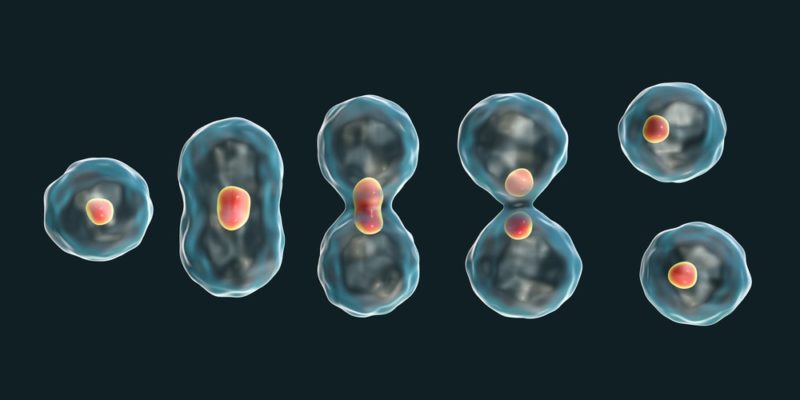
The cell theory can be reduced to three fundamental postulates:
- All living things are made up of cells. Therefore, these are the minimum functional unit of life, at its different levels of structural complexity. One cell is enough to constitute an organism (unicellular), but many cells can be organized in colonies or in a single organism (multicellular), diversifying their functions and reaching a very high margin of interdependence.
- The vital functions of organisms take place inside cells. Through biochemical processes, and are controlled by substances that cells secrete. Each cell operates as a unique open system, exchanging matter and energy with its environment in a controlled manner. Furthermore, in each cell of an organism the same vital functions occur as in the entire organism: birth, growth, reproduction, death.
- All the cells that exist come from other previous cells. By cell division or by formation from stem cells. The oldest and most primitive cells in the world are prokaryotes (without a cell nucleus).
References
- “Cell theory” on Wikipedia.
- “Postulates of cell theory, biology” (video) on the CCH Academic Portal.
- “Cell theory” in Southern Biology.
- “Cell Theory” in ScienceDirect.
- “Cell Theory” in The Encyclopaedia Britannica.