We explain what colonial trade was and why it was so important. In addition, what were its general characteristics and consequences.

What was colonial trade?
Colonial trade is understood as the dynamics of exchange of goods and resources which is established between a center of hegemonic power (or metropolis) and its dependent settlements or colonies.
In times of European expansion and imperialism, the great powers of Europe (especially Spain, Portugal, Great Britain, Germany and France) were established in the territory of other continents. There they installed officials or settlers and imposed on their populations A political, social, economic and cultural system that subject them to a dependency relationship with respect to the metropolis.
Colonial trade consisted fundamentally The extraction of the natural resources of the colonized region and its shipment to the colonizing metropolis. It used to be accompanied by rules and restrictions that favored colonial power and rejected the interference of other powers. In addition, it was the scenario of numerous cultural and ethnic exchanges.
There was also a whole culture of mediators and hazards, since the colonized territories were considered sources of easy and immediate wealth . Thus, both merchants and other intermediaries prosper and also groups that took advantage of the movement of resources to capture them by force, such as the famous Pirates of the Caribbean.
European colonial trade was particularly active In America, but too It was developed in Africa, Asia and Oceania .
History of colonial trade
Modern European colonialism began with the overseas explorations of the fifteenth century . The trips of Portuguese and Spanish inaugurated a stage of exploration, conquest, settlement and exploitation of natural and human resources that during the following centuries were continued by other European powers such as Netherlands, Great Britain, France and Germany.
Colonial trade affected areas in America, Africa, Asia and Oceania and lasted with regional variations until the mid -twentieth century when the latest decolonization processes in Asia and Africa were completed.
One of the most significant examples of colonial trade is the one that involved Spain, Portugal and England with the American lands, from the conquest that followed the arrival of Christopher Columbus to the Antilles in 1492. American colonial trade. It subsisted up to at least the beginning of the 19th century although today a few territories considered colonies persist.
The American colonies
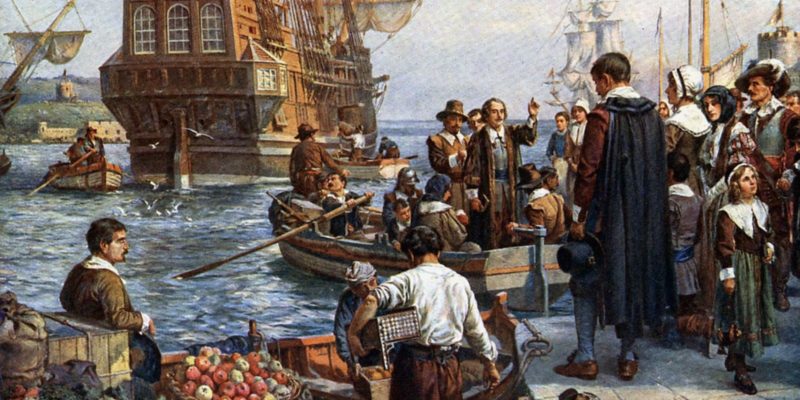
Spain, Portugal and Great Britain, most of the American continent were distributed In the 16th and 17th centuries. This process of conquest and colonization was accompanied by wars, indigenous resistance and competition between European powers.
Thus the American colonies were born both in the regions of North America – which were under the power of the British crown – and in Brazil – under the Portuguese crown – and in the areas from southern North America to a good part of South America – which were under the domain of the Spanish crown. There the conquerors founded cities that sometimes carried the names of European cities. The Spanish crown integrated the colonized territories into a system of viceroyalty and general captains.
Besides A caste system was established (especially in Hispanic America) that differentiated the inhabitants from criteria formulated in racial terms. The “whites” (as the peninsular Spaniards or the Creoles could be) were the leading or privileged elite who participated in the colonial trade, while the “Indians” (generic term for the American indigenous people) were subject to the authority and exploitation of whites and the “blacks” (as the Africans and descendants of Africans were called) were slaves. The descendants of “mixtures” among these social groups were generically called “castes.”
What was colonial trade in America like?
In America Most of the colonial territory belonged to the Spanish crown, which exercised its dominance from the south of the current territory of the United States to the Río de la Plata and its adjacencies, excluding some areas such as Brazil. Although the status of their possessions in America was that of viceroyalty and general captains, in practice they fulfilled the function of colonies.
The vast extension of the Spanish empire offered commercial advantages derived from the control of the extraction of valuable natural resources in America and the monopoly of its shipping in boats towards Europe through the Atlantic.
This system benefited the merchants so much that they acted on behalf of the crown or with their permission, as well as the monarchy, which received important income from rates and trade taxes. Merchants also looked with the sale in the merchandise colonies made in the metropolis. Indigenous populations suffered, however, various forms of exploitation to obtain resources and were harmed when they were forced to trade.
Spanish trade monopoly

Colonial trade in America had a markedly extractivist character . This means that European or Creole officials and settlers extracted the natural resources coveted in Europe from the American soil, and generally employed indigenous or African labor. Among the resources obtained were:
- Precious metals: mainly gold and silver.
- Textiles and food: tobacco, cotton, corn, cocoa, etc.
- Other products, such as exotic pearls and animals.
During most of the time that the colonial trade of Spain lasted with America, the crown maintained a rigid monopoly system. American resources could only leave a few ports (such as Callao and Veracruz) And they were sent to the port of Seville or Cádiz in the metropolis, from which in turn other ships with European products to America left.
To avoid the attacks of privateers and pirates in the Atlantic, the fleet and galleon system was used: several mercantile vessels came together, accompanied by war ships.
This control was sustained in laws issued by the crown and in the appointment of trusted officials in the positions of power in American soil. The prohibition of trade with other nations encouraged smuggling practices And, as the population increased in America, the Creole sectors were unhappy against the privileges of the peninsular in the monopoly. This, added to the high costs of the Fleet and Galeon system and the few commercial routes enabled, stimulated commercial reforms implemented by the Bourbons in the 18th century.
Liberalization of colonial trade
In the 18th century, the Spanish crown, which had been in the hands of Habsburg’s house, passed to Bourbon’s house. In this period, the so -called Bourbon reforms were implemented that, among other things, gave rise to a relative liberalization of colonial trade. Some of their rules were flexible and more ports were enabled .
The fleet and galleons system was replaced by The registration ship system which allowed the navigation of merchant ships authorized by the hiring house of Seville (then installed in Cádiz) to trade in the ports of America, subject to a rigorous inspection to prevent smuggling.
During the reign of Carlos III it was promulgated The Regulation for Free Trade (1778) which authorized direct trade between thirteen ports of Spain and twenty -four of America. This measure increased commercial flows. Anyway, more than an economic liberalization was a previously existing modernization of the system, since it maintained the Spanish monopoly of colonial trade.
End of American colonial trade

Colonial trade in America concluded as the independence movements triumphed . In the United States this happened at the end of the 18th century and in the Hispanic colonies throughout the 19th century. However, it was not a peaceful process but these territories crossed insurrections and military conflicts known as wars of independence.
The promoters of these independence movements They used to be Creoles who were born or resided in America . Some had been harmed by the monopolistic control of trade, the tax pressure of the Bourbons and the political and economic privileges that used to usufruct the peninsular. This, added to other factors, stimulated emancipation impulses.
Among the first countries of Hispanic America that proclaimed their independence are Mexico, Argentina, Paraguay and Venezuela. The latter were Cuba and Puerto Rico, which had been under American domain after the Spanish-American war of 1898 (although Puerto Rico maintains the associated free state status of the United States).
Colonization and decolonization in Asia and Africa
European colonization in Asia and Africa He charged a great boost in the eighteenth and nineteenth centuries especially with the thrust of the industrial revolution and the maritime boom of Great Britain. The territorial cast between British, French, Germans and other European nations triggered wars but also decolonization processes that, in the mid -twentieth century, led to the independence of most of the European colonies.
In many cases, this led to the emergence of new republics of what was called the Third World. Many of them They suffered the consequences of colonialism and joined the modernity and world trade in disadvantageous conditions regarding the powers that had dominated them.
Colonial taxes

The rate and collections system with which Spain controlled American trade consisted of various types of taxes, such as:
- Tithe . It was a tribute that charged the Spanish crown to land owners in America, and that consisted of a tenth of what they produced, where the money for religious work in the colonies came out.
- Fifth Real . It was a tax for which a fifth of what was extracted in gold, silver and other resources from America should be allocated to the Spanish crown.
- Almojarifazgo . It was a tariff that was imposed on the entrance and exit of merchandise from the ports of America and Spain.
- Alcabala . It was a tax on the sale of goods (furniture, immovable and slaves) in the colonies.
Privateers and pirates
The response of international interests against the Spanish monopoly of American colonial trade was the formation of military naval units or permission granted to individuals to loot the enemy ships . These were national flag vessels, known as privateers.
These privateers had a Corso patent, that is, Legal permit of other governments (especially from England) to use their territories and assault Spanish trade routes. They kidnapped, robbed and murdered protected in said legality.
This activity was also practiced by pirates who did not have a legal guarantee, that is, acted to satisfy their own interests and did not serve a government. They approached vessels, ravaged American coastal cities and sold the resources captured to the highest bidder.
Consequences of colonial trade
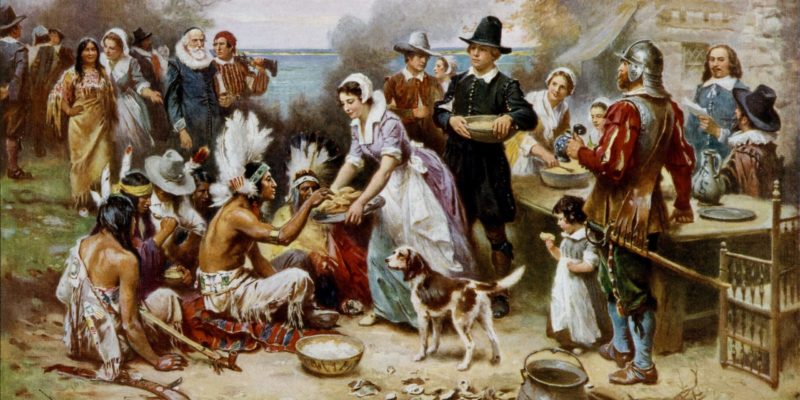
Colonial trade favored the reigning houses and the merchants of Europe . In many cases it provided European nations of raw materials necessary to boost the economy and a colonial market to sell elaborate products, which in Nations such as England favored the takeoff of the industrial revolution.
When this revolution The world economy changed definitely in the 19th and 20th centuries the states that had carried out colonization were generally in advantageous positions, even after losing their colonies. On the contrary, most of the colonies had to face numerous difficulties in integrating world trade once they reached independence after centuries of subordination and exploitation of their resources.
The same independence movements were one of the consequences of colonial trade. The unequal conditions in economic exchanges encouraged discontent with the central powers. For example, when Napoleonic troops invaded Spain and arrested King Ferdinand VII at the beginning of the 19th century, Creole elites saw the opportunity to claim greater autonomy commercial freedom and finally proclaim your sovereignty.
The confrontation between the realists, who defended the Spanish commercial monopoly, and the patriots, who demanded commercial freedom and better political conditions or independence for the colonies, was one of the aspects of the American independence wars.
})
References
- “New History of the Argentine Nation. Volume 2: Spanish period (1600-1810)” National Academy of History (1999). Planet.
- “The colonial economy system: internal market, regions and economic space” Assadourian, CS (1982). Peruvian Studies Institute.
- “Western Colonialism” Nowell, CE, Webster, Ra & Magdoff, H. (2020) at https://www.britannica.com/
- “Colonial trade (1804)” at http://elarcondelahistoria.com/
- “Colonial economy” at http://www.icarito.cl/
- “Colonial trade” at https://historiamatute.wordpress.com/
- “Colonial commerce” at http://www.escolares.net/
- “Commerce in the colonial era” at https://www.educacioninicial.com/
- “Export and trade of products between the Ibero -American and Spain colonies” of educational material for the University of Murcia, at (https://www.youtube.com/)