We explain what the colonial era was and what continents affected. In addition, what were its characteristics and consequences.

What was the colonial era?
The colonial era was The historical period in which some European nations such as Spain, Portugal, France, the Netherlands and England, explored, conquered and colonized territories of the other continents . Colonial domination not only meant economic exploitation and political subordination but also covered religious, social and cultural issues.
This form of modern colonialism It began at the end of the 15th century with the oceanic explorations of Portugal and Spain . Portuguese trips allowed to surround Africa in the south to reach Asia and promoted the establishment of settlements on the coast.
The expedition of Christopher Columbus through the Atlantic led to the coasts of America and motivated the beginning of the conquest of the American continent. In the seventeenth century, the British, Dutch and French began the construction of their own colonial empires.
Since then, European empires expanded and colonized territories in America, Africa, Asia and Oceania. In most of the American continent, the colonial era ended between the end of the 18th century and the beginning of the 19th century With the wars of independence.
However, other territories continued under the colonial regime until the twentieth century, such as the countries of Asia and Africa that became independent through decolonization processes after World War II.
The colonial era left its traces in each region in a different way and gave rise to various forms of cultural diversity, especially in the so -called Third World.
Colonial era in America
The Spanish Empire in America
The main colonies in America were under Spanish, Portuguese and British domain. The Spanish Empire was the one that controlled a major territory, after the arrival of the first navigators to the continent at the end of the fifteenth century and the conquest undertaken in the following years.
The wars of conquest – built by figures such as Hernán Cortés and Francisco Pizarro – and the diseases introduced by the Spaniards decimated indigenous populations. The survivors were evangelized and subject to various forms of economic exploitation.
Among the Spaniards, different forms of land and resources distribution were imposed and two viceroyalties were initially created: that of New Spain (in a large region with center in the current Mexico) and that of Peru (centered on the current Peru and with an extension that reached the north until Colombia and the south to Argentina).
Subsequently the viceroyalties were founded from Nueva Granada and the Río de la Plata. The viceroyalties were controlled by the Spanish crown and were subject to political and commercial restrictions imposed from the metropolis.
Colonial society in Latin America was formed by the interaction between Spanish culture and indigenous cultures . Although Spanish language and customs spread and The Catholic religion was imposed, there were also phenomena such as religious syncretism (the combination of Christian and indigenous symbols), the survival of some local traditions and the incorporation of indigenous words in the Spanish language.
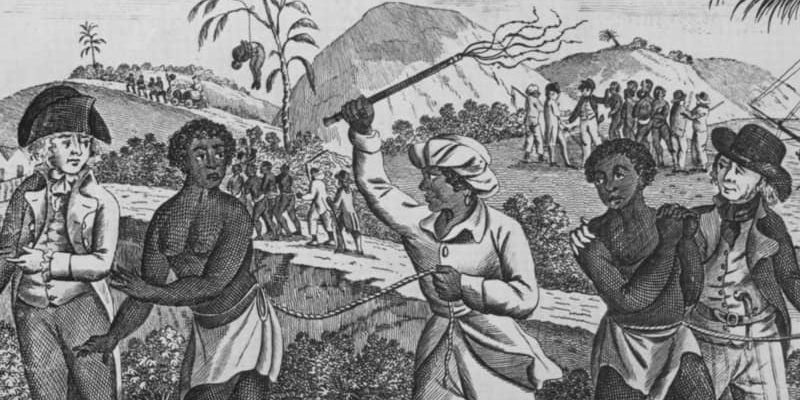
To this combination was added the contribution of African cultures since many individuals were taken from Africa to America to be used as slave labor.
In this social context, The phenomenon of miscegenation was also given (the offspring of union between people from different ethnic origins) And a social structure was formed that differentiated among the peninsular Spaniards, the Spanish Creole, the indigenous people, the Afro -descendants, the mestizos and other social categories.
The Hispanic colonies became most of Spain in the vast majority in the early nineteenth century in the context of the Spanish -American independence wars. The last American possessions to separate from the Spanish empire were Cuba and Puerto Rico in 1898.
The Portuguese Empire in America
The Treaty of Tordesillas signed between the crowns of Spain and Portugal in 1494 established a distribution of the areas that were being discovered by Europeans. This decided that The Portuguese Empire, which was already installed in Western Africa areas, began the conquest of Eastern Brazil As of 1500.
In 1533, The territory of Brazil was divided into captains, granted to Portuguese nobles called “donatarios” for colonization and government. Since 1549 a general governor designated by the king and between 1580 and 1640 was appointed, when the union between the Spanish and Portuguese crowns took place, All the territories of the Portuguese Empire were under the authority of the King of Spain .
The colonial era in Brazil was marked by The exploitation of resources such as wood and gold, and agricultural work in estates or sugar reed plantations, usually with slave labor.
The “Bandorantes” (members of armed bands oriented to exploration) used to attack indigenous people to enslave them, but slave labor brought from Africa was also used. As in Latin America, The colonial era in Brazil concluded at the beginning of the 19th century .
The British Empire in America

The first attempts to establish English settlements in America took place at the end of the 16th century. However, The first permanent English settlement was the colony of Jamestown, founded on the current state of Virginia (United States) at the beginning of the 17th century. From then on, The English colonized most of eastern North America and some Caribbean islands .
As new colonies were founded and borders expanded, The settlers faced indigenous populations with which they also traded and sometimes enslaved them to use in farms or sugar plantations. At the same time, English culture and Protestant religion in the colonies were consolidated.
In 1776, The thirteen colonies that had been founded on the east coast of the current United States declared their independence regarding the British empire and began the war of independence. This ended in 1783 with the British recognition of the independence of the United States. Other American territories continued to be subjected to British colonial domain until the nineteenth and twentieth centuries.
Colonial era in Africa
Before the nineteenth century, European empires had only installed a few settlements and commercial establishments on the coasts of Africa, although the sale of people captured and enslaved by African merchants was part of both European and Arabic colonial trade.
The colonization itself in Africa occurred during the 19th century. In full phase of economic growth due to the industrial revolution, European powers They needed raw material . Since they had lost their American colonies, they pointed towards Africa, which was for Europeans an almost unknown territory.
Germany, France, Belgium, the Netherlands, Italy, Spain and the United Kingdom proceeded to what was called the “distribution of Africa” : They drawn boundaries between colonies based on parallels and without bothering to know the nature of the territories or their indigenous populations.
Colonization in Africa was generally very violent and submitted local populations to work in very hard conditions, especially in mines and fields. A special case was that of the Free State of the Congo, a personal possession of the Belgian King Leopold II Between 1885 and 1908, which in just over twenty years saw its population reduced by approximately half due to working conditions and applied violence.
Some of these territories exceeded colonialism through wars and rebellions (as in Algeria). In other cases, the territories were decolonized by peaceful means due to the little interest of the powers in facing the costs of their administration (as in most of the sub -Saharan Africa). Most of these decolonization processes took place in the mid -twentieth century.
Colonial era in Asia and Oceania
European empires in Oceania

The occupation and colonization of Oceania began with the arrival of Spaniards, Portuguese and Dutch to some of their islands in the sixteenth and seventeenth centuries. However, the most important exploration was carried out by English and French navigators during the 18th century and the beginning of the 19th century.
In Australia, the British government installed a penitentiary colony At the end of the 18th century, which later became a series of agricultural, livestock and miners.
In New Zealand, the settlers arrived at the end of the 18th century and They were expanded after the finding of gold deposits In the nineteenth century. In both cases, clashes with aboriginal populations caused fierce wars.
At the beginning of the twentieth century, Australia became joint and New Zealand in domain, which meant that They acquired a status of self -government but remained united to the British crown .
The colonial era in India
European navigators, such as the Basque Portuguese da Gama, They arrived in India at the end of the fifteenth century in search of resources and new trade routes. Cities like Goa were controlled by the Portuguese Empire (and by the Spanish Empire in the years of the Iberian Union) for four centuries.
On the other hand, Its European rivals founded commerce companies such as the British company of the Eastern Indies or the Dutch Company of the Eastern Indies. Each of these companies defended the interests of their respective nation over India and other regions of Asia.
At the end of the seventeenth and early eighteenth century, the British settled in Calcutta with the consent of Emperor Mogol who ruled in India, although a few years later they had to face some Indian attacks. During the nineteenth century, The British faced the French and Indian inhabitants, and extended their control . For this they had cipayos, Indian soldiers trained in Europe to protect colonial interests in the region.
With the fall of the Mogol Empire In 1858, The British raj was created, the colonial regime of the Indian subcontinent which existed until independence was achieved with respect to the United Kingdom in 1947.
The colonial era in the rest of Asia
The European colonies in Asia covered very different cultural areas. The Indochina region was colonized by the French during the 19th century . After the independence and partition achieved in 1954, it was the scene of the Vietnam War (in which other powers intervened, such as the United States, the Soviet Union and the People’s Republic of China).
The Dutch Empire had an important colonial presence in Asia . For example, in the seventeenth century he occupied much of Indonesia and expelled the Portuguese from Ceilán (current Sri Lanka). On the other hand, China crossed various stages of commercial control and occupation of territories by foreign powers (Western and Japan) in the 19th century and the beginning of the 20th century.
The nineteenth -century opium wars exploded due to opium smuggling in China promoted by the British empire, which obtained in return tea, silks and porcelain. Port cities and regions of importance such as Hong Kong or Shandong were European colonies until the twentieth century .
Characteristics of the colonial era
Colonial societies
Colonial societies were very diverse from each other, but they had in common the fact that Indigenous populations were subject to the political and economic predominance of a foreign elite or of local sectors that acted as allies or officials of the colonial power.
Some elites and religious institutions promoted cultural penetration in the colonies. However, Subordination relationships linked to ethnic differences were maintained sometimes interpreted in racial terms. This was seen, for example, in the state society in Latin America or in the characteristic racism of colonialism in Africa.
Colonial economies
Colonial economies They were built with the aim of satisfying the interests of the metropolis About those of the colonies, although the elites that resided in the colonies (for example, the Creoles of America) also obtained profits from economic exploitation and colonial trade.
The basic economic practice of the colonies was the extraction of resources generally through the use of indigenous labor or slave labor force (such as that corresponding to Africans who were enslaved and sent to the plantations of some regions of America).
Local resources were exploited and sent to Europe and then exchanged the products made by the raw material of the colonies.
Colonial trade was an unequal exchange sustained by the force of the colonial authorities to guarantee the satisfaction of their interests. For example, the Spanish colonies in America were prohibited to trade with each other and with other nations, since the Spanish monarchy established a monopoly by which colonial resources could only be sent to Spain. In addition, colonial institutions applied taxes and tithes.
The colonial clothing

The clothing in the colonies generally reflected the class and ethnicity distinctions that organized colonial society. The clothing of Europe were part of the outfit that Europeans retained in the colonies. In Hispanic America, the Creoles adapted European fashion to local needs.
For its part, The natives could generally keep their traditional clothes as long as the moral precepts imposed by colonial culture did not breach. The low sectors and slaves used simple garments made with rustic textiles that differentiated them from privileged strata.
Colonial immigration
The colonies were a usual destination for Europeans who saw in them the opportunity to become rich and return to their homeland, or start from scratch a new life. For example, Many Spaniards were traveling to the Latin American colonies to enrich themselves or to acquire a title of nobility and then return to Spain.
Among Anglo -Saxon migrants, some saw an opportunity to found a community or nation with their own laws, such as the Puritano settlers who escaped from religious persecution in England.
The existence of Europeans who settled in the colonies and had offspring gave rise to social categories such as Creoles in Latin America, as well as various forms of miscegenation.
The colonial empires
The four great colonial empires of history were:
- He British empire from the 16th century to 1949.
- He Spanish Empire from the 16th century to 1898.
- The French colonial empire from the seventeenth to 1958.
- The Portuguese Empire from the fifteenth to 1975.
Other important colonial empires Europeans were:
- The Dutch Empire from the seventeenth century to the twentieth century.
- The German empire from the nineteenth century to the twentieth century.
- The Danish colonial empire from the thirteenth century to the 20th century.
- The Russian Empire from the 18th century to the 20th century.
References
- Elliott, JH (2006). Empires of the Atlantic world. Spain and Great Britain in America (1492-1830). Taurus
- Hunt, L., Martin, Tr, Rosenwein, BH & Smith, BG (2016). The Making of the West: Peoples and Cultures. 5th edition. BEDFORD/ST. Martin’s.
- León-Portilla, M. et al. (1990). Latin America in the colonial era. 1. Spain and America from 1492 to 1808. Criticism.Nowell, CE et al. (2023). Western colonialism. Britannica Encyclopedia. https://www.britannica.com/