
We explain what the Holocaust was and what its causes and consequences were. Also, its history, who participated and how it ended.
What was the Holocaust?
The Holocaust was systematic persecution and organized murder of Jews during World War II . This process is also known by the terms “Jewish genocide” and “Shoá” (which in Hebrew means “catastrophe” or “destruction”). The main person responsible for the Holocaust was the Nazi regime that ruled Germany between 1933 and 1945 and took the lives of almost 6 million Jews from different countries in Europe.
The persecution of the Jewish population began before World War II. Between 1933 and 1938, the Nazis' goal was to expel the Jews from Germany . During Kristallnacht (November 9-10, 1938), the Nazi government looted Jewish shops, homes, and synagogues and imprisoned 30,000 people in concentration camps.
During the Second World War (1939-1945), with the occupation of Eastern Europe, The Nazi government multiplied concentration and extermination camps . In 1942, top German officials proclaimed the “final solution to the Jewish problem” and deported the entire Jewish population to Eastern Europe, where they were made to work building roads under grueling conditions. The survivors were systematically murdered in gas chambers.
Holocaust or Shoah?
The preference for using the terms “Holocaust” or “Shoah” has to do with a difference in cultural approach and perspective.
“Holocaust” is a term widely used to describe the genocide of nearly 6 million Jews by Nazi Germany.
“Shoah” is a Hebrew word meaning “catastrophe” or “destruction,” and is preferred within the Jewish community to refer to the same historical event, but highlighting the specificity of the Jewish experience and the cruelty of the losses suffered.
Causes of the Holocaust
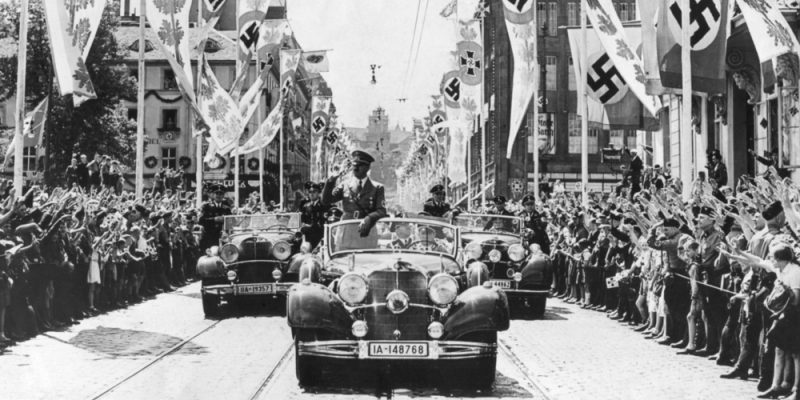
The Holocaust was a product of the rise of racist fascism of the Nazi Party in Germany . His absolute control of the State and the destruction of the democratic republic (known as the Weimar Republic) meant that there was no dissent within the government apparatus and that racist Nazi ideology could be implemented with little resistance.
This was possible due to the context of the time and the political, economic and social crisis that Europe, especially Germany, went through after the First World War. In Germany and in different parts of Europe, movements with right-wing ideology grew which promoted authoritarianism, were antidemocratic and adhered to fascism. Adolf Hitler's Nazi Party was the German expression of the fascist ideology of the European right.
On the other hand, in Germany, the political, economic and social crisis was linked to the harsh conditions imposed by the victorious countries. In this context, Nazism began to point to the Jews and communists as responsible for the defeat and to identify them as a threat to the German nation.
Holocaust History
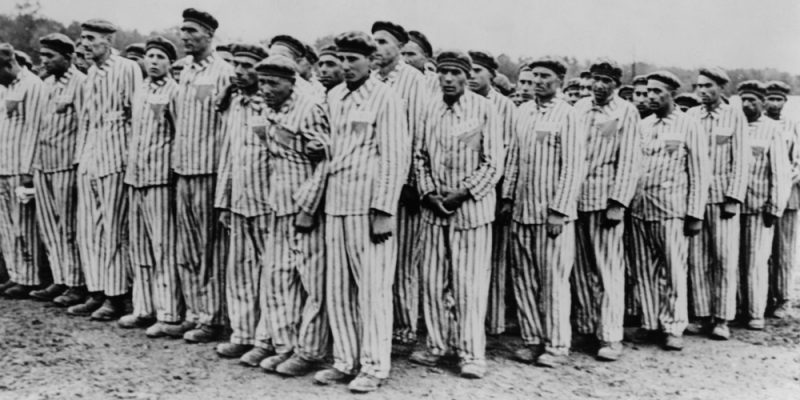
Throughout history, discrimination against Jews existed in different parts of the world. However, It was in the second half of the 19th century that anti-Semitism appeared in Europe : a theory that identified Jews as a biological race and accused them of conspiring internationally to dominate the world. At that time, anti-Semitic parties were founded in Germany, France and Austria that promoted the expulsion of Jews from their countries.
However, it was only with the political, economic and social crisis of the interwar period that anti-Semitism gained strength in Germany. Adolf Hitler (the leader of Nazism) spread the idea that, to recover social well-being, it was necessary to create a racist State that would eliminate the main threats (Jews and communists).
Once in power, The Nazi Party carried out the persecution of the Jews gradually . In 1935, the so-called Nuremberg Laws were enacted, which took away political, economic and civil rights from the Jewish population. In the following years, spatial segregation was established and German Jews were forced to live in ghettos (separate neighborhoods). In this context, nearly 300,000 Jews accepted deportation and migrated out of Germany.
In 1938, violent attacks began . On Kristallnacht, Jewish homes, businesses and synagogues were destroyed in different parts of Germany and almost 30,000 people were sent to concentration camps. During World War II, Jews in these territories occupied by the Nazi regime were forced to live in ghettos or sent to concentration camps.
Starting in 1942, the last stage of the Holocaust began, in which Violence radicalized and the systematic annihilation of European Jews was established . Senior Nazi officials established the “final solution to the Jewish question” (in German, Endlösung der Judenfrage), which involved mass murder through effective means.
The “final solution” of the Holocaust
The “final solution” It was carried out through mass shootings and extermination centers . The mass shootings were carried out in nearly 1,500 urban centers in Eastern Europe, by special German units of the SS (acronym for the German term “Schutzstaffel”, the police of the Nazi regime). Almost all the inhabitants of the Jewish ghettos were murdered in mass shootings. It is estimated that almost 2 million Jews died in this way.
On the other hand, a system of extermination in concentration camps was developed with the aim of systematizing the murder of Jews in the fastest, most economical and effective way possible. For this, gas chambers were built in the concentration camps of Auschwitz-Birkenau, Treblinka, Sobibor, Chelmno and Belzec.
The Jews who were imprisoned in the different concentration camps in Europe were sent by train to one of the extermination camps (the term “deported” was used). Upon arrival, the majority were annihilated almost immediately. The gas chambers allowed the killing of between 5,000 and 10,000 people per day . It is estimated that around 2,700,000 people were murdered in the extermination camps. Some people were forced to collaborate with the killing process and others were separated to perform the forced labor necessary to keep the camp functioning. For example, they were forced to remove dead bodies from gas chambers, which were then cremated in mass graves.
Those responsible for the Holocaust
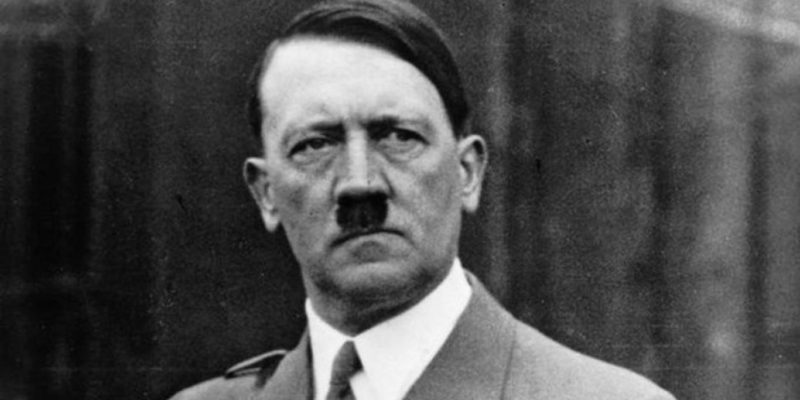
The Holocaust was perpetrated by different forces of the Nazi regime . Among them, the SS (the police) were the main force of the regime that was responsible for the organization and implementation of anti-Semitic racial operations.
Among those mainly responsible for the Holocaust were:
- Adolf Hitler . Ideologist of the entire process, political and military leader of the Nazi Party.
- Heinrich Himmler . Director of the internal security military corps of the SS, organizer and supervisor of the deportation and extermination system.
- Hermann Goring . Reich Air Marshal, in charge of executive directives for “Jewish resettlement.”
- Reinhard Heydrich . Director of the Reich Central Security Office, designer of the plan for mass shootings and extermination centers (the plan was known as “Aktion Reinhard”).
- Odilo Globocnik . SS general who implemented, administered and supervised the first concentration camps in Poland, and executor of Aktion Reinhard in various countries.
- Adolf Eichmann . Lieutenant colonel organizer of forced deportation plans in occupied countries.
- Friedrich Wilhelm Kritzinger . Politician and jurist responsible for the loss of civil rights of the Jewish population in Europe.
- Eugen Fischer . Nazi physician and anthropologist, whose theoretical studies contributed to the construction and design of concentration camps.
Other victims of the Nazi regime
Together with the Jewish population, the Nazi regime persecuted other victims : Roma and Sinti gypsies, political opponents (especially communists), Jehovah's Witnesses, disabled people, homosexual people and Slavic population groups.
Furthermore, in the context of war, they defined the death of prisoners and civilians from occupied territories (especially from the Soviet Union and Poland). In total, it is estimated that the Nazis were responsible for the deaths of almost 10 million non-Jews.
The end of the Holocaust
The Holocaust formally ended with the fall of Nazi Germany in 1945 when his troops were defeated by combat on both fronts: the Soviet and the Allied.
The first concentration camp to be liberated was Majdanek, near Lublin, Poland, in July 1944, at the hands of the Soviet Army. Despite the efforts of fleeing Nazi personnel to destroy evidence of the murders, the gas chambers were found intact.
In the summer of that same year, the Soviet Army liberated the extermination camps of Belzec, Sobibor and Treblinka, and, in January 1945, it liberated Auschwitz-Birkenau in Oswiecim, Poland.
British troops liberated a concentration camp for the first time in April 1945 when they arrived at the Bergen-Belsen camp, in Germany. That same month, the Americans liberated the Ohrdruf extermination camp in Germany.
Those responsible for the Holocaust were arrested and prosecuted by the international community in what was known as the Nuremberg Trials, between November 1945 and October 1946. Most of them were sentenced to death or life imprisonment. Many others, belonging to the upper echelons, committed suicide alongside Hitler.
Later, between 1963 and 1965, the Auschwitz Trials were held in Frankfurt, the first entirely German trial of the SS officers and personnel who collaborated with the extermination at the Auschwitz camp and its other subcamps.
Holocaust consequences
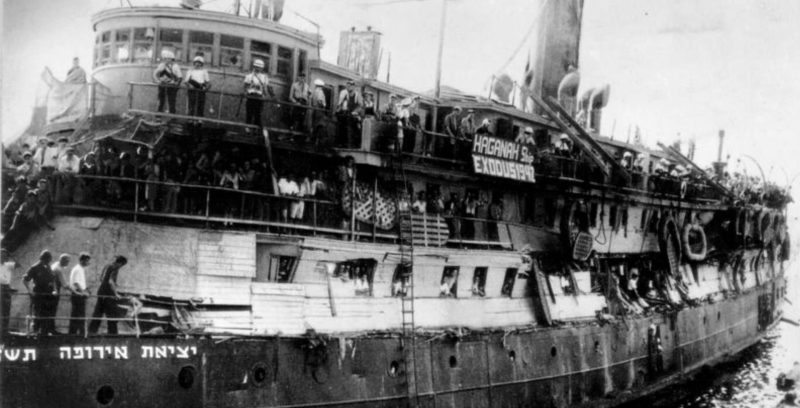
The main consequence of the Holocaust It was the death of nearly 16 million people, of which almost 6 million were Jews . Jews who survived the Holocaust in concentration camps were liberated by the Allied armies that defeated Germany at the end of World War II.
On the other hand, most Jews who survived persecution and extermination found their homes and communities destroyed, reminiscent of anti-Semitism in different parts of Europe, and displaced from their place of origin. Therefore, the majority of them had to continue living as displaced people: nearly 250,000 people were housed in refugee camps and urban centers, administered by the authorities of the allied countries. These centers existed between 1945 and 1952, and their objective was to provide humanitarian assistance for the reintegration of all those affected by the destruction of the war.
References
- Browning, C. (2004). The Origins of the Final Solution. The Evolution of Nazi Jewish Policy, September 1939-March 1942. University of Nebraska Press.
- Sheldon, G.W. (2001). National Socialism. Encyclopedia of Political Thought. Infobase Publishing.
- United States Holocaust Memorial Museum. (2020). Documenting numbers of victims of the Holocaust and Nazi Persecution. Holocaust Encyclopedia. https://encyclopedia.ushmm.org/
- United States Holocaust Memorial Museum. (2022). Introduction to the Holocaust. Holocaust Encyclopedia. https://encyclopedia.ushmm.org/


