
We explain what the inductive method is, its characteristics and examples. Also, its history and the difference with the deductive method.
What is the inductive method?
A method or inductive reasoning is known as a type of reasoning that is characterized by moving from the particular to the general. This characterization indicates that the conclusion of the reasoning contains new information regarding the premises.
To explain particular phenomena, Inductive reasoning starts from the knowledge of these to obtain a general truth or principle. . In the sciences, scientists use induction to obtain knowledge from experience. Induction is a method that discovers properties from the observation of a regularity in a series of certain phenomena.
Its constituent steps are:
- A similarity is observed.
- A generalization, conjecture or tentative judgment is made that results from evidence supported by particular cases.
This is usually translated, in its classical form, as follows:
- It is observed that every time X is given, Y is given.
- It is induced that whenever X is given, Y is given.
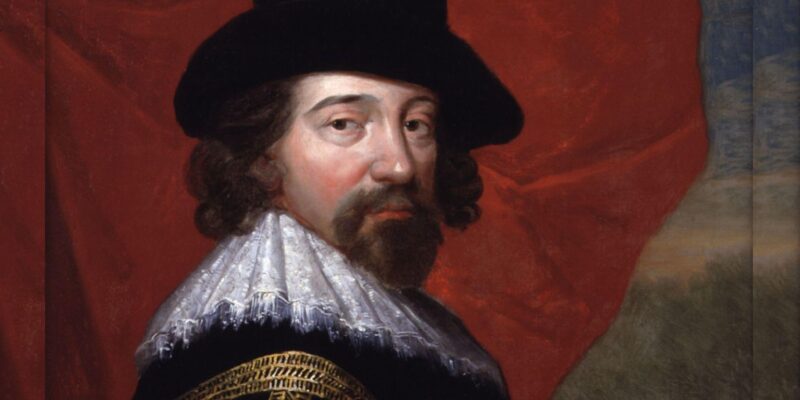
The English philosopher Francis Bacon (1561-1626) gave a formal origin to the inductive method in his work New scientific instruments better known as Novum organum scientiarum. In 1620, Bacon stated that the establishment of general principles could be achieved through induction, in direct opposition to logical deduction. For this, he relied on the criticisms of Aristotelian syllogisms, made by different philosophers previously.
Definition of induction :
- Induction is the logical procedure that goes from the particular to the universal or general. In this it is opposed to deduction, which goes from the universal to the particular.
Logical characteristics of the inductive method
In the field of logic, the argument that performs a logical procedure is called inference . Inference is a process that allows the direct discovery of an unknown truth.
When a logical truth is arrived at in a necessary way (that is, through a logical necessity, which implies a mandatory necessity) through an inference, we speak of a “deductive inference.” If these truths are demonstrated in a probable way, this process is an “inductive inference.” For example: “the planet Earth is inhabited; then the other planets, if the conditions are the same, can be inhabited.”
Contrary to deductive reasoning, which discovers a truth already foreseen, Inductive reasoning leads to the discovery of an unforeseen truth . If we take the premise “all bodies left to themselves fall”, the question arises: “why doesn't the Moon fall?”, from which the law of gravitational force is discovered.
All inductive reasoning has the same characteristics. These are:
- The premises present a characteristic that the elements of an initial set have in common.
- The premises also establish that some of the elements of such a set share a second characteristic.
- In the conclusion, the second characteristic (shared by a subset of elements that is not necessarily its own) is generalized to, at least, one new element of the set of which it is not known, from the information given in the premises, if it really has it. . That is, the characteristic found in some from the elements of the premises to a new set of elements.
Examples of the inductive method
The characteristics of the inductive method can be observed in the following examples:
- Premise 1: My house is made of bricks.
- Premise 2: My parents' house is made of bricks.
- Premise 3. The houses in the town where I live are made of bricks.
- Conclusion: All houses are made of bricks.
- Premise 1: Gold is a good conductor of electric current.
- Premise 2: Aluminum is a good conductor of electric current.
- Conclusion: Metals are good conductors of electric current.
- Premise 1: When I release an orange, it falls.
- Premise 2: When I let go of a shoe, it falls.
- Premise 3: When I release a melon, it falls.
- Conclusion: All objects fall
History of the inductive method
Induction, which is the procedure by which one passes from the particular to the general is a logical procedure that dates back to Antiquity. In Greece, the Epicureans held that the inductive method was the only form of legitimate inference.
However, for a long time induction was not used . The Aristotelian syllogism, as a deductive method, was considered the logical operation par excellence until the Modern Age. Even in late antiquity, thinkers such as Sextus Empiricus criticized the validity of induction by drawing the distinction between a complete induction and an incomplete induction.
In 1620, Francis Bacon published his work Novum Organonin which he revalued the inductive method. There, relying on criticism of Aristotle, he maintained that general principles could be reached if one started from an adequate selection of experiences.
For this selection, Bacon created a series of tables in which he distinguished:
- Being and presence.
- Disappearance or absence.
- Degrees.
Through these tables, Bacon sought to find a property such that it was everywhere present or absent which increased or decreased with the given property and which was the limitation of a more general nature. Bacon's objective was to recover the scientific notion of experience, wanting to put it to proper use and recover its scientific prestige.
Contingency and the problem of induction
The problem of induction is know if the results obtained from an inductive argument can produce knowledge . The difficulty is in being able to justify the truth value (the value that indicates to what extent what was stated is true) of the conclusion obtained.
For David Hume (1711-1776), the problem of induction was in the nature of human reasoning. . The English philosopher maintained that reasoning has its origin in “relations of ideas” (intuitive or demonstratively true statements) and in “questions of fact.” While relations of ideas came from logic, matters of fact had their origin in experience and were, therefore, contingent. The same thing happened with inductions of particular experiences, which are contingent. This means that they are not necessary: a particular experience may or may not happen. The conclusion of an induction can never be verifiable through the scientific method.
Deductive method
The deductive method uses reasoning where the conclusion is contained in the premises.
The syllogism is the best known deductive reasoning . A syllogism is a reasoning that is composed of a general premise and a specific premise that guarantee that there is a conclusion. The form of this reasoning must be valid and accurate. Thus, if the reasoning is well planned, the conclusion will have a truth value that will depend on the truth value of the premises, not on their validity.
Deductive reasoning is different from the reasoning of the inductive method because in the latter the formal validity of the conclusion cannot be demonstrated.
Here is an example of deductive reasoning:
- Premise 1. All living beings breathe.
- Premise 2. The human being is a living being.
- Conclusion. All human beings breathe.
References
- Gamut, LTF, & Durán, C. (2002). Introduction to logic. Buenos Aires, Argentina: Eudeba.
- Obiols, G. (1997). New Logic and Philosophy course. Kapelusz.
- Díez, JA (2002). Initiation to Logic. Ariel.


