We explain what measurement means and what measurement units are for. Direct measurements, traditional measurements, and common errors in measurement.
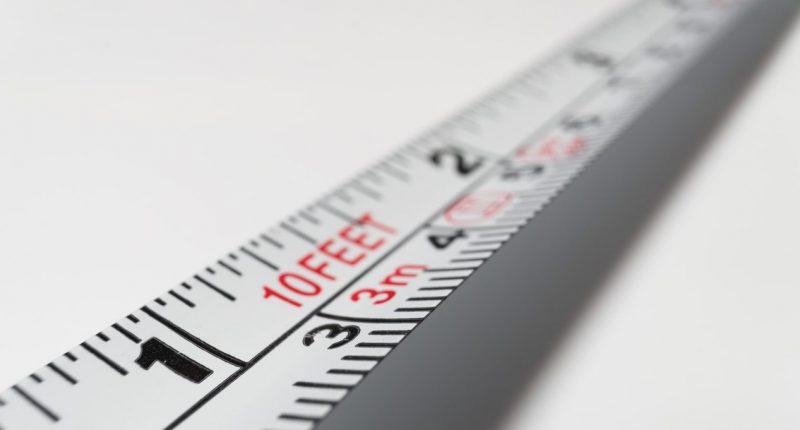
What is measurement?
The word measure is a verb that has Latin origins. «metiri» and refers to act of comparing a given quantity of something with a unit of measurement where it is established how many times this unit occupies a place within said quantity.
Definition of measure: Determine the length, volume, extension, or capacity of a thing by comparison with an established unit of measurement that is used as a reference, usually using some instrument graduated with said unit .
Unit of measurement
On the other hand, within what concerns the term measure, we find the concept of unit of measurement. The unit of measurement is the pattern to follow to perform the measurement . You must meet certain conditions, which are:
- A unit must be universal
- A unit must be easy to reproduce
- A unit must be unalterable
Direct measurements and their different errors
We call a direct measurement when an instrument is available that calculates a specific measurement. In turn, the direct measurement can present different errors:
- Absolute error
- Relative error
- standard error
Furthermore, an error has a systematic or random origin, depending on the regularity with which said error occurs when measuring.
Traditional measurements

- Inch. It is equivalent to the width of a thumb.
- Foot. In ancient times, a foot referred, as a measure, to its length. However, today it is equivalent to twelve inches.
- Yard. To obtain a yard, the object to be measured must have a length from the nose to the middle finger.
- Fathom. Its name refers us to the arm and we will not be wrong if we relate it to it, since a fathom goes from the tip of the middle finger to the arm.
- Span. In relation to the palms of the hands.
- Elbow. Forearm length.
- Mile. Its origin dates back to Rome, when this unit of measurement was equivalent to two thousand steps.
- League. We return to Rome, where the league was equivalent to a mile and a half, that is, 3000 steps. Currently it is equivalent, depending on the geographical area, to up to seven kilometers.