We explain what the modern age is and in what context it developed. In addition, what are its general characteristics and main changes.
What is the modern age?
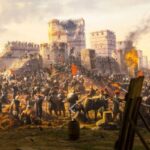
The Modern Age is the period of history between the conquest of Constantinople by the Ottoman Empire in 1453 d. C., and the beginning of the French Revolution in 1789. This historical period It is between the Middle Ages and the contemporary age .
This division of history corresponds to studies on the past of the West, focused on the development of European Western culture.
During the Modern Age political, economic and social transformations were given that differentiated European societies from their medieval predecessors. In this period, the power of centralized monarchies was consolidated that, during the following centuries, They became the main nations of Europe. Its enrichment allowed the exploration of other territories and the reactivation of commercial routes that connected the continent with the rest of the world.
During this period there were the conquest and colonization of America, the Lutheran reform, the beginning of the industrial revolution. In the cultural aspect, the movements of humanism, the Renaissance, the Enlightenment and the Baroque were disseminated.

Teporo-Spatial Location of the Modern Age
The Modern Age It is located between the fifteenth and eighteenth centuries . Some historians mark their beginning with the taking of Constantinople by the Ottoman Empire in 1453 and with it the end of the Roman Empire of the East. Other specialists take the year 1492 as a historical milestone that begins modernity, the year in which Columbus boats first arrived in America.
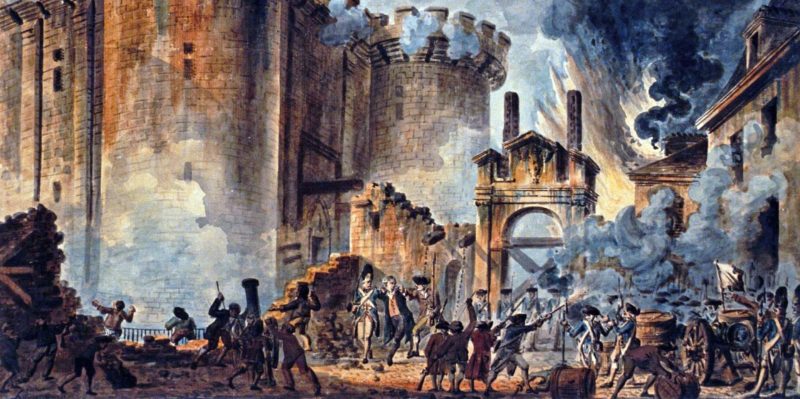
To establish the end of the Modern Age, most use the year 1789 with the beginning of the French Revolution. However, some authors prefer to locate the end of modernity in 1776, with the independence of the United States; Others argue that Spanish -American independence wars could be taken as the end of the time. From then on the contemporary age would begin.
These criteria differences are linked to the different areas of study within the Academy and with the meaning that different historical milestones to understand the changes and permanence that are developed from certain processes.
Modern Age in History
The historians of the eighteenth and nineteenth centuries They focused their studies on the western nations of Europe so this division of the universal history of Eurocentric or at least restricted to Western civilization has been accused.
In recent times, Studies on civilizations of different parts of the world have multiplied And, consequently, the uselessness of this periodization has been demonstrated to explain the history of non -European societies. However, in general terms it is still used since it allows us to recognize certain changes and permanence that occurred in the long term both in Europe and in the rest of the world.
Modern Age Characteristics
Historians consider that the transformations that occurred in Europe during the fifteenth and sixteenth centuries represented a breakdown of the feudal social order (characteristic of the Middle Ages) and therefore, they argue that since the end of the 16th century it can be spoken of a new era. In general terms, the following characteristics of the Modern Age can be differentiated:
- Temporary location . It passed between the fifteenth and eighteenth centuries, from the arrival of the Spaniards to America to the French Revolution.
- European periodization . Modern age as a historical period is used especially to study European political, economic and social processes. For other cultures, other periodizations are used.
- Political centralization . The European monarchies were strengthened and managed to impose itself on the lay and religious feudal lords. In addition, they sought to expand and encourage exploration to grow their kingdoms and enrich them with the conquered territories.
- Economic transformations . European societies crossed different economic changes linked to new forms of agricultural production, mercantilism, technical innovations and the beginning of the industrial revolution.
- Conquest of America . The conquest and colonization of America gave rise to the colonial regime in the continent, based on the oppression of American societies and the slave labor of Africans.
- Religious changes . The dissemination of the Protestant reform through Europe played the superiority of the Pope as a representative of God on earth and broke the unity of European Christianity.
- New ideas and artistic expressions . The transformations in the political, social and economic spheres allowed the emergence of new forms of thought and artistic expression, in which man and his knowledge about the world took a central place. In architecture, the Renaissance and the Baroque left a monumental imprint in the construction of the great palaces, basilicas and cathedrals.
Political changes of the modern age
In the Modern Age there were deep political transformations. During the Middle Ages, political power in Europe was fragmented among feudal lords; The monarchies depended on the resources and the protection of medieval knights to maintain unified kingdoms . Although they were nominally vassals of the kings, the feudal lords exercised their authority over the territory they controlled.
The 14th century crisis weakened the power of the feudal lords in their lands . In each country, this process occurred differently but, in general terms, the wars between the different lineages of the nobility, the loss of control over the peasants, the appearance of the bourgeoisie and the enrichment of the cities favored the concentration of power in the hands of the kings.
The modern monarchies had the following characteristics:
- Territorial integration . The monarchies were defined as states that controlled a marked portion of the territory, with border limits established through war and diplomacy. The monarchies coined their own real currency and eliminated tolls within the territory, to promote commercial exchange and economic activities.
- Absolutism . With the construction of real power, the idea that the king represented the whole society was spread. In addition, with the support of the Church a political order was legitimized that concentrated power and decision making in the real figure. In this system, institutions such as courts, parliament or the general states were important, which allowed the participation and expression of the needs of each group. However, decisions were exclusively in the hands of the kings.
- Bureaucracy . The state organization was made up of officials who formed a bureaucracy responsible for enforcing the laws, administering justice, collecting taxes and other administrative tasks for the kingdom. The noble and bourgeois were part of this bureaucracy.
- Diplomacy . The territorial organization of modern states led to redefining the borders between the kingdoms. Although territorial limits were often defined as a result of war, they were also established through diplomacy, through ambassadors that kings sent to other kingdoms. These ambassadors sought to improve the understanding and links between kingdoms and, in many cases, achieve marriage alliances between the different real dynasties.
- Army . The monarchies began to support their own armies, so as not to depend on the personal loyalty of the king’s lords and vassals. The soldiers were paid with real money and, in this way, they could be used for wars between different kingdoms or as an armed force to control internal rebellions.
- National identity . Modern states began to develop symbols that represented the cultural unity of their territories. Through shields and flags, they symbolized the union around real dynasties or cultural elements of the monarchy.
Economic changes of the modern age
After the fourteenth century crisis, Europe lived a period of economic recovery and commercial expansion that endured until the seventeenth century. The main elements of this growth were the following:
- Changes in socioeconomic relationships . As a consequence of the pests and famine of the fourteenth century, the depopulation of the field generated changes in the form of rural production and in the relations between the peasants and the feudal lords.
- Technical Innovations of Agricultural Production . The great availability of land allowed to dedicate greater extensions to the breeding of livestock and, consequently, the fodder cultivation for its food was introduced. In addition, innovations were introduced into agricultural tools, such as the me metal landfill (which allowed to open deeper grooves in the soil). The combination of these elements allowed greater performance of the land and, therefore, an increase in agricultural production.
- Changes in the productive relationship between the countryside and the city . The relationship between the countryside and the cities was energized: rural production offered more variety of foods in cities and part of textile manufacturing production moved to the countryside.
- Trade reactivation . Agricultural and manufacturing recovery activated short and long distance trade. The enriched peasants joined local markets, as sellers and as consumers. Since the fifteenth century, new trade routes were established that connected increasingly remote regions. Among the most important maritime routes, the Mediterranean route (which linked Europe with Asia) and the North Sea route (which linked the continental part of Europe with England) were revitalized. In turn, these routes combined with other land routes that crossed Europe in the four directions.
- Creation of commercial companies and banks . Commercial growth led to some merchants establishing networks of agents that acted in the different cities or commercial points. Thus, the first commercial companies or companies appeared. On the other hand, the use of different currencies in the different kingdoms or regions led to the emergence of the bankers, merchants who dedicated themselves to the exchange of money. Over time, banking activity differed from commercial activity, and bankers created loan systems, distance payments and exchange letters.
- Mercantilism . Between the fifteenth and seventeenth centuries, mercantilism was installed as a doctrine and as an economic practice. Europeans believed that economic wealth was based on the amount of precious metals, such as silver and gold. In addition, they argued that there was a finite amount of metals on the planet and, therefore, wealth could not occur, but that it existed in a certain amount and passed hand in hand. To be able to monopolize the riches, the different kingdoms sought to control metal extraction areas, reduce the import of manufacturing and promote manufacturing production of goods for export.
- Overseas expansion . Towards the mid -fifteenth century, several kingdoms began looking for maritime routes through which to be able to trade with the regions farthest from Europe. Constantinople taking through the Ottoman Empire had closed the main commercial route that connected Europe with the East. The empowered monarchies sought to expand the territories under their domain to increase their income through tax collection and, in turn, find valuable material resources such as gold or silver.
- Conquest and exploitation of America . In the context of European overseas expansion, the discovery was given and subsequently the conquest of America. The occupation and exploitation of the American territory by several European countries had fatal consequences for local societies. On the other hand, European countries were economically and politically benefited: they installed a system of exploitation and extraction of American natural resources through forced labor (slavery, parcel, mita, yanaconazgo and porting).
- Massive slave trafficking . Since the 16th century, an intense slave trade was developed, led by companies of European origin. Slaves were people captured in Africa, transported and sold as goods in America. In this trade, European and Arab merchants intervened, and also African kings sold prisoners of enemy peoples to slave traffickers.
- Colonial regime . In America, a regime cemented in forced labor was implemented for the economic and social conformation of the new political units, controlled by European monarchies. Through the colonization process (after the conquest and occupation of land of the different American peoples), the Europeans founded cities, installed permanent population and created a complex system of authorities that responded to the monarchies of origin.
- Industrial revolution . Since the end of the 18th century, a series of economic and social transformations linked to new forms of production began. Since 1760, in England, the industry began to incorporate new technologies and new ways of organizing work. The factories became the axis of the new system. Great portions of the peasant population, without properties or economic resources, moved to the cities and offered themselves as wage labor. This process of economic transformation, known as an industrial revolution, expanded throughout Europe and lasted more than a century. It had huge long -term consequences, which were consolidated during the contemporary age.
Religious changes of the Modern Age
The new power relations that were established in the Modern Age in conflict with the power, institutions and ideas of the Christian Church.
The medieval church was both a spiritual power (based on religious faith) as a temporary power, that is, political, social and economic. The Church as an institution possessed manors and properties on those who had rights and were worked by peasants.
In addition, he charged tithe: a tribute of the tenth of the income that all Christians had to pay . During the medieval era, the papacy became a political-territorial unit that controlled a large part of Italy and competed with the rest of the European monarchies.
In the sixteenth century, Numerous clergy began to criticize the Pope’s power over the Christian community ; both in its political aspect and in religious issues. From then on, and throughout the modern age, there were various movements that modified power relations and religious beliefs. Among them, they stand out:
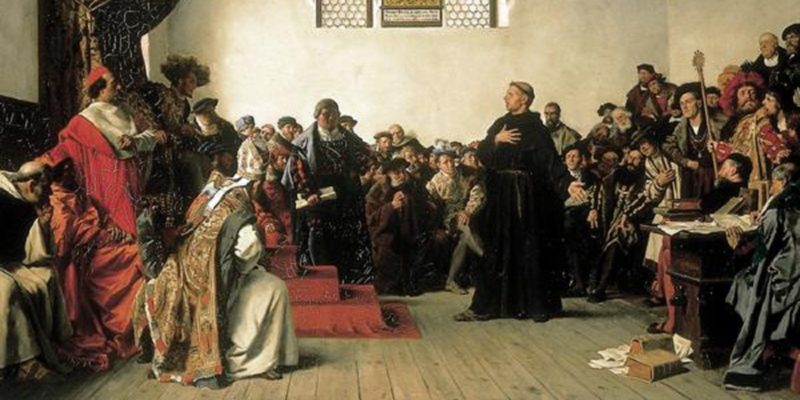
- Lutheran reform . In 1517, Martin Luther began a movement known as the “religious reform” that promoted a reform in the spiritual doctrine of the Church. Luther postulated that the relationship between God and the faithful should be direct and personal, dismissed the intermediation of the clergy and proposed the free interpretation of the Bible. In this way, he questioned the hierarchical order of the Church and denied the superior power of the papacy as a representative of Christ.
- Protestant movement . This movement had many followers, especially among the German nobility. In 1521, Emperor Carlos V expelled Luther for his ideas. Then, many noble supporters of the reform protested against this decision. Since then, the followers of the Lutheran reform were called “Protestants.” This conflict caused wars between the reformists and the imperial army that protected the ideas and power of the Catholic Church.
- Dissemination of reform . The criticisms against the Church expanded throughout Europe and different reformist movements arose. In France, Switzerland and Scotland, the reform was led by Juan Calvino, who argued that God had predetermined the salvation or conviction of each person, regardless of the actions he would carry out in this world. In England, King Henry VIII took advantage of the reformist movements and did not know the papal authority to found a national church in which the king was erected as the highest authority, even of religious affairs.
- CONFORMATION OF THE CONTRANFORM . As resistance to the reformist movements, the Council of Trent (1545-1563) was held, in which the internal restructuring of the Catholic Church was agreed among the high hierarchy clergymen of different parts of Europe. This process was known as the counter -reform and reaffirmed the doctrine of salvation through good works, the value of the sacraments and the hierarchical order of the clergy.
- Jesus Company Foundation . To strengthen Catholic beliefs, new religious orders were created, among which that of the Jesuits, whose main mission was to evangelize the peoples that did not share Christian beliefs. The Jesuits extended their influence especially in Asia and America.
- Debate on the status of Americans . With the Spanish conquest, the Church wondered about the nature of American people and debates were carried out around whether human or animal beings should be considered. Pope Paul III said they were human beings and prohibited them from being enslaved. However, all those who lived in the conquered territories were considered subjects of the crown. The mission of evangelizing them was established and the legal status of minors were attributed to them, the impossibility of making decisions.
- Evangelization of America . With colonization, the conversion of American people to Catholicism was imposed. The Pope gave the Catholic Monarchs the Patronagefrom which the monarchs could organize the Church in the American territories, appoint bishops and collect the tithe. In return, the Spanish crown promised to defend the Church, support the clergy and evangelize its subjects. Evangelization implied forced conversions and the breakdown of Americans and Africans slaves in America with their own beliefs and culture of origin. The ancient cults were replaced by Catholicism and forced them to receive baptism and practice Christian ceremonies.
- Religious syncretism. Many of Catholic representations and practices were reinterpreted by Americans and Africans, and resignified according to their own beliefs. In this way, there was a process of combination of elements of several cultures, which is known as “syncretism.”
Philosophical changes of the Modern Age

During the Modern Age and, especially from the Renaissance, the different philosophers and thinkers They focused the focus of their thinking on man . During the Middle Ages, God had been the center of all philosophical developments and was the core from which the world and human societies should be understood.
In the Modern Age new philosophical currents emerged that moved away from this perspective:
- Humanism . Humanist philosophers resumed the texts of classic literature and philosophy of Greek and Roman societies. From the works of Plato, Aristotle and other thinkers, they developed explanations and knowledge about the secular world, that is, they sought to give answers that were not based on religious ideas, but on observation and experimentation. They argued that there were no indisputable truths and proposed to reach knowledge through the debates and exchanges of ideas. Among its greatest exponents are Erasmus from Rotterdam, Tomás Moro and Machiavelli.
- Illustration . Between the seventeenth and eighteenth centuries, a new thought system based on the use of reason to understand reality and society was disseminated. The rationalists of the Enlightenment differentiated the sphere of the supernatural (related to God) and the sphere of the natural (linked to nature, man and all his creations). They considered that the things of the natural world could be observed and explained through reason. They rejected indisputable truths and proposed to understand the world through research and experimentation. The rationalist ideas arose with René Descartes and had their greatest exponent in Immanuel Kant. The characteristic work of the enlightened movement was the Encyclopedia edited by Denis Diderot and JLR d’Alambert. In the thought about society and politics, the works of Jean Jacques Rousseau, John Locke and the Baron de Montesquieu stood out.
Artistic changes of the Modern Age
In the Modern Age, the different branches of the arts lived a great impulse. Among the main artistic currents are:
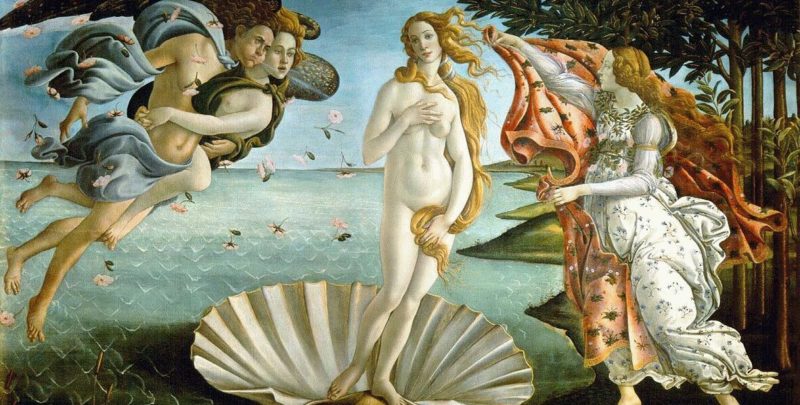
- Renaissance . It was an artistic movement linked to the recovery of the forms of classical culture of Greek and Roman origin. The Renaissance sought to move away from the medieval religious style centered on God. In painting and sculpture the human figure and its environment were highlighted, incorporating the perspective, curved lines and a more realistic representation. Among the main Renaissance artists are Boticcelli, Leonardo da Vinci and Miguel Angel.
- Baroque . It was a style based on movement, contrasts, sensitivity, color and monumentality. In architecture he was closely linked to the movement of the Catholic counter -reform and the monarchies of the seventeenth century. One of the most characteristic constructions is the Palace of Versailles.
- Rococo . It was an artistic movement linked especially to architectural decoration and painting. Proposed the love motives, the country parties, the aristocracy in nature and its palaces. In Architecture, one of the Cumbres del Rococó works was the Palacio de Sansouci.
References
- Tenenti, A. (2003). The Modern Age. XVI-XVILL centuries. Critical Editorial
- Bennasar, B., Jacquart, J., Blayau, N., Denis, M., & Lebrun, F. (2005). Modern history (Vol. 8). Akal editions
- Dominguez Ortíz, A. (1992). Universal History. Modern Age Editorial Vicens Vives