
We explain what a neuron is and what its main functions are. Also, the types that exist and what their structure is like.
What is a neuron?
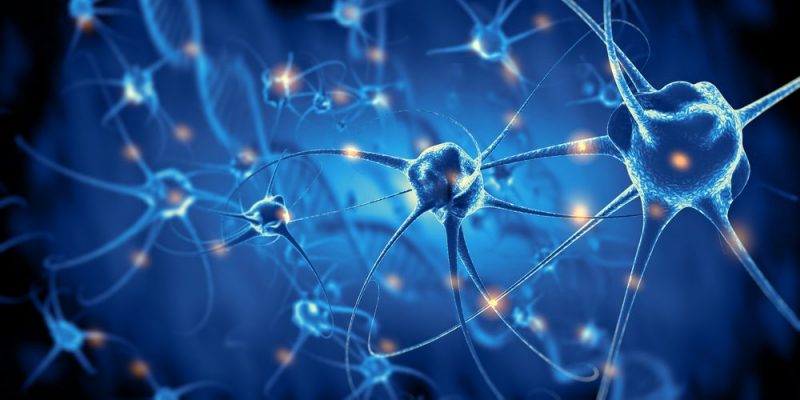
It is known as a neuron (from the Greek neuron“crow” or “nerve”) to a highly specialized type of cell which makes up the nervous system, responsible for controlling the voluntary and involuntary functions of the body.
The neurons are characterized by their electrical excitability which translates into the ability to conduct nerve impulses throughout the immense network of the nervous system, also transmitting them to other cells, such as muscle cells.
They are particularly abundant in the brain, reaching the figure of 86 x 109 cells in humans which can vary according to the animal species (fruit flies have 300,000, certain nematode worms barely 300).
The neurons of an adult individual, in addition, do not usually reproduce, but they continue to be created in the brain from stem cells and progenitor cells, in only two locations in the brain: the subgranular zone (SGZ) of the hippocampus and the subventriuclar zone (SVZ). ), in a process called neurogenesis.
This does not mean that the entire neuronal network is replaced or restored, nor that it can cope on its own with diseases that deteriorate it, since the new neurons deal with very specific matters, such as smell.
The neurons are not the only nerve cells however. The glial cells (astrocytes and Schwann cells) share the nervous system with them.
Functions of neurons
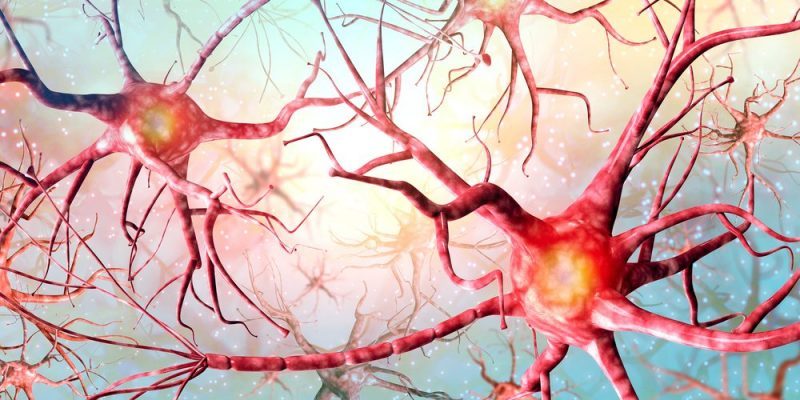
Neurons play the role of messengers and communicators of the organism. are capable of transmitting nerve impulses to other cells in the body like the muscular ones, and generate movement; to perceive and communicate external stimuli and convert them into an organized reaction, such as when faced with cold, heat, danger, etc.; or to keep a message running in a neural network, thus allowing the storage of information in memory.
This occurs thanks to the electrical transmission between these cells, through the use of sodium and potassium ions, among other chemical elements that pass from one cell to another. The speed of this transmission is such that it takes an impulse about 18.75 milliseconds to travel the distance from the toe to the brain, in an adult human being.
Types of neuron
There are many ways to classify neurons. The main three are:
- According to its shape and size Neurons may look like this:
- Polyhedral With a specific geometric shape.
- Fusiform Appearance similar to cylindrical muscle cells.
- Starry In the shape of a star or spider, that is, with many limbs.
- Spherical Round in shape.
- Pyramidal Pyramid shaped.
- According to its function Judging by the role they play in the nervous system, we can talk about:
- Motors. Those that are linked to movement and muscular coordination, both conscious and reflex.
- Sensory. Those linked to the perception of stimuli coming from outside the body through the senses.
- Interneuronal. Those that connect various types of neurons together and allow neural networks, thus giving rise to complex thinking, memory, etc.
- According to its polarity Depending on the number and arrangement of their electrical terminations, they can be:
- Unipolar Its axon is a single bifurcated extension.
- Bipolar. With the nucleus in the center, they have a long axon and dendrite that tend to opposite ends.
- Multipolar. They have a long axon and multiple dendrites that allow many simultaneous connections.
- Monopolar. They have only one dendrite divided in two and directed to opposite ends, which is why they are considered false unipolar.
- Anaxonic Extremely small, they do not distinguish their axons from their dendrites.
structure of neurons
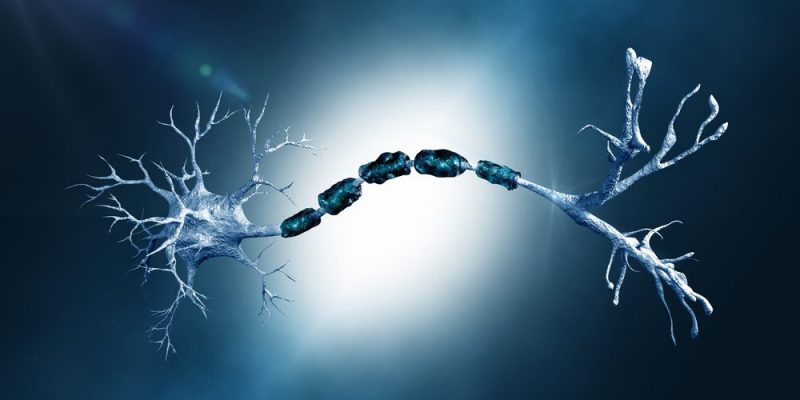
Neurons have a defined morphology that is made up of four parts:
- Core Where the genetic information of the neuron is found, it usually occupies a central and very visible position in it, especially in younger specimens.
- Pericarion The space that surrounds the nucleus and makes up the cell body, in which the various organelles of the neuron are found, such as free ribosomes, the rough reticulum, the Golgi apparatus, etc.
- Dendrites These are extensions of the cell's cytoplasm, wrapped in a plasma membrane devoid of myelin, abundant in organelles and vesicles that allow interconnection and synapses.
- Axon It is a tubular extension of the body of the neuron, covered with myelin and abundant in microtubules, which allows the passage of electrical stimulation from one end of the cell to the other. At the end of the axon there are a series of terminals that allow it to physically connect with other neurons and cells of other types.
Neurons and synapses
The synapse process occurs when neurons communicate with each other or with some other cell (such as muscles to generate movement or glands to secrete hormones), thus activating or deactivating certain processes in the body.
This occurs through the transmission of a nerve impulse that is, the segregation by the emitting cell of a chemical discharge in its membrane, which causes an electrical discharge perceived by the axon of the neuron. This, in turn, secretes chemical compounds called neurotransmitters, which are perceived by another intermediate neuron and thus a chain continues that takes a total of fragments of a second.


