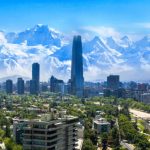
We explain everything about Peru and its physical and cultural characteristics. In addition, how is its economy, religion and the history of this country.
Peru
Peru is a national state whose official name is Republic of Peru . It is located in South America and limits to the north with Ecuador and Colombia, to the east with Brazil and Bolivia and to the south with Chile.
Has a total extension of 1,285,000 km2 and a population of more than 32 million inhabitants . Its capital is the city of Lima.
Peru is divided into 24 provincial states called “departments” and the Constitutional Province of Callao . The most populated departments are Lima, where their capital, Piura and La Libertad is located. Its government regime is democratic and presidentialist, and the gentilicio of its inhabitants is “Peruvians.”
Like most Latin American countries, Peru was a Spanish colony, so the official and most spoken language of the country is Spanish . However, in some Andean regions of Peru indigenous languages such as Quechua and Aymara are spoken.
It is a country with a great Inca tradition which maintains even today since most of its inhabitants are descendants of native peoples of America. It also has a great diversity of climates, vegetation and fauna which makes Peru a country with varied tourist attractions.
Why is it called “Peru”? It is believed that the name Peru comes from the word Birúwhich in Guaraní means “river.” Other theories argue that it could actually come from the term Aimara Piruw which means “land of wealth” or “land of abundance.”
See also: Inca civilization
Characteristics of Peru
Some characteristics of this country are:
- Its population is 32 million inhabitants.
- It covers an area of 1,285,215 square kilometers.
- It has a population density of 24.8 inhabitants per square kilometers.
- Its capital is the city of Lima, which has 9,600,000 inhabitants.
- Its official language is Spanish.
- Christianity is its main religion.
- It has three predominant climates: warm and dry in coastal areas, cold in mountainous and warm, and humid areas in the Amazonian plain.
- In its territory is Lake Titicaca, the highest height worldwide, located at 3812 meters above sea level.
- It is crossed longitudinally by the Andes mountain range.
- Its main economic activities are agriculture, mining, fishing, industry and tourism.
Extension, population and capital of Peru
Peru has an extension of 1,285,215 square kilometers so it is the third most extensive country in South America after Brazil and Argentina. It has a population of 32,650,000 inhabitants, and a population density of 24.8 inhabitants per square kilometer.
It is divided into 24 departments and a special departmental unit called the Constitutional Province of Callao . The most populous department, with more than 10 million inhabitants, is Lima, where the capital of the same name is located.
The less populated department, but at the same time one of the most extensive, is the mother of God, in the east of the country, which has more than 85,000 square kilometers of surface but only 187,000 inhabitants.
The most populated cities in the country are its capital Lima (9,600,000 inhabitants), Arequipa (1,100,000) and Trujillo (1,000,000).
Climate, relief and hydrography of Peru

Peru’s climate can be divided into three zones:
- The coastal region which has a warm arid climate, with very high temperatures, summer and fresh winters and very low rainfall that does not exceed 200 mm per year.
- The mountainous region which has a cold climate influenced by the altitude of the Andes mountain range.
- The Amazon region which has an equatorial, very warm and rainy climate.
As for the relief, they stand out:
- The coastal plains . They extend along the coast on the Pacific Ocean. They are low and undulating lands that are characterized by receiving few rainfall.
- The Andes mountain range. It crosses the country in a longitudinal direction and has a variety of mountainous chains, volcanoes and highlands. Its highest peaks are the snowy of Huascarán, with 6768 meters high and the Montes Yerupajá (6634 meters) and Coropuna (6425 meters)
- The inner plain. It is where a sector of the Amazon jungle is located, where a part of the Amazon river basin passes. They are low and undulating lands that are covered by tropical humid forests and are crossed by extensive and caudalous rivers.
The hydrography of Peru is characterized by having short and little caudalous rivers that are born in the Andes and flows into the Pacific Ocean, and very extensive and mighty rivers that are also born in the mountain range but flow to the east.
The most extensive rivers are part of the Amazon River basin, which covers more than 70 % of the Peruvian territory. The Purus and Yurúa rivers, tributaries of the Amazon River, are the largest rivers in Peru with more than 3000 kilometers long.
Flora and fauna are conditioned by the climate and relief of the country. In the coastal areas, desert vegetation predominates like cactus and animals such as guanacos and foxes, adapted to the lack of water.
In mountainous regions flora and fauna are adapted to cold and oxygen scarcity : The Raimondii Puya, a typical plant of Peru, grows in the Andes and the Andean Condor and the Vicuña are some of the typical animals of this region.
The vegetation and animals of the Amazon plain are typical of the jungles with a great diversity and variety of animals and plants that develop in these environments thanks to the abundance of rainfall and heat throughout the year.
Lake Titicaca, shared with Bolivia, is the highest lake in the world, with an average altitude of 3812 meters above sea level. In addition, it is one of the most extensive lakes in South America, with 8300 square kilometers of surface. Because of its landscape beauty, it also constitutes one of the main tourist attractions of the country.
Culture of Peru

About 90 % of the inhabitants profess the Catholic religion established as the official religion in 1915. However, Peru allows the religious freedom of choice of its inhabitants, so they can find practitioners of other religions (Protestants, Jews and Muslims).
The majority of Peru’s inhabitants are descendants of native peoples of America . There is also a high percentage of mestizos and immigrant population in Europe, China and Japan.
The official language is Spanish although there are many native languages among which Quechua and Aymara stand out.
The culture of Peru is influenced by the different indigenous, European, African and Asian traditions . Peruvian music covers a wide variety of styles and rhythms: one of the most emblematic genres is Huayno, originally from the Peruvian Andes. Another important style is the sailor, considered the national dance of Peru.
As for literature, one of the greatest referents of Peruvian and Latin American literature is Mario Vargas Llosa, recognized internationally and awarded the Nobel Prize for Literature in 2010. Other outstanding Peruvian writers include César Vallejo and José María Arguedas, already writers such as Clorinda Matto de Turner and Magda Portal.
One of the most representative dishes of Peruvian cuisine is ceviche made with fish or fresh seafood marinated in lemon juice. Other iconic dishes include chicken, anticucho and stuffed rocoto.
One of the largest Japanese communities in the world outside Japan is found in Peru. Japanese immigration in Peru began at the end of the 19th century and the beginning of the 20th century, with a significant flow of Japanese who arrived in the country in search of economic opportunities. During that period, many Japanese settled in Peru and formed numerous institutions such as schools, cultural and religious associations, which have contributed to preserving Japanese identity and traditions.
Homeland symbols of Peru

The national symbols of Peru are:
- The Flag of Peru . It is formed by three vertical bands, two side reds and a central white. In the center is the national shield. It was adopted in 1825.
- The National Anthem of Peru . His lyrics were composed of José de la Torre Ugarte, and his music by José Bernardo Alcedo. He was adopted as a national anthem in 1821.
- The Coat of Peru . It shows three central images: a yellow vicuña on a celestial background, a green quina tree on white background and a horn of abundance with yellow gold coins on red background. It is surrounded by red and white flags and a green crown.
Economic Activities of Peru
The most important economic activities of Peru are:
- Agriculture . It is one of the main economic activities in Peru. The production of corn, wheat and potatoes stands out.
- Mining . It represents one of the most important economic sectors in the country. Peru is one of the main world producers of copper, gold, silver, zinc and tin.
- Fishing . With more than 3000 kilometers of coast, it is a very important activity for the Peruvian economy.
- Industry . The food and beverage industry is the most important in the country. They are followed by petrochemicals, textile and paper.
- Tourism . The tourist activity is in marked growth in Peru in recent years. The historical sanctuary of Machu Picchu is the most visited site in Peru by tourists around the world. Lake Titicaca and the cities of Cusco, Iquitos and Lima are also important tourist centers in the country.
The official currency of Peru is the Peruvian Sun and its main commercial partners are China, the United States, Brazil, Switzerland and Mexico.
History of Peru

In the current territory of Peru, various pre -Hispanic societies inhabited, such as Chavín and Huari cultures. The last important pre -Hispanic political entity was the Inca Empire that in the fifteenth and sixteenth centuries an extensive territory focused on Cuzco that reached Ecuador in the north and Chile in the south.
The Spanish conquest of Peru, directed by Francisco Pizarro, began in 1531 and concluded with the defeat of the Inca Atahualpa in 1533. Shortly after the Viceroyalty of Peru was created, with capital in Lima. Spanish domination ended in 1824 when the realistic troops were definitely defeated by the patriots in the battle of Ayacucho, three years after the declaration of independence (1821).
The first years of Independent Peru were characterized by conflicts between leaders. In 1845, General Ramón Castilla accessed the presidency and, under his mandate, some institutional stability was achieved and Guano exports were promoted.
The growing discontent with military governments motivated the foundation of the Civil Party, formed by landowners, which led Manuel Pardo (1872-1876). Between 1879 and 1883, in addition, the Pacific War occurred, in which Peru and Bolivia were defeated by Chile and lost territories rich in nitrate deposits.
In 1895 Nicolás de Piérola arrived at the presidency, who applied economic reforms, and between 1908 and 1912, Augusto Leguía ruled. Leguía returned to the Presidency in 1919 and promoted a new Constitution, but in 1930 he was overthrown by a coup d’etat. Then military and civil governments alternated.
In 1968 another coup d’etat triumphed that inaugurated the dictatorship of Juan Velasco Alvarado, who promoted an agrarian reform and the nationalization of companies. However, in 1975 there was a new blow that turned back with some of these measures. In 1980 elections were held and the guerrilla activity of the Luminous Sendero organization began.
In 1990, the presidency Alberto Fujimori, who implemented some liberal measures and, in 1992, gave a self -golpe with which he suspended the Constitution organisms intervened and arrested several opponents. Fujimori continued in the presidency until 2000 and, since then, various constitutional presidents followed.
Continue with:
References
- Peruvian – Japanese Association (SF) Historical review. Japanese immigration museum to Peru. https://www.apj.org.pe/
- Bordino, J. (2022) Flora and fauna of Peru. https://www.ecologiaverde.com/
- Ministry of Foreign Affairs (2023) Peru. Country record. Diplomatic Information Office of Spain. https://www.exteriors.gob.es/
- Ministry of Agrarian Development and Irrigation of Peru. Basins and Hydrography. https://www.midagri.gob.pe/