
We explain what a problem is, its types, and the characteristics of social, economic, environmental and research problems.

What is a problem?
We all know, in one way or another, what it's like to have a problem, even though it can be difficult to define it in the abstract. If we go to the dictionary, we will see that it defines problem as “a question that is being clarified”, “a questionable proposition or difficulty in solving” or “a set of facts or circumstances that make it difficult to achieve some goal”. Three different definitions but that serve to draw some important coordinates.
First of all, problems are facts and circumstances, or propositions or issues that have to do with them; and secondly, that they require a clarification or solution, in order to achieve an ultimate goal. That is to say that, In abstract terms, a problem is a question in need of an answer. .
All sciences and disciplines study the world by posing problems that is, questions that require the elaboration of an answer, despite the fact that they deal with very different areas of knowledge. Thus, logically there are problems of all kinds: scientific, methodological, philosophical, mathematical, and an immense etcetera.
Types of problems
Beyond their classification by theme, when thinking about the problems in the abstract, a difference is possible between:
- Convergent problems. Also called logical or structured, they are problems that have a single defined and concrete solution, even though it can be obtained through very different procedures. Its name is due to the fact that these procedures, in the end, converge on the same answer, which would be the ideal or suitable solution. These types of problems are typical of the exact sciences, mathematics, chess, astronomy, etc.
- Divergent problems. If in the previous case all the methods converged towards the same solution, in this case the opposite happens: the methods diverge and yield different solutions, often contradictory to each other, since in these cases linear logic does not work. Generally, these are problems whose solution requires an external element, something that is not initially contemplated and that may be of a very different nature, that is, more or less creative solutions.
On the other hand, we can also differentiate between:
- Deductive problems. When they are logically derived from a set of previous premises. That is, when they have a clear and logically deducible origin.
- Inductive problems. When the logic that originates them tends rather to the probabilistic, to the uncertain, without having a unique cause or recognizable logic.
Social problems

Social problems are those that concern the members of a specific society often as a consequence of factors far beyond the control of an individual or a small group of them.
These are problems that impact the individual and economic lives of citizens and which are usually attempted to be remedied through political mechanisms. Examples of social problems are: social inequality, discrimination, public health, mass migration or social immobility.
Economic problems
The economic problems are those that are related to the world of production, finance and consumption that is, with the economy. They generally have to do with the distribution of wealth and consumption opportunities, within the framework of the great central problem of the economy, which is summarized in that “resources are finite, and needs are infinite.”
Consequently, rational planning is required to try to make the most of available resources, knowing that they are never completely sufficient anywhere.
The economic problems They tend to trigger other types of problems, such as social or political ones. and are central to the stability of government systems. Examples of economic problems are: unemployment, currency devaluation, inflation, economic depression or a fall in consumption.
Continue in: Economic problems
Environmental problems
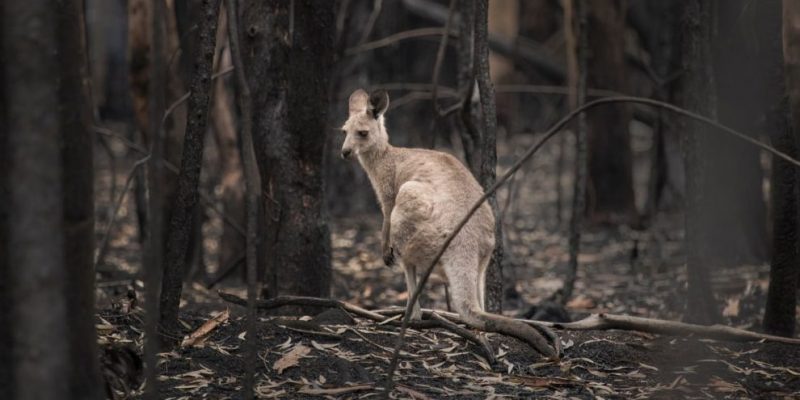
Environmental problems are those that pose some level of damage to the environment that is, a greater or lesser degree of alteration of the physical, chemical and biological conditions inherent to nature.
Unfortunately, these types of problems seem to be intrinsic to human industrial activity, and in some cases they can be extremely serious, resulting in permanent damage to the ecosystem or large-scale changes that threaten, paradoxically, the lives of everyone. living beings, even the humanity that causes them.
Environmental problems They can be reversible or irreversible depending on the time it takes for nature to regain balance and repair the damage caused. They involve different forms of pollution of air, water and soil, as well as the destruction of the natural environment for economic or industrial purposes.
Examples of environmental problems are: deforestation, indiscriminate hunting of species at risk of extinction, the destruction of ecosystems and the impoverishment of global biodiversity, atmospheric pollution and global warming, or the acidification of sea waters.
Research problems
When carrying out research, both in the exact sciences and in the humanities or social sciences, The first step lies in defining the problem to be addressed. that is, finding the question to which answers (that is, solutions) will be sought. Only by choosing the problem well (although this may sound strange) can the path that leads to the desired solutions be chosen.
In methodological language, this stage is called “problem statement,” and it is usually associated with the question what thing? either what matter?in the sense that researchers must be able to explain what they are interested in, and be able to delimit the topic. In other words: you must choose which question to try to find the solution to.
Research problems can be as diverse as the researchers' interests. Each investigation will address and cover them within the framework of the parameters that they themselves establish. : To what extent will this or that phenomenon be studied? under what specific conditions? What type of solutions will the research point to?
References
- “Problem” in the Dictionary of the language of the Royal Spanish Academy.
- “Problem solving” on Wikipedia.
- “Theory of problems” on Wikipedia.


