We explain what protozoa are, how they originated and their characteristics. Also, its classification, reproduction and examples.

What are protozoa?
Protozoa or protozoans are called a group of Microorganisms found in humid or aquatic environments and which could be considered microscopic animals. However, in some biological classification systems they form their own kingdom called Protozoa; and in other cases they are part of the Protista Kingdom, since they are considered the first evolutionary step of eukaryotic beings, prior to the existence of the animals, plants, fungi and algae that we know.
Traditionally, however, protozoans are considered primitive single-celled animals : hence its name, a union of the Greek words protos, “first”, and zoo, “animal”. This is because they are heterotrophic (they must consume organic matter) and are equipped with voluntary movement. There is currently scientific debate regarding its correct classification in the different branches of the tree of life.
Most protozoa can be seen with a microscope, since Its size ranges between 10 and 50 micrometers and around 300,000 species of them are known, along the various rungs of the microscopic food chain: herbivores, decomposers, predators and parasites. Many of them are capable of infecting and making humans sick.
Origin of protozoa
It is thought that protozoa have been on our planet for about 1,630 million years, since their initial appearance in the Mesoproterozoic period. Its origin coincides with the emergence of the first eukaryotic cells that is, with a defined cell nucleus, and with the subsequent inauguration of a broad category of living beings.
Various theories try to explain this passage from the simple and primitive world of prokaryotes to that of eukaryotes, and one of the most accepted has to do with a process of endosymbiosis between two prokaryotic organisms. Those first eukaryotic organisms were, precisely, the first protozoa in history.
Characteristics of protozoa

Protozoans are an extremely diverse group, whose fundamental characteristics are:
- Microscopic size and varied shape Most protozoa measure between 10 and 50 micrometers, but some species can grow to a millimeter or more. Their shapes, however, range between amorphous (like the amoeba) or elongated and oval in shape (like the paramecium).
- are unicellular organisms Your entire body is a single cell, equipped with various organelles and structures that fulfill nutritional, mobile, etc. functions.
- have their own mobility And they move through flagella, cilia or the elongation of their cytoplasm, as if they were “fingers”.
Classification of protozoa
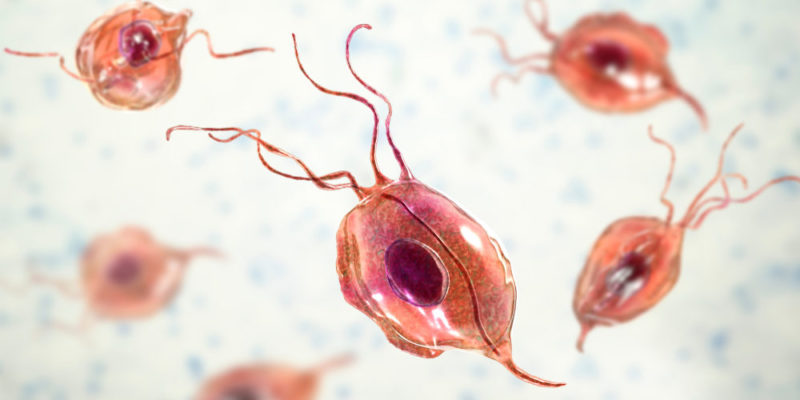
The traditional classification of protozoa distinguishes between the following types:
- Rhizopods They are characterized by their movement through pseudopodia, that is, the formation of protuberances of their cytoplasm and plasma membrane, projecting them towards where they want to move. These projections also serve to capture food and introduce it to the cytoplasm (phagocytosis), either preying on other organisms or assimilating organic waste matter.
- Flagellated Cells equipped with one or more flagella, which is the name of the “tails” with which they propel themselves forward in the environment.
- Ciliates Its plasma membrane is surrounded by cilia, that is, filaments smaller and more numerous than the flagella, which also serve to mobilize.
- Sporozoans Parasitic protozoans without much mobility, which have a multiple division phase known as sporulation: a type of asexual reproduction that consists of producing spores or endospores, resistant structures that generate a new identical individual.
Reproduction of protozoa

Protozoa can reproduce sexually and asexually, depending on environmental conditions and their life cycles. They tend to do it abundantly, which is key to their biological and evolutionary success. Its main reproduction methods are:
- Binary division (asexual) A process of cell fission after mitosis (genetic replication), which consists of one cell dividing into two and generating new individuals identical to it and to each other.
- Budding (asexual) A protozoan generates an identical copy of itself, within a resistant structure that remains with its parent and can even survive it during difficult periods. Eventually, that structure (gem) is reactivated and brings back to life a specimen identical to the parent.
- Sporulation (asexual) The original protozoan fragments into a set of spores or endospores, which withstand environmental changes and then give rise to entire individuals.
- Cell fusion (sexual) Protozoa generate gametes or microgametes inside, which allow them to unite and form a zygote, mixing their genetic materials and obtaining in exchange a new, original individual with greater genetic variety. This process can be total or partial, and is usually carried out in periods of resource abundance.
Diseases caused by protozoa

Some species of protozoans are harmful to humans and have adapted to parasitize their bodies, causing diseases such as:
- Malaria Also called “malaria”, a genus of protozoa called malaria is responsible for it. plasmodium. Its symptoms are high fevers, chills, sweating, headache, as well as nausea, cough, bloody stools, muscle pain, jaundice, and worsening with shock, kidney or liver damage and death.
- Amebiasis This is a common intestinal infection, caused by the presence of pathogenic amoebae (there are free-living and non-pathogenic ones as well) in the intestine or digestive tract of a person. These protozoa cover the intestinal wall and hinder the absorption of nutrients, causing diarrhea of varying degrees.
- Toxoplasmosis Caused by protozoa of the genus toxoplasmawhich are transmitted to humans through contact with infected cats and other types of felines, or with infected animal or human feces. Its symptoms are confused with those of the flu, but it also causes inflammation of the lymph nodes, spleen, liver and cysts in the tissues, being its greatest danger in pregnant women, since it affects the fetus causing malformations and other problems.
Examples of protozoa
Some common protozoa are:
- Paramecium A free-living, oval-shaped, fast-moving ciliated protozoan.
- Giardia Parasitic protozoan that invades the human intestines, causing foul gas, inflammation and diarrhea.
- Amoeba A genus of predatory protozoans, which may or may not parasitize other multicellular living beings, or live freely in aquatic spaces.
- Trichomonas Another genus of parasitic protozoa, which invade the vagina and are transmitted sexually, causing foul secretions, itching and pain when urinating, and even risk of premature birth.
References
- “Protozoan” on Wikipedia.
- “Protozoa” in Online Teacher.
- “Protozoa” in Ambientum.
- “Protozoa” in Medical Microbiology (Baron, S., editor) in National Center for Biotechnology Information.
- “Protozoan” in The Encyclopaedia Britannica.