We explain what rationalism is, its characteristics and representatives. Also, differences with empiricism and humanism.
What is rationalism?
Rationalism is a philosophical movement that promotes reason as the main faculty of knowledge . It emerged in the Modern Age, specifically in Europe in the 17th and 18th centuries, and is usually considered the movement contrary to empiricism, for which sensitivity took precedence over reason.
rationalism defends the idea that human knowledge comes from reason and our ability to reason. This in itself constituted a substantial change in thinking with respect to the Middle Ages, a time in which religious faith fulfilled that role.
History of rationalism
rationalism arose from certain cultural changes that occurred in the West during the Renaissance and the end of the Middle Ages.
These changes had to do with the emergence of different interpretations of the sacred books of monotheistic religions, especially Christianity and Judaism. The idea of divine truth as a criterion of truth for the sciences began to be questioned . However, it is possible to trace the antecedents of rationalism in Ancient Greece, in the theories of thinkers such as Plato and Aristotle.
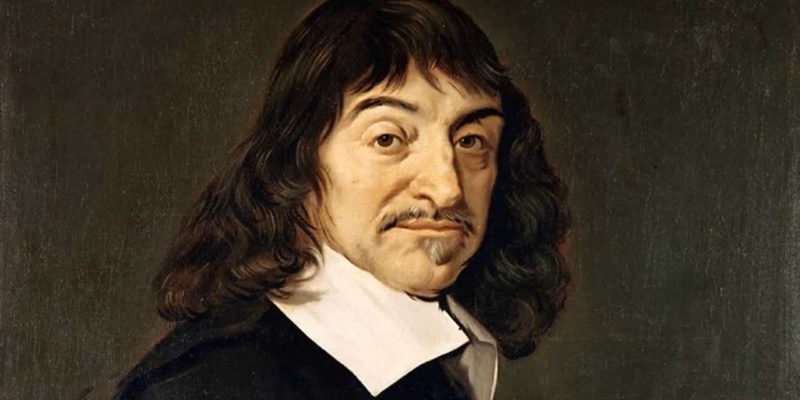
Traditionally René Descartes (1596-1650) is considered the founder of this movement . His famous expression “I think, therefore I am”, known as the cogito Cartesian, fully represents the metaphysical postulates of rationalism.
Philosopher, mathematician and physicist, Descartes was a great admirer of geometry and mathematics, sciences that he considered role models for all forms of philosophy. He aspired to turn philosophy into a scientific discipline, provided with a method, since, in his opinion, certain universal truths could only be found through reason.
The dream he had about it is famous, as we can know thanks to his diaries and notes. He dreamed of a dictionary and a poetic anthology, the Corpus Poetarum . When he woke up he came to the conclusion that the dictionary contained all the sciences together, including poetry, which was only possible by combining all the words in the other book. From there arises his idea of the unity of science, as well as its universality and the idea that all knowledge is at the base of the tree of science.
In your Discourse of the method (1637), proposed four rules for all philosophical investigation:
- Evidence . It consists of considering as true only what is self-evident. This will be the germ of hyperbolic doubt as a method to find the truth.
- Analysis . It consists of dividing each of the topics into as many parts as possible until you find the simplest elements. These elements will be true if they can be grasped through an immediate and evident intuition.
- Synthesis . It consists of finding complex truths from the simplest truths.
- Enumeration . It consists of reviewing each of the steps carried out until you are sure that you have not omitted any or made any deduction errors.
The Metaphysical meditationswhose full title is Metaphysical meditations in which the existence of God and the immortality of the soul are demonstrated (1641), are considered as the metaphysical explanation and justification of the method. in this book Descartes tried to find a guarantor (God) for rational knowledge first, and for all types of knowledge, later. Originally written in Latin, a French version was printed in 1647 under the supervision of Descartes himself.
Other philosophers, contemporary and after Descartes, are also considered representatives of rationalism. Some of them were the Dutch Baruch Spinoza (1632-1677) and the Germans Gottfried Wilhelm Leibniz (1646-1716) and Christian Wolff (1679-1754).
Characteristics of rationalism
Rationalism is characterized by the following general ideas:
- Hold reason and thought as the source of all human knowledge.
- Believe in nativism. In the human mind or spirit there are preconceived ideas, born with him or put there by God.
- Use logical-deductive methods to explain empirical reasoning and confirm them when possible.
- Play a fundamental role in the advent of secular (and anti-religious) thought.
Its main defenders thought and lived in France, Germany and other countries in continental Europe, opposed to empiricism coming from England.
Representatives of rationalism

The main representatives of rationalism were:
- Rene Descartes (1596-1650). Philosopher, mathematician and physicist of French origin, father of analytical geometry and modern philosophy, he was one of the great names of the Scientific Revolution, whose work broke with the scholasticism that prevailed until then. Together with Spinoza and Leibniz, he makes up the trio of the greatest rationalists in history.
- Blaise Pascal (1623-1662). French mathematician, physicist, theologian, philosopher and writer, he not only contributed theoretically to natural sciences and natural history, but practically to all sciences. He is one of the pioneers in the construction of mechanical calculators.
- Baruch Spinoza (1632-1677). Dutch Jewish philosopher, he is considered one of the great rationalists of the 17th century. His work was harassed by Catholicism and forgotten until its rediscovery in the 19th century. Later philosophers such as Hegel and Schelling proclaim him as the father of modern thought.
- Gottlieb Leibniz (1646-1716). Of German origin, this mathematician, theologian, jurist, librarian, politician and philosopher was one of the great thinkers of his time, to whom the title of “last universal genius” is conferred. His contributions in all the aforementioned areas are significant, so much so that even his detractors deeply admired him.
Rationalism and empiricism
The two philosophical aspects that followed skepticism They were rationalism, in favor of giving human rationality a central place in learning, and empiricism, which proposed giving that place to experience and the world of the senses.
These two models opposed each other throughout the Modern Age and they constituted the philosophical poles of the West, fathers of the later and elementary philosophical schools in the development of scientific thought as we understand it today.
Rationalism and humanism
The rationalist movement has similarities with humanism at least in its secular version, because it considers human reason as the only true path to the truth of things. Thus, rationalism displaced the religious faith that had prevailed in Western thought during the Middle Ages.
This displacement allows the emergence of philosophical thought outside religion which is also central to the doctrine of humanism, whose central objective was to place the human being, and not God, at the center of the world. This does not mean that rationalism has necessarily been atheistic, since it does not rule out or affirm a priori the existence of God. In fact, many thinkers, such as Descartes or Leibniz, placed God as the guarantor of reason when acquiring knowledge.
For its part, Secular humanism proposed a revaluing and dignified vision of the human being for which a rationalist, skeptical vision is fundamental, although the ethical question of the human being is also important. In this way, not every rationalist is necessarily a humanist, even when these currents have many theoretical points in common.
What does rationalism mean today?
The term “rationalism” nowadays has acquired other connotations: it is used to refer to any philosophical position that gives reason a central place above faith, superstition, or other forms of thought . Idealism, cognitive philosophy, and humanism are examples of cases in which the use of the term rationalism is applied with this connotation.
References
- Verneaux, R. (1999). General epistemology or criticism of knowledge. Herder.
- Fraenkel, Carlos; Perinetti, Dario; Smith, Justin EH (eds.). (2011). The Rationalists: Between Tradition and Innovation. Springer.
- Pereboom, D. (ed.). (1999). The Rationalists: Critical Essays on Descartes, Spinoza, and Leibniz. Rowman & Littlefield.
- “Rationalism / Empiricism” in the Soviet Dictionary of Philosophy.
- “Rationalism vs. Empiricism” in Stanford Encyclopedia of Philosophy.
- “Rationalism” in The Encyclopaedia Britannica.