We explain how fungi reproduce and the characteristics of these living beings. Also, how is their sexual and asexual reproduction.
How is the reproduction of fungi?
Fungi are eukaryotic living beings belonging to the kingdom Fungi. Here, yeasts, which are unicellular, and molds and mushrooms, which are multicellular, are grouped together.
These organisms are characterized by being immobile heterotrophs (decomposers of organic matter) and for having cells with a cell wall of chitin (instead of cellulose, like plants). All this differentiates fungi from plants and animals.
Fungi can live in extremely diverse habitats, including deserts or bodies of water. Some are free-living, others are parasites from different organizations and others establish symbiotic relationships with plants, animals or algae.
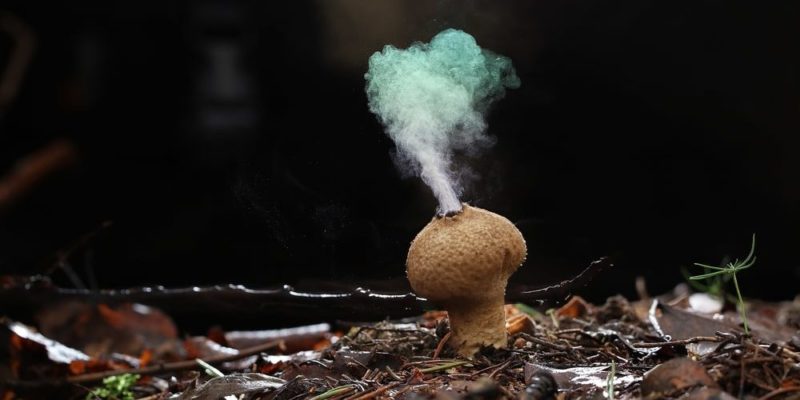
Most mushrooms reproduces both asexually and sexually throughout its life cycle . Generally, by one mechanism or another, fungi produce spores, which are germ cells that give rise to new individuals.
Spores can be dispersed by air, water or animals, and can remain dormant for a long time, waiting for environmental conditions to be conducive to their germination. That is why spores are said to be resistance structures.
When a spore germinates, a first filament called a “hypha” grows. An interwoven mass called mycelium is gradually built from it, which is a set of hyphae of the same type. A fungus may have a single mycelium or several types of mycelia, as it undergoes the phases of its life cycle.
Fungi are classified into four phyla according to their morphology and life cycle: chytridiomycetes (Chytridiomycota), zygomycetes (Zygomycota), ascomycetes (Ascomycota) and basidiomycetes (Basidiomycota). Those that do not have a known sexual phase in their life cycle are grouped under the name “imperfect fungi” or Deuteromycota.
See also: Fungus
Asexual reproduction of fungi
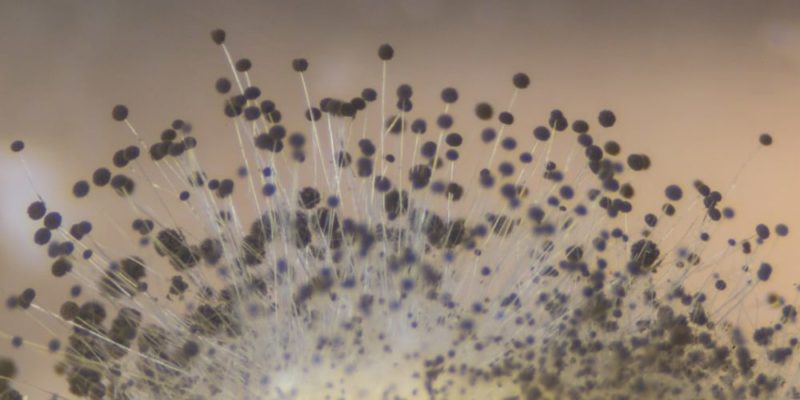
Asexual reproduction of fungi usually occurs when environmental conditions are stable. Asexual reproduction mechanisms do not provide genetic variability to the offspring but are faster than sexual ones.
In general terms, Fungi grow specialized hyphae, called sporangiophores where sporangia are formed. Inside each sporangium, spores are formed by mitosis, which are haploid (that is, they have a single set of chromosomes).
These spores are called “conidia”, both in ascomycete fungi and in basidiomycetes that have asexual reproduction. And particularly in chytridiomycetes, these spores are diploid (that is, they have pairs of chromosomes) and flagellated.
Once mature, sporangia release spores to disperse and germinate by finding the right environmental conditions. Each spore will give rise to a new individual genetically identical to its parent.
Asexual reproduction of fungi can also occur by fragmentation of the hyphae: each fragment will transform into a new individual. And in yeasts it occurs by budding, a process by which a bud or bud emerges from each single-celled individual that separates and gives rise to a new yeast.
See also: asexual reproduction
Sexual reproduction of fungi
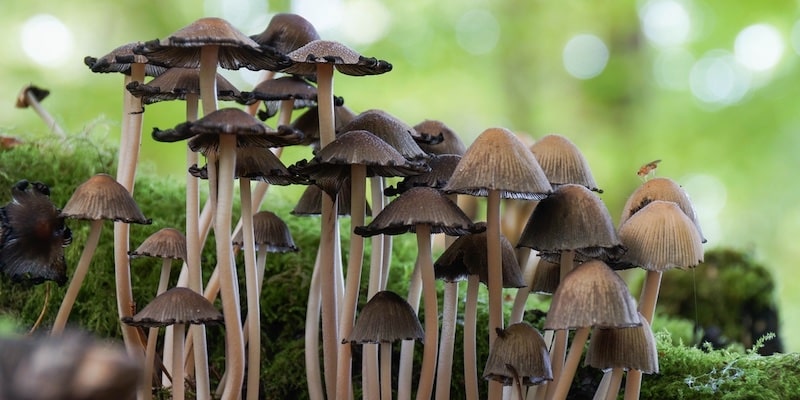
Sexual reproduction of fungi involves two individuals of the same species that exchange genetic material just as it happens in animals and plants that reproduce sexually. This provides genetic variability to the offspring.
The general mechanism of sexual reproduction in fungi begins with plasmogamy, which is the fusion of two opposite hyphae (+) and (-), and continues with karyogamy, which is the fusion of their nuclei. As a result, diploid cells are formed that enter meiosis and give rise to four haploid cells. These, in turn, give rise to spores.
In zygomycetes and ascomycetes, Sexual reproduction is usually triggered by adverse environmental conditions such as lack of moisture or food. It can also simply occur when two opposing mycelia are found, generally designated as (+) and (-) since there are no males and females.
Basidiomycetes reproduce mostly sexually, and chytridiomycetes also always have a stage of sexual reproduction throughout their life cycle as they alternate generations. In contrast, deuteromycetes do not have a known sexual reproduction mechanism.
Sexual reproduction of zygomycetes
In zygomycetes, sexual reproduction begins when two specialized hyphae called progametangia (one + and one -) meet. These different fungal hyphae They attract each other thanks to hormones that they diffuse in the air .
Upon contact, each hypha forms a gametangium, which is a single cell with many nuclei. Both gametangia fuse (this process is called “plasmogamy”) and form a multinucleated cell called a “zygosporangium,” which contains a single zygospore.
In the zygospore, karyogamy occurs and diploid nuclei are formed. Then, through meiosis, each of these nuclei generates four haploid nuclei. When the zygospore germinates, it produces a sporangiophore with a sporangium. Over there, The nuclei multiply by mitosis and transform into spores who can become new individuals.
Sexual reproduction of ascomycetes
In ascomycetes, sexual reproduction begins with the attraction of two opposing hyphae and the formation of two gametangia called “antheridium” and “ascogonium”, which fuse (plasmogamy). This is similar to what happens in zygomycetes.
After plasmogamy, dikaryotic hyphae are formed, this means that They have the nuclei of both mushrooms but they have not fused yet . These hyphae are incorporated into a fruiting body called “ascocarp”.
At the end of each hypha, a sac or ascus is formed, where karyogamy occurs. Each diploid nucleus enters meiosis and, subsequently, the haploid nuclei undergo mitosis and transform into ascospores. When the asci burst, the ascospores are released and can give rise to new individuals.
Sexual reproduction of basidiomycetes
In basidiomycetes, opposite hyphae attract, fuse (plasmogamy) and produce a dikaryotic mycelium that grows out of the soil and gives rise to a mushroom . The mushroom (also called basidiocarp) is the fruiting body of these fungi.
Inside the mushroom, the ends of the dikaryotic hyphae produce elongated cells called “basidia.” Karyogamy occurs in each basidium and a diploid nucleus is formed which upon entering meiosis gives rise to four haploid nuclei or basidiospores.
When released to the outside and germinate, each basidiospore gives rise to a new individual.
Sexual reproduction of chytridiomycetes
Chytridiomycetes have alternation of generations: go through haploid and diploid stages throughout their life cycle . A characteristic structure of these fungi are the sporothalles, which are diploid (that is, they have pairs of chromosomes).
The sporothalles can give rise to mitosporangia (where spores are formed by asexual reproduction) or meiosporangia. In the latter, meiosis occurs and haploid spores are generated.
When a haploid spore germinates, a gametothallus is formed . In this structure, “female” and “male” gametangia are formed, which are close to each other and generate flagellated gametes.
The fusion of two opposite gametes results in a cell, in which karyogamy occurs between the nuclei of each gamete. Upon germination, this cell gives rise to a diploid sporothalle.
References
- Curtis, H., Barnes, N.S., Schnek, A., & Massarini, A. (2008). Biology. (7th ed.). Panamericana Medical Editorial.
- Nabors, M. W. (2006). Introduction to botany. Pearson Education.
- González, C. (August 2005). Life cycles – Fungi. In Various life cycles. Botany Office, National College of Buenos Aires, University of Buenos Aires. CNBA
- Alexopoulos, C.J., Ahmadjian, V., and Moore, D. (March 21, 2023). Reproductive processes of fungi. In Fungus. Encyclopedia Britannica.
- “Fungi” on Wikipedia.
- “Mushroom reproduction” in cK-12 Foundation.
- “Life cycles – Fungi” at the University of Buenos Aires.
- “Mushroom reproduction: sexual and asexual” in Paradais Sphynx.
- “How do fungi reproduce?” (video) in Fungiturism.