We explain what the Second Industrial Revolution was and what its main characteristics were. Also, its causes and consequences.
What was the Second Industrial Revolution?
The Second Industrial Revolution It was a process of economic changes that some of the main world powers went through between 1850 and 1914 . These changes were caused by the introduction of a series of technical and technological innovations in industrial production. The main protagonists of the Second Industrial Revolution were Germany, France, Belgium, Russia, the United States and Japan.
The name “Second Industrial Revolution” refers to the First Industrial Revolution a stage of economic and productive transformations that took place in the United Kingdom and other European countries between 1760 and 1840. This process was characterized by the introduction of the steam engine in productive processes, the mechanization of work and the appearance of factories in cities, as main production centers.
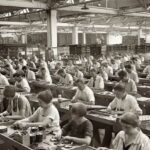
On the other hand, the Second Industrial Revolution was characterized by the introduction of the “assembly line” (division of the production process into different steps), the specialization of worker labor, mass production and, consequently, the increase in factory productivity.
Steel became the essential industrial product and electricity and oil began to be used as energy sources. Other areas of great development during this period were transportation (airplanes, automobiles and electric trams) and telecommunications (radio, telephone and phonograph).
Characteristics of the Second Industrial Revolution
The Second Industrial Revolution was characterized by:
- The mechanization of the production process, the introduction of the assembly line and mass production as a work model.
- The incorporation of scientific knowledge to productive development.
- The creation of new materials (such as steel, zinc, aluminum and plastic), new chemicals (such as dynamite and TNT) and new ways of obtaining energy (such as oil and electricity).
- The transformation of daily life through the introduction of electricity, new consumer goods and new means of transportation and communications.
- The expansion of markets worldwide as a consequence of improvements in transportation and telecommunications.
- The increase in rivalries between the main world powers in their competition to obtain resources (raw materials for their industry) and control markets.
Causes of the Second Industrial Revolution
Among the main causes of the Second Industrial Revolution, the following can be identified:
- The expansion of the First Industrial Revolution in the 19th century from the United Kingdom to other European countries, Japan and the United States.
- State support for productive investment and the growth of the industrial bourgeoisie (protagonist of the First Industrial Revolution).
- The availability of raw materials necessary for production, as European empires extracted many of their resources from their colonial territories in Africa, Asia and America.
- The demographic growth of the population, which generated availability of labor for factories and increased the demand for consumer goods.
What happened in the Second Industrial Revolution?
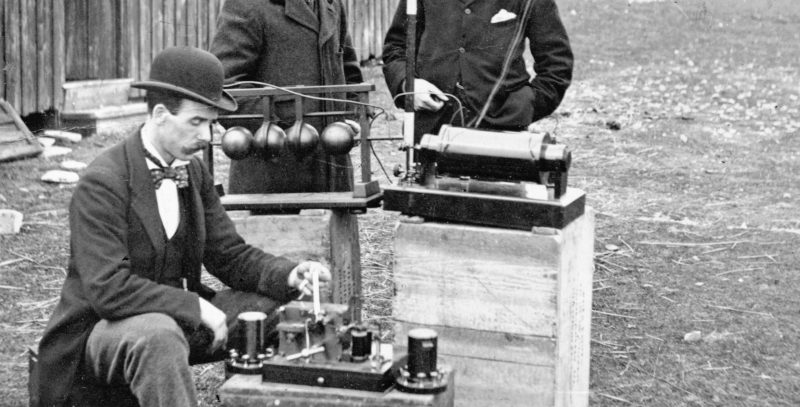
In the Second Industrial Revolution, The industrialization that began during the First Industrial Revolution deepened . More scientific and technological innovations were incorporated into factory production, transportation systems, forms of communication and business organization.
The main advances and changes of the Second Industrial Revolution were the following:
Materials
The way of producing steel, aluminum and rubber was improved and these materials became cheaper and more accessible. Steel began to be used massively for the construction of tracks for railways and trams, ships and large buildings. Aluminum, for automobiles and as a conductor of electrical energy. And rubber, for cables, conveyor belts in factories and automobile wheels.
Energy
A new way of extracting and distilling oil was introduced a substance that became one of the main sources of energy. It was used for lighting with kerosene lamps and as gasoline for the internal combustion engines of airplanes and automobiles.
On the other hand, electrical energy began to be generated industrially and to be used for lighting cities and homes, for radio, telephone and tram transportation. This profoundly transformed the way of life of industrialized societies.
Working model
The mechanization of the work process was deepened started with the First Industrial Revolution. A new modality known as the “assembly line” was introduced: the work process for the production of a good was divided into simple tasks that were carried out continuously. In this way, each worker made only part of a piece, which was then taken by another worker to make the next part. This reduced the need for skilled workers, as these were simple tasks.
On the other hand, in the United States, this system was perfected by introducing a conveyor belt and creating an assembly line that automated work times. This system is known as “Fordism.”
Transport and telecommunications
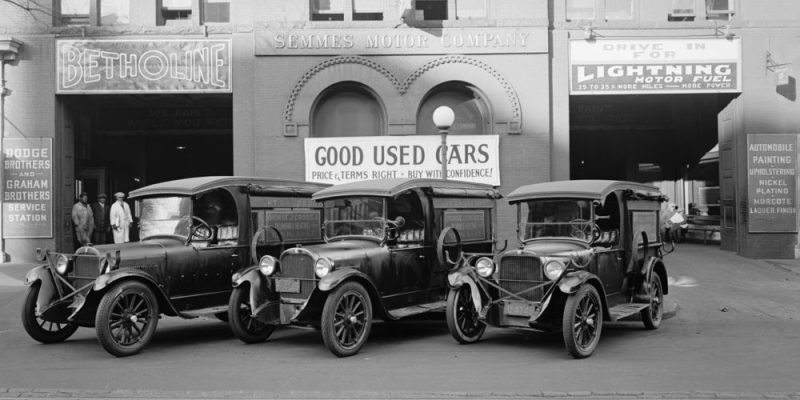
With new materials available and new energy sources, transportation technology was deepened . Railway lines were improved and trams were introduced for transport within cities. The first automobiles and airplanes were created, and lighter, faster ships were built from steel. This revolution in transportation generated greater mobility of the population and goods.
Besides, the use of the telegraph became widespread for long distance communications. At the beginning of the 20th century, the radio was invented and the telephone (invented a few decades before) began to be used.
Other inventions of the Second Industrial Revolution
In addition to the introduction of different materials and new forms of energy, during the Second Industrial Revolution a series of inventions were made that changed daily life during the 20th century:
- In 1866, Alfred Nobel invented dynamite, an explosive that revolutionized the military and mining fields.
- In 1864, Louis Pasteur discovered the pasteurization process, which revolutionized the food industry. Furthermore, he demonstrated that microorganisms imperceptible to the eye were responsible for the decomposition and contamination of food.
- In 1866, Jean Villemin demonstrated that tuberculosis is transmitted from one person to another, and in 1882, the microbial agent that causes it was discovered.
- In 1867, the typewriter was invented, and, in 1876, the electric telephone appeared by Alexander Graham Bell and Elisha Grey.
- In 1878, Thomas Alva Edison invented the first light bulb in history.
- In 1874, Émile Baudot patented his system of rapid telegraphy, revolutionizing the telegraphy that had existed since 1836 (invented by Samuel Morse).
- In 1880, the bicycle was invented.
- In 1885, Daimler and Benz built the first gasoline-powered vehicle.
- In 1895, Peugeot circulated the first vehicle on rubber wheels, a material that in 1839 Goodyear had managed to vulcanize for the first time.
- In 1895, the Lumiére brothers created the first cinematographic device.
- In 1895, Wilhelm Röntgen discovered X-rays and they began to be used for medical purposes in the following decades.
- In 1897, Marie and Pierre Curie discovered the chemical element radium.
Consequences of the Second Industrial Revolution
The Second Industrial Revolution had different consequences, such as the development of mass production, the emergence of mass consumption, urban and demographic growth, the political organization of the working classes and the increase in tensions between imperialist powers.
In summary, the consequences of the Second Industrial Revolution were:
- Consumer market . The introduction of the assembly line in factories generated an increase in productivity and the emergence of mass-produced goods. This meant a greater variety of products at affordable prices for a larger population. In addition, new products linked to the entertainment and leisure of the masses appeared.
- Urban growth . Cities grew due to the incorporation of transportation (such as the electric tram) and energy sources (such as electricity).
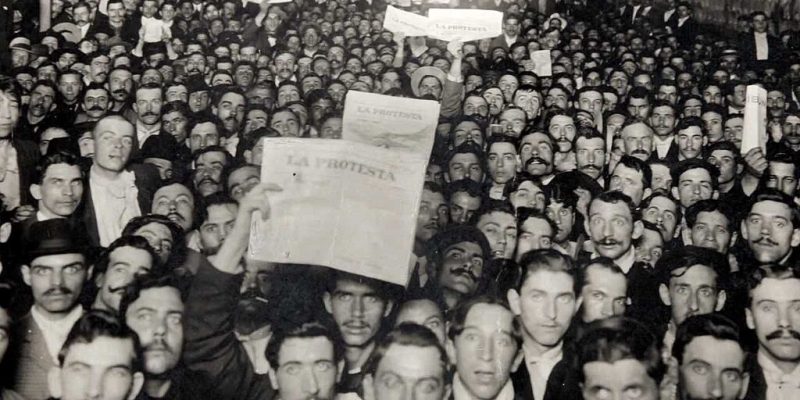
- Labor movement . The poor conditions in the organization and in the work spaces caused workers to begin to organize to demand the recognition of certain labor rights and salary improvements. In this context, the first leftist theories and the first groups of the labor movement were developed.
- Imperialist tensions . The industrial powers deepened their competition to obtain valuable territories and resources for their own political and economic growth. This led to the colonization and division of Africa between the main European powers and, in the long term, to the tensions that led to the First World War.
Third Industrial Revolution
The Third Industrial Revolution It was another process of productive transformations that occurred at the end of the 20th century between the 1970s and 1980s. In this case, it was a series of changes linked to the introduction of knowledge in computing, robotics, telecommunications and biotechnology in production processes.
Its main consequence was the change in the forms of organization of work and production . The incorporation of computers that process information and new telecommunications tools allowed the creation of large business corporations that integrate different productive functions.
This new form of business management and the incorporation of technological innovations generated an increase in productivity both in the production of industrial goods and in the production of agricultural goods and other types of services.
References
- The Editors of Encyclopaedia Britannica. (2022). Industrial Revolution. Encyclopedia Britannica. https://www.britannica.com/
- Hobsbawm, E. (2001). Industry and empire. Criticism.
- Peemans, J. P. (1992). Industrial revolutions, modernization and development. Critical history(6), 15-33.