
We explain what the Warsaw Pact was and the countries that integrated it. In addition, what are its characteristics, criticism and dissolution.
What is the Warsaw Pact?
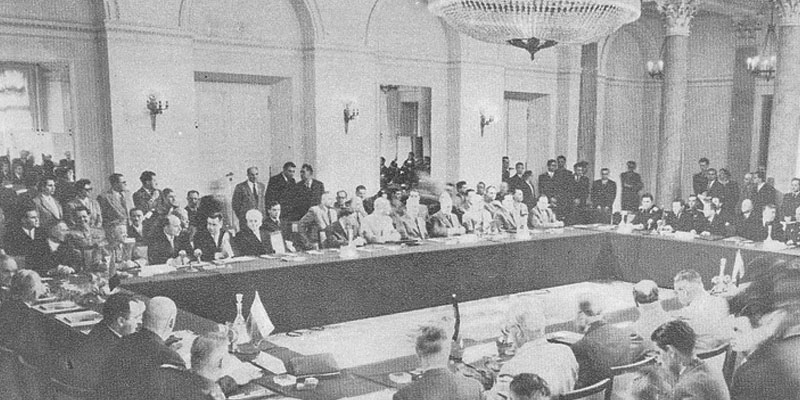
The Warsaw Pact or “Friendship, collaboration and mutual assistance pact” was an agreement signed in 1955 by the countries of the so -called Eastern Block or Soviet Block. Through this pact, the signatory countries established The bases of a military alliance of mutual defense before the war threat of the countries of the western block.
The Warsaw Pact arose in the context of the Cold War. The USSR sought to generate an alliance against the union of the western capitalist countries in the organization of the North Atlantic Treaty (NATO) and coordinate the forces of the Eastern Block in case of an invasion of the Soviet territory.
The signatory countries of the Warsaw Pact were Albania, Bulgaria, Czechoslovakia, Hungary, German Democratic Republic, Poland, Romania and the Soviet Union.
This covenant was signed within the framework of the beginning of the Cold War, a long-economic and strategic political and strategic confrontation (1945-1991) that divided the entire world into two sides: the capitalist (Western) composed of the United States, England and its allies; and the communist bloc (oriental) composed of the Union of Socialist Soviet Republics (USSR) and its allies.
Frequent questions
What was the Warsaw Pact?
The Warsaw Pact was a defensive political agreement signed by the countries of the communist bloc during the Cold War.
What was the objective of the Warsaw Pact?
The objective of the Warsaw Pact was to counteract the power of the North Atlantic Organization (NATO) that had created the main powers of the capitalist bloc during the Cold War.
Why did NATO face and Warsaw pact?
The opposition between NATO and the Warsaw Pact arose from the antagonism between the western-capitalist block and the eastern-community block, during the Cold War. These blocks defended opposite economic and social systems and competed to increase their power and influence on the international scenario.
What was the importance of the Warsaw Pact?
The Warsaw Pact played a key role in international relations during the Cold War within the communist bloc. The Soviet Union imposed its influence on the Alliance and the Military Forces of the Warsaw Pact were used to suppress the revolutionary movements of Hungary (1956) and Czechoslovakia (1968).
What countries integrate the Warsaw Pact?
The countries involved in the Warsaw Pact They were almost all of the socialist bloc : The USSR, the Popular Republic of Albania, the German Democratic Republic, the Popular Republic of Bulgaria, the Socialist Republic of Czechoslovakia, the People’s Republic of Hungary, the Popular Republic of Poland and the Socialist Republic of Romania.
Yugoslavia did not join the treaty, but was strongly influenced by him. The People’s Republic of China was affiliated as an observer until 1962.
The conformation of the pact

At the end of World War II, the world balance of political power was deeply modified. Europe was devastated and its impoverished economy for the destruction and expenses of war.
Consequently, The United States and the Soviet Union were imposed as superpowers and played political supremacy over the European continent. In addition, these countries promoted two antagonistic political, economic and ideological systems: capitalism and communism.
The antagonism between the United States and the Soviet Union triggered the cold war: a long period of political and military tension in the world was divided into two large blocks led by superpowers.
In that context, the western capitalist block (led by the United States) signed in 1954 the Atlantic Alliance and formed the organization of the North Atlantic Treaty (NATO). This agreement laid the foundations for the coordination of the military forces among the signatory countries before an invasion of their territories . Although among its objectives was the political integration of European countries to maintain their safety, the agreement was directly motivated by the fear of Soviet advance.
The Soviet Union tried to join the alliance with the purpose of generating a European security system, which implied the neutralization and permanent division of Germany (responsible for the beginning of World War II). However, Western powers rejected the proposal and excluded the Soviet Union .
Between 1945 and 1948, the USSR had signed different bilateral pacts with all the countries in its area of influence, but with the conformation of NATO, the USSR sought to form a military alliance among the entire eastern block, which made the coordinated forces of the western block counterweight counterweight. In 1955, Albania, Eastern Germany, Bulgaria, Czechoslovakia, Hungary, Poland, Romania and the Soviet Union signed the Treaty of Friendship, Cooperation and Mutual Assistance, also known as the Warsaw Pact.

The influence of the USSR
The Warsaw Pact was constituted as the political-military agreement between the different states that formed the eastern block during the Cold War. The policy of the pact was determined by the interests of the Soviet Union, which was constituted as the leading superpower of communist countries.
Among the different articles of the pact, the Mutual consultation in all important international matters that may affect the signatory countries, the political coordination between countries and the prohibition of signing other international agreements that conflict with the interests of the pact.
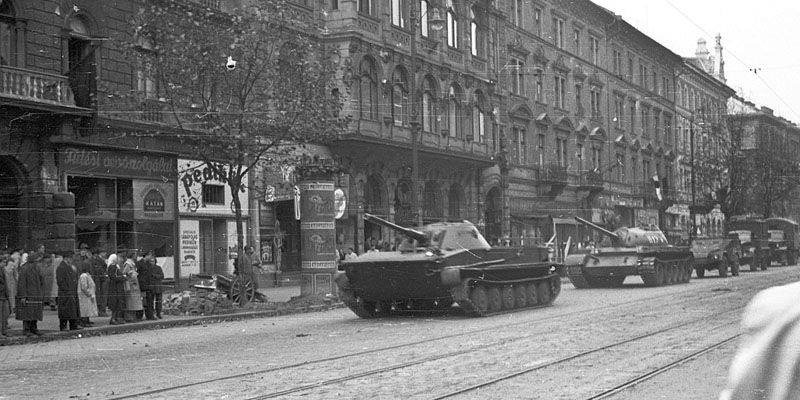
The power of the USSR on the international action of the pact and the mobilization of forces was total. When in the Hungarian Revolution of 1956 the new government declared the departure of the Warsaw Pact, the USSR mobilized the forces without consulting the rest of the member countries and used them to reestablish in Hungary a Prosotavic government.
THE TERMS OF THE PACT
The Warsaw Pact was formed as a political-military alliance whose objective was to guarantee the inviolability of the borders of the signatory countries and ensure its defense against an eventual invasion. Contemplated the following terms:
- Cooperation based on peace maintenance.
- Joint organization in case of foreseeable attacks.
- Mutual defense in case of military conflicts.
- Establishment of a “General Staff” to coordinate war efforts.
- Duration of twenty years, renewable, and freedom of each signature state to revoke it.
The political organization
The institutional organization of the Pact was evolving over the years. At the cusp of the organization was the Consultative Political Committee constituted by the heads of government of all nations along with their heads of armed forces.
Since the 1970s, this committee annually regularized its meetings. From there the policies and tasks of the block were established.
In addition, the organization of the Pact contemplated a Military Advisory Committee, a Technical and Investigation Committee, and a Defense Secretaries Council.
THE EXCLUDED OF THE PACT
The countries of socialist regime that were not incorporated into the Warsaw Pact were Yugoslavia (governed by Tito), China, North Korea, Vietnam of the North and the Popular Republic of Mongolia.
These countries were part of the eastern block, but for different reasons they did not sign the Warsaw Pact.
- Yugoslav Schism
- Sino-Soviet rupture
The military operations of the Warsaw Pact
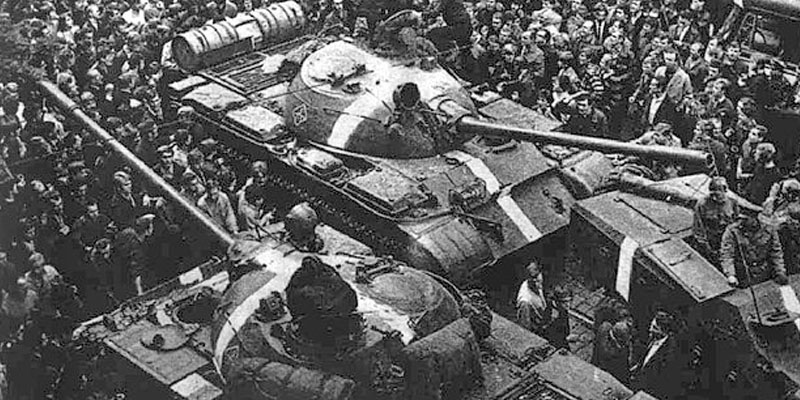
During its validity, there were only two military operations that mobilized resources and forces of the pact. In both cases, internal conflicts were treated to the signatory countries and not a foreign territorial invasion.
Hungarian autumn
In 1956, a popular revolution that claimed the free choice of his government and the cessation of the repressive activities of the Secret Police (which responded to the Soviet regime) was triggered in Hungary.
The rebellion led to the replacement of pro-Soviet government with a communist government Reformist led by Imre Nagy, who declared the withdrawal of Hungary from the Warsaw Pact. Consequently, the Soviet government mobilized the coordinated forces from the pact and invaded Budapest, with the aim of repressing the revolution and installing a new government under its influence.
The spring of Prague
In 1968, Czechoslovakia lived the spring of Prague, a popular revolution that sought political liberalization. With the election of Alexander Dubček as the first secretary of the Communist Party of Czechoslovakia, A series of reforms oriented to political democratization and economic decentralization began . These initiatives were against Soviet interests.
In response, the Warsaw Pact troops were mobilized for the second time, invaded the country and imposed a new government that reversed most of the reforms. Since then until 1989, Soviet forces remained in the country.
The Dissolution of the Pact
The end of the Cold War occurred with the disintegration of the Soviet Union. In that context, the Warsaw Pact lost its usefulness. In 1991, Czechoslovakia, Hungary and Poland announced their retirement. Months later Bulgaria did the same, which caused the dissolution of the pact. Its purpose was formalized by the USSR that same year.
Currently, with the exception of Russia (former Soviet Union), All countries that were part of the Warsaw Pact are NATO members.
Text of the Warsaw Pact
The contracting parties,
“Reaffirming their aspiration to create a collective security system in Europe based on the participation of all European states, regardless of their social and political regime, which allows them to unite their efforts in the interest of ensuring peace in Europe;
Taking into account, at the same time, the situation created in Europe for the ratification of the Paris Agreements, which provides for the formation of a new military group in the form of union of Western Europe, with the participation of a remilitated Western Germany and with its integration into the North Atlantic block, which increases the danger of a new war and creates a threat to the national security of peace -love states;
Convinced that in these circumstances the European states lovers of peace must take the necessary measures to ensure their safety and promote the maintenance of peace in Europe;
Guided in the purposes and principles of the United Nations Charter;
Eager to strengthen and develop further friendship, cooperation and mutual assistance according to the principles of respect for the independence and sovereignty of states and non -intervention in their internal affairs;
They have resolved to conclude the present treaty of friendship, cooperation and mutual assistance, and with this purpose they have appointed their plenipotentiaries;
Who, after having presented their full powers and finding them in good and due form,
They have agreed on the following:
Art. 1. The contracting parties are committed, according to the United Nations Charter, to refrain in their international relations to resort to the threat or use of force and to fix their international controversies by peaceful means, so that international peace and security are not endangered
Art. 2. The contracting parties declare that they are lending to participate, in the spirit of a sincere collaboration, in all international action that aims to ensure international peace and security, and that they will completely consecrate their efforts to the realization of such objective. For this purpose, the contracting parties will discuss, according to the other states that wish to collaborate in this work, that effective measures are taken for the general reduction of armaments, and for the prohibition of atomic weapons of hydrogen and others of mass destruction.
Art. 3. The contracting parties shall consist mutually over all important international issues that affect their common interests, with a view to the strengthening of international peace and security. The contracting parties will be immediately consulted every time in the opinion of one of them arises a threat of armed attack against one or more states parties in the treaty in order to provide for collective defense and maintain peace and security.
Art. 4. In the case of armed attack in Europe against one or more of the States parties in the Treaty, by any state or group of states, each State starts in the treaty in the exercise of its right of legitimate individual or collective defense in accordance with article 51 of the Charter of the United Nations, will provide the State or states of such an attack of an immediate assistance individually or by agreement with the other States parties in the Treaty, by all means that it considers even the use of the use of the United States. The States parties in the treaty will be immediately consulted on the collective measures necessary to restore and maintain international peace and security. The measures taken in accordance with this article will be communicated to the Security Council in accordance with the provisions of the United Nations Charter. Such measures will be without effect as soon as the Security Council has taken the necessary action for the restoration of international peace and security.
Art. 5. The contracting parties have agreed to create a unified command of the Armed Forces that will be placed by agreement between those under their orders, acting on the basis of established principles by common agreement. Any other concerted action that is required to reinforce their defensive capacity, in order to protect the work of their peoples, guarantee the integrity of their borders and ensure defense against any eventual aggression will also take. (…) “
Continue with:
})
References
- Buleta López, B. (1991). Situation in the countries of the Warsaw Pact. In Strategy notebooksNo. 36, pp. 59-74.
- Mackintosh, M. (1969). Evolution of the Warsaw Pact. In Information Bulletin No. 40-IV. Ed. Ministry of Defense.
- MAH LONS, J. (1982). NATO and the Warsaw Pact. Comparison of forces. In Information Bulletin No. 159-IV. Ed. Ministry of Defense.


