We explain what water pollution is, what its contaminants and causes are. Consequences and solutions to avoid it.

What is water pollution?
Water pollution or water contamination occurs when natural bodies of water (lakes, rivers, seas, etc.) have presence of various types of chemical substances foreign to its original composition which modify its properties making it unhealthy, harmful to life, and therefore useless for fishing, agriculture, recreation and human consumption.
Water is the most abundant liquid substance on the planet and the universal solvent present in most substances and in all living beings, which without it could not exist. Life itself originated in the seas of our planet.
However, this has not prevented numerous human activities from generating a significant impact on the quality of the planet's water, through the disposal of liquid, solid and even gaseous substances into the environment. And although also There are natural processes and human initiatives that seek to counteract water pollution it is much easier to dirty it than to make it drinkable.
According to many international organizations, The amount of drinking water available in the world predicts future scarcity crises . According to the UN, 3.1% of the people who die annually on the planet do so due to consumption of contaminated water, which is equivalent to 2.2 million people.
What are the contaminants in water?

The main water contaminants are:
- Sewage. Product of urban consumption (sewage), industrial processes or other daily human uses.
- Garbage and solid waste. Such as waste materials, metals, plastics, glass, objects that fall from ships, etc.
- Chemical and agrotoxic products. Chemicals used for the agricultural industry, to treat soils or for other specific uses are often washed away by rain and run off into the seas or groundwater.
- Sediments and minerals Such as volcanic ash, sediments and particles of soil or construction, such as dust, lime, etc.
- Radioactive materials. Resulting from nuclear plants, they are extremely toxic elements that are stored in lead containers and are often thrown into the ocean as there is no better place to dispose of them.
Causes of water pollution
As has been seen, the main (if not the vast majority) of the causes of water pollution come from the way of life of human beings and, especially, the way in which we consume natural resources and dispose of the by-products and waste of our activities.
Since the Industrial Revolution and the exponential growth of the world's population during the 19th and 20th centuries, humanity's needs for water, energy and raw materials have only increased. And the pollution of water, air and land is a direct consequence.
Consequences of water pollution
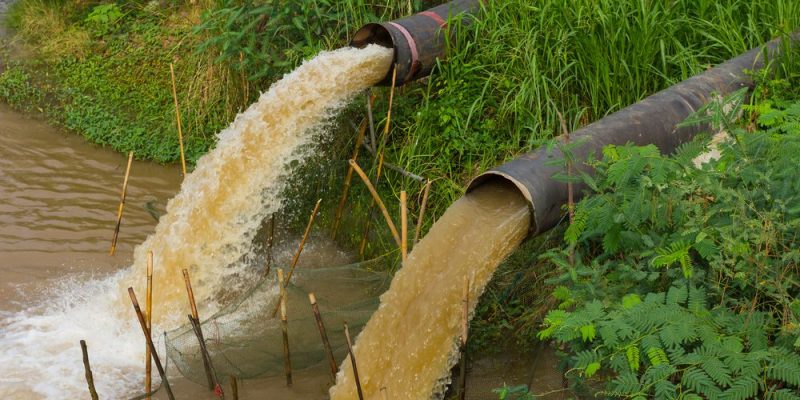
The main consequences of water pollution can be:
- Biological imbalances The presence of certain chemicals in the water can cause the abnormal proliferation of certain microbes or algae, which unbalances the food chain and generates abnormal competition that, in the long run, causes the excessive death of certain species that will decompose by adding organic matter to the water. water.
- Chemical alterations Changes in water chemistry can reach lethal extremes, in which local fauna and flora become extinct or migrate to other areas, causing severe ecological damage.
- Climate impact Changes in temperature, pH and other properties of water as a result of added substances or suspended solids affect the behavior of the masses of the liquid, reducing its evaporation and therefore its precipitation and altering the local climate.
- Land and air pollution Water pollution is not just in the water, but spreads to the land and the air, according to the water cycle, in a domino effect of unpredictable consequences.
How to avoid water pollution?
To avoid or reduce water pollution, it is enough to be aware of it and ensure its more thrifty, efficient and responsible use. This happens through:
- More responsible urban and industrial policies That force the correct disposal of industry by-products and wastewater, mitigating the impact that these wastes inflict on the sea and lakes.
- Consumer awareness campaigns. The waste of drinking water is a daily reality, ranging from the tap that is left open while we soap our hands, to the drinking water that we waste “cleaning” the sidewalk.
- Recycling culture The reduction of solid waste that will end up, in one way or another, in water or in landfills in contact with groundwater, can occur through recycling and more responsible consumption.
Solutions for water pollution
Contaminated water often has a solution. There are purification and cleaning processes such as:
- Bacteriological control methods and biological control of waters.
- Wastewater treatments and reuse before returning them to the sea.
- Filtering mechanisms of various kinds.
- Also combat air and land pollution.