We explain what a reform is and what the Bourbon, Protestant, agrarian, educational and political reforms are. Also, the counter-reformation.
What is a reform?
If we look at its most basic meaning, reform means to reshape, that is, subject something to gradual or moderate changes that are for its benefit or its improvement, or its adaptation with respect to new contextual conditions. This type of progressive changes is differentiated from others that are much more violent and sudden, for which the term revolution is reserved.
Reforms have been common in history in different areas of interest to humanity. They are usually the result of long periods of social tension or political struggle since they involve changes and rethinking that normally have followers and detractors in society.
Those who support the cause of some type of reform are called reformists, while those who actually carry out the reform are called reformers.
Bourbon reforms
The Bourbon Reforms in New Spain (called simply Bourbon Reforms) were a set of changes in the administrative policy of the Spanish colonies in America, which in the 18th century carried out the absolutist monarchy of the House of Bourbon.
These reforms were intended to renew the administrative structure of the colonies, granting the crown more power and more direct control over the wealth generated in America, with the hope of thus refloating the Spanish Empire in crisis, after years of war with England and corruption, waste and demographic crisis.
Its objective was to alleviate the Spanish decline with the riches of America. modernize the empire and restore its place among the powers of the time, implementing administrative centralism and economic liberalization between the metropolis and the colonies. This involved measures such as:
- Two new viceroyalties were created thus reducing the size of the Viceroyalty of Peru: the Viceroyalty of New Granada in 1717 and the Viceroyalty of the Río de la Plata in 1776.
- The positions of mayor and mayor were eliminated considering them a focus of administrative corruption. In its place, a system of quartermasters was implemented.
- Trade restrictions and taxes were reduced and the non-indigenous population was censused to make it tax-active.
- A standing army was created in the most important cities of Hispanic America.
- Education was reformed to take power away from the Catholic Church and the exemptions enjoyed by the clergy were reduced. Furthermore, the Jesuits were expelled in 1767 and their order was dissolved, to counteract the enormous influence they had within Spain.
- State monopolies were created on the generation of tobacco, liquor and gunpowder, and new commercial companies were created to exploit certain natural resources. The mining tax was also reduced.
- Numerous educational institutions were created basic, technical and higher, to obtain qualified labor.
The Bourbon reforms meant a significant reduction in the powers of the Creole elite and they sowed a lot of unrest among them, which led to some brief rebellions that were quickly put down. Its effect on the Spanish Empire was not proven, given that at the beginning of the 19th century the American independence processes began, probably encouraged by these same reforms.
Protestant Reformation
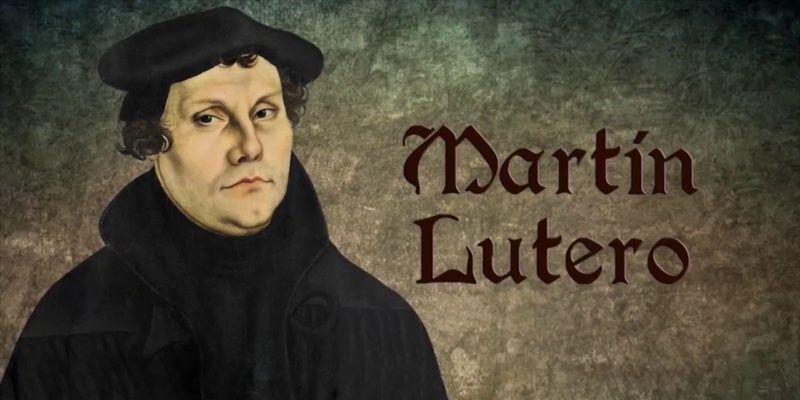
The Protestant Reformation (known simply as the Reformation), was a religious movement started by the theologian and Augustinian friar Martin Luther (1483-1546) in Germany in the 16th century. He sought to reform Catholicism to return to the practices of early Christianity.
Such a proposal was contrary to the Pope's jurisdiction over all Christian territories. It was used in different regions of Europe to give rise to various national and divergent churches, reunited today under the name of Protestantism.
Among the claims of Luther and other Protestants to the functioning of the Catholic Church were the sale of indulgences, which they understood as a sale of the sacred Gospel instead of its free preaching, and the infallibility of the Pope, which gave him enormous political power. in the territories of Christendom. Instead, They proposed that the civil powers have full authority over the Catholic Church .
Luther was excommunicated and branded a heretic by the Pope, but the consequences of the Reformation could not be stopped. A deep schism was created in the Catholic Church allowing the birth of Protestantism and, at the same time, serving as a justification for the Catholic Counter-Reformation that came later.
Reformation and Counter-Reformation
Given that the Protestant Reformation sought to change the operating structures of the Catholic Church and return Christianity to its original practices, to a version more attached to the holy scriptures, the Counter-Reformation was the diametrically opposite movement, emerging as an ultra-Catholic reaction in Spain and Italy, which sought to strengthen the Catholic tradition, then considered under attack .
The Counter-Reformation served as a containment dam so that reformist ideas did not spread beyond northern Europe. It was transmitted to the American colonies, through fanatical emissaries and inquisitors, as well as works of art that insisted on Catholic motifs and fervor as the main theme.
Agrarian reform
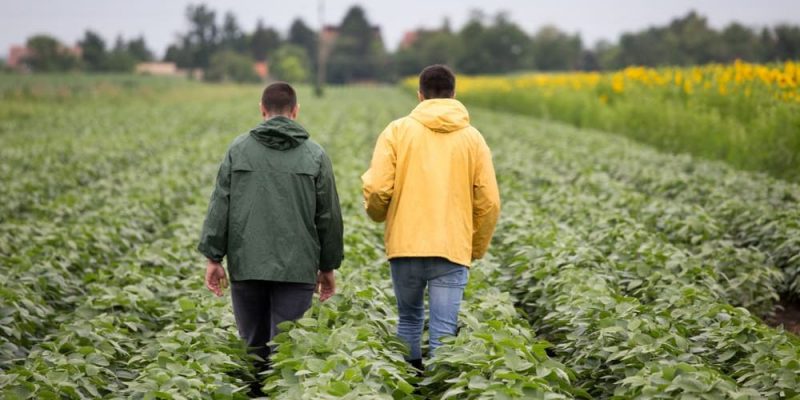
The name Agrarian Reform is commonly called the different processes of modernization and transformation of the rural sector of countries. Its fundamental purpose is to redistribute land ownership promote the use of agricultural technologies and thus promote agricultural productivity, to combat latifundia and guarantee a more solid national food base.
The agrarian reforms They were very common in the mid-20th century especially in Latin American nations, whose economies depended on agricultural production and the sale of raw materials.
Various mechanisms could be put in place to reform agriculture, such as land expropriation or distribution with compensation to former landowners. Most of them were promoted by the State and defended by various urban and rural leftist movements.
Educational reform
It is called educational reform. a modification of a nation's educational system with a view to its modernization, updating or improvement. It may be at the level of the school curriculum (that is, the knowledge taught and its systematicity), the methods chosen to teach it or the school structure itself according to which the teaching takes place.
Educational reforms are usually proposed by the political actors of a nation, always in accordance with what is established in the legislation. It usually takes place throughout a complex process of diagnosis, proposal, review and approval in which different educational bodies have a voice and vote, and the obligation to intervene.
Political reforms
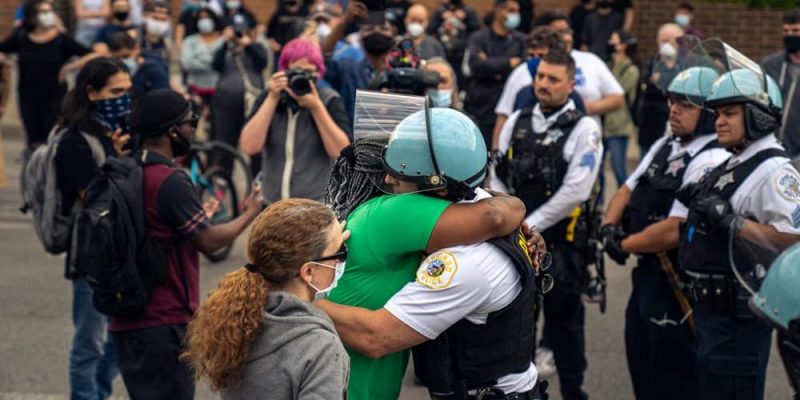
In a similar way to the previous case, a political reform It is a change in the rules of the game of the political exercise of a country which does not affect or contradict its fundamental and elemental features. In fact, they usually take place following what is established in the Magna Carta or in accordance with the provisions of the legislation that is, in an institutional, gradual and consensual manner.
In this it is distinguished from a Revolution, which sweeps away everything and establishes an entirely new order. A political reform, on the other hand, does not interrupt or disturb the established social and political order, but rather aims to correct, update or repeal political elements that are not working or are not considered adequate.
References
- “Reform” on Wikipedia.
- “Reform” in the Language Dictionary of the Royal Spanish Academy.
- “Bourbon reforms in New Spain” in Wikipedia.
- “Protestant Reformation” on Wikipedia.
- “Agrarian reform” on Wikipedia.
- “The Protestant Reformation and Luther” (video) in Academia Play.