
We explain what a sandstorm is and what its causes and consequences are. Also, its general characteristics and examples.
What is a sandstorm?
Sand storms are characteristic meteorological events of arid and semi-arid climates. They occur when Intense winds raise large amounts of sand and dust and form a dense cloud that moves over the Earth's surface at high speed. These storms can last from a few hours to several days and often have a significant impact on people's lives.
Sand and dust particles carried by winds are very small and light. For this reason they can reach more than 4000 meters high and fly thousands of kilometers to very remote regions.
How are sand storms formed?

To form a sandstorm, a wind strong enough to lift particles of dust or sand from the ground and send them into the atmosphere is required. As the wind advances and the cloud moves, more particles are incorporated and storms can grow in size and strength.
In addition to winds, droughts and lack of vegetation can also contribute to the formation and intensification of sandstorms.
Consequences of a sand storm

Sand storms can produce very severe consequences for human populations:
- Visibility is reduced and the sky darkens due to the amount of particles suspended in the air. This can increase the risk of traffic accidents and also cause disruptions in road transport and air transport.
- Crops may be destroyed, which may affect the food security of nearby communities.
- Interference may occur to radio signals and other means of communication, which may make it difficult for emergency services in affected areas.
- “Dirty” or “muddy” rains can be generated, since suspended dust can mix with rainwater.
- Suspended dust transports minerals and materials to distant places that affect the chemical balance of other ecosystems.
- Dust can reduce the effectiveness of solar panels and similar technologies that rely on the sun's rays.
Differences from a dust storm
Although in principle they operate in the same way, sand storms and dust storms are distinguished by the type of solid materials they lift from the ground and throw into the atmosphere. Sand grains are larger than dust grains. so they tend to last less in suspension and fly shorter distances.
Another important difference is the height of the clouds. Sand storms can create clouds of particles that rise several hundred meters while dust storms generally produce lower clouds.
Sand storms are more common in arid and semi-arid regions where a large amount of sand is available. Instead, dust storms can occur anywhere, even in urban areas.
Sand storm risk areas
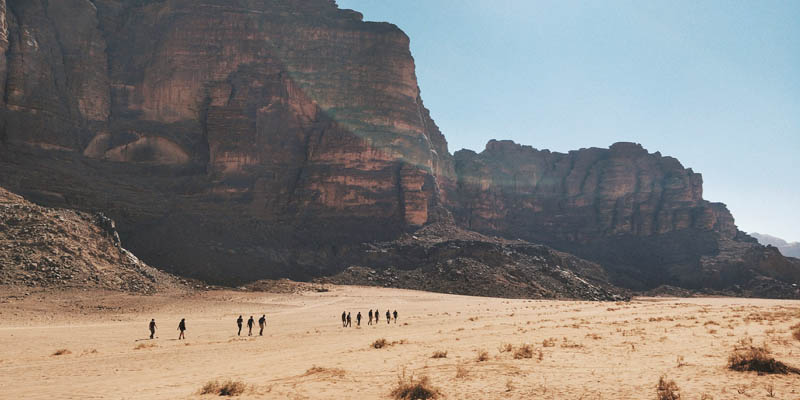
Sandstorms are common in arid and semi-arid regions where deserts predominate, for example:
- in the Sahara Desert in northern Africa
- in the Arabian Peninsula
- in the Gobi Desert in Mongolia
- in the Taklamakan Desert in northwest China
- in the dry pampas region of Argentina
- in northern Chile
Precautions against a sand storm
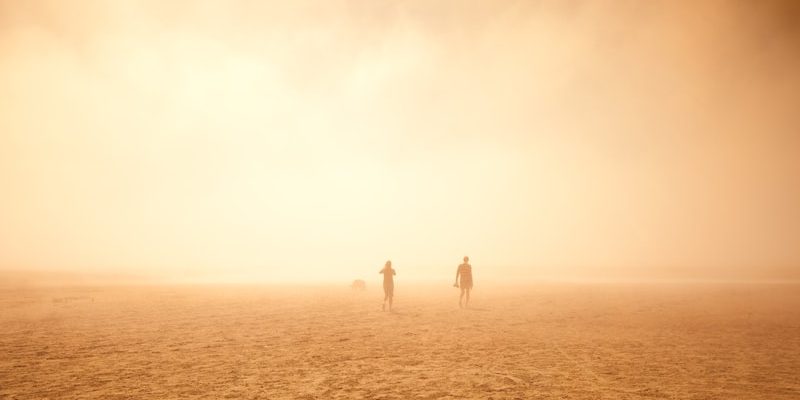
In the event of a sandstorm, it is advisable to take certain precautions:
- Stay inside . It is best to seek shelter in a home or a closed vehicle.
- Cover your face . It is important to protect mainly the eyes, nose and mouth.
- Stay hydrated . Sand storms are usually very dry, so it is important to drink plenty of water to avoid dehydration.
- Avoid traveling on the streets . If you are in a car, the best thing to do is to stop and wait for the storm to pass, although this brings the inconvenience of being trapped inside the vehicle with practically no visibility.
Sand and dust storm alerts
The World Meteorological Organization (WMO) develops a forecast and warning project on sand or dust storms. For provide early warnings and accurate forecasts of sand storms the WMO works closely with the meteorological services of countries and with international agencies that study climate.
These forecasts are based on the observation and analysis of meteorological information from data from satellites, radars and weather stations. In addition, the WMO coordinates the exchange of meteorological information between countries, a fundamental measure to try to predict the occurrence of large sand storms that may affect several regions.
Worst sandstorms in history
Some of the most intense sandstorms in recorded history occurred in:
- Sydney, Australia, 1942 . It was the largest dust storm in the city's history, and reduced visibility at the local airport to 500 meters.
- Phoenix, USA, 2011 . The entire city was covered by a dust cloud 3,000 meters high and 80 kilometers wide that prevented all types of flights to and from the American city.
- Beijing, China, 2014 . It was one of the worst dust storms in the region, forcing the suspension of classes and causing damage to the cities' infrastructure. In addition to Beijing, it affected the cities of Tianjin and Zhengzhou.
- New Delhi, India 2018 . More than 125 people died after a dust and sand storm hit overnight and caused many buildings to collapse.
Off-planet sand storms
Sand storms on Mars are relatively common events, which can last weeks or even months. They occur when Martian winds stir up large amounts of dust and sand from the planet's surface and lift them into the atmosphere.
These storms can also have an impact on space exploration. During a sandstorm, sunlight arrival and surface visibility are significantly reduced, which can make it difficult for space vehicles that operate and collect data using solar power to operate.
References
- Pacheco, G. (2022). What is a sandstorm and why does it form? Excelsior
- WMO (World Meteorological Organization) (sf). Sand and dust storms. W.M.O.
UNEP (UN Environment Programme) (sf). Sand and dust storms. Contain a global phenomenon. UNEP


