
We explain what tornadoes are, how they form and what their consequences are. Also, its general characteristics and classification.
What is a tornado?
A tornado is a meteorological phenomenon of short duration and extension in which a swirl of air rotates at high speed. It is one of the most dangerous and destructive weather events.
Tornadoes can come in different shapes and sizes, but they are usually They resemble a rotating tube of clouds that forms a funnel from the sky to the earth's surface and which is usually surrounded by a cloud of debris and dust. Its winds are so intense that they uproot and collect everything in their path.
Tornadoes are unpredictable, which also makes them very dangerous . They almost always form without warning, move quickly and can change direction in a matter of seconds, making them even more difficult to anticipate.
These are short-lived phenomena, and generally last between a few seconds to an hour. The average duration is approximately 10 minutes.
How is a tornado formed?
A tornado forms when a mass of warm, moist air meets a mass of cold, dry air . This collision of masses of different temperatures and humidity can produce thunderstorms and strong updrafts of air.
When a rising current of warm, moist air encounters cold, dry air in the upper atmosphere, a zone of instability occurs. This instability can cause the column of warm air to form a thundercloud.
Inside the storm cloud, warm, moist air continues to rise while cold, dry air descends, creating a rotation of wind in the atmosphere. This rotation can be intensified and produce a vortex of air that descends from the storm cloud to the Earth's surface .
As the air vortex descends it can increase its rotation speed and suck air into the tornado. This can cause the tornado to grow in size and strength, increasing the speed of the winds and the amount of damage it can cause.
Types of tornadoes
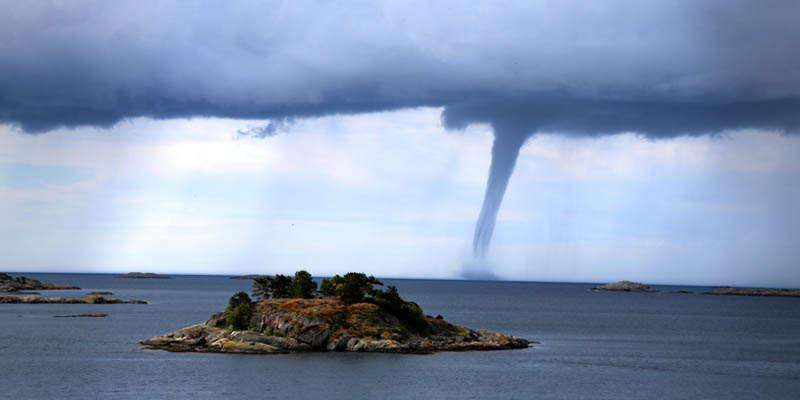
Depending on their formation, size, duration and intensity, tornadoes can be classified as follows:
- Supercell Tornadoes . They are formed from high intensity electrical storms. They are violent and destructive tornadoes.
- Non-supercell tornadoes . They form from smaller thunderstorms. They tend to be tornadoes of lower intensity than supercellular ones.
- Multiple vortex tornado . These are two or more columns of air that rotate around a common axis, which gives rise to several vortices or “tips” of the tornado.
- satellite tornado . These are two tornadoes (one large and one small) that are found or formed very close, so the smaller one orbits the larger one and rotates next to it as if it were a satellite (hence its name).
- wedge tornadoes . They are characterized by having a wedge or inverted “V” shape, with a wide base and a narrow tip.
- rope tornadoes . They are characterized by being very narrow, shaped like a rope extended from the surface towards the clouds. They tend to be less destructive than classic tornadoes.
- Waterspout . This is a tornado that forms over the sea or a large body of water. They can be tornadoes that formed directly over water or moved from land toward water.
Consequences of a tornado
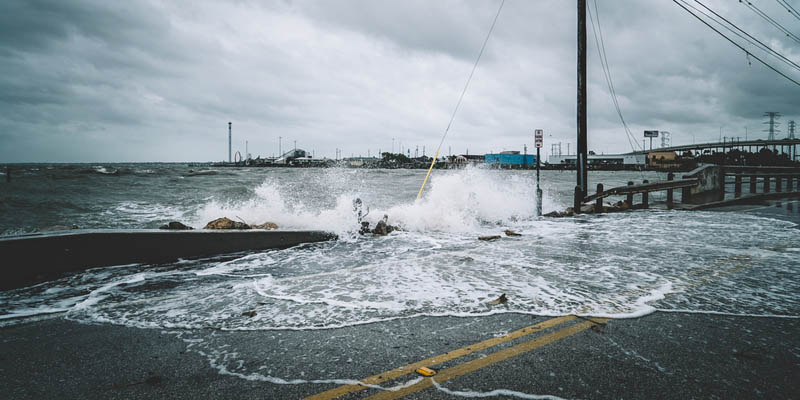
The consequences of tornadoes tend to be more or less devastating, depending on the speed of the winds and their duration. In general They can uproot trees, roofs and smaller objects. These objects can be dragged and thrown at great speed and distance by the force of the tornado's winds.
They can also be very dangerous to people who are not in safe shelters during a tornado. They can be blown by the wind and hit or crushed by objects blown up by the tornado.
The passage of tornadoes usually also causes interruption of basic services. The blowing up of poles and cables can leave affected areas without power, connectivity or telephone.
Life cycle of a tornado
The life cycle of tornadoes is made up of three phases:
- Training . Tornadoes usually originate in a storm system. Hot, moist air rises and cold, dry air sinks. This difference in temperature, atmospheric pressure and humidity creates a vortex of air that begins to rotate and initiates the formation of the tornado.
- Maturity . Once the tornado forms, it can grow to its maximum size in a few minutes. This phase is the most destructive of the tornado because it reaches its maximum rotation speed. This is also when it acquires the typical funnel shape of tornadoes.
- Dissipation . In the final stage of the tornado, the lack of warm, moist air weakens the vortex and makes it rope-thin, before losing the last of its energy and dissipating.
Where do tornadoes form?
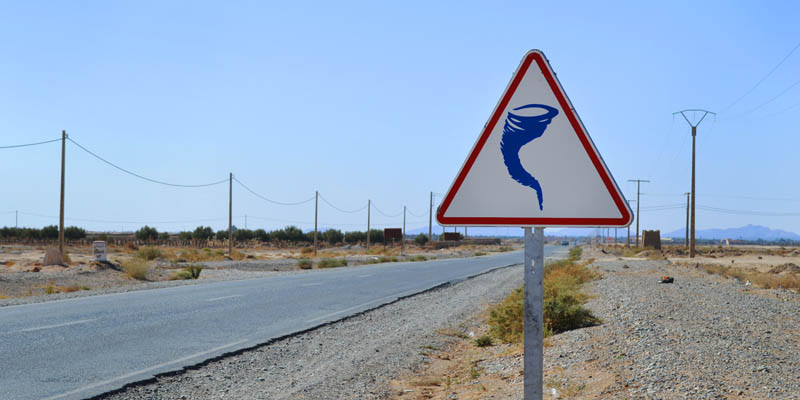
Tornadoes have been observed on every continent except Antarctica, but Most (about 75%) are produced in the United States . In that country, 80% of tornadoes occur in the region known as “Tornado Alley”, in the states of South Dakota, Nebraska, Kansas, Oklahoma, Iowa and Texas.
Its formation is also frequent in south-central Asia, southern Africa, southeastern Australia and New Zealand and in some places in South America.
What should be done in the event of a tornado?
The forecasts in case of a tornado indicate:
- In a home, seclude yourself in the room furthest from the windows.
- Outdoors, take shelter in a nearby building, home or structure.
- In a vehicle, stop it and seek shelter in a safe place outside the car.
In all cases, the recommendations always indicate staying calm, staying informed, not manipulating objects or touching cables, and covering your head and body.
How is the intensity of tornadoes measured?
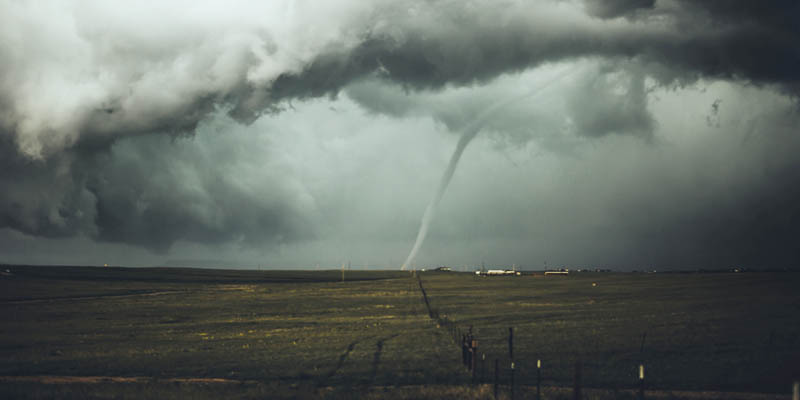
Most tornadoes have wind speeds between 65 and 180 kilometers per hour, although The most intense in history have exceeded 400 kilometers per hour . They can be from a few meters wide to more than 2 kilometers wide.
The intensity of tornadoes is measured by the scale Improved Fujita (EF), also known as the Fujita-Pearson Scale. This scale classifies tornadoes based on the damage they cause on a scale of EF0 to EF5, with EF5 representing the most destructive tornadoes and EF0 representing the least destructive.
Worst tornadoes in history
Some of the most devastating tornadoes in history have been:
- The United States Tri-State Tornado . It occurred on March 18, 1925 and affected the states of Missouri, Illinois and Indiana. It traveled 325 km in about 3.5 hours at a travel speed of 117 kilometers per hour. It caused 695 deaths and more than 2,000 injuries. Although the Fujita scale did not exist at the time, it is believed that it could have been classified as F5. It is considered the most devastating tornado in history.
- The Dalautpur-Saturia tornado in Bangladesh . It happened on April 26, 1989, and is the deadliest tornado in history with a death toll of 1,300 people and more than 12,000 injured. The tornado was part of a series of thunderstorms that developed in the center of the country. It had an approximate width of 1.5 kilometers and moved north at a speed of 120 kilometers per hour.
Tornadoes in the cinema
Tornadoes are a fearsome force of nature that has inspired numerous films, especially in the Hollywood industry, such as: Hurricane (1979), Twister (1996), perfect storm (2000), The day after tomorrow (2004), eye of the hurricane (2012) and Into the Storm (2014).
The films were produced in the comedy genre Sharknado (2013) and its sequels, in which a tornado launches sharks into the city of Los Angeles.
References
- Ready (sf) Tornadoes. Ready
- Rodríguez, H (2022). This is how a tornado forms. National Geographic
- Viñas, J. (sf) The Tri-State Tornado. Time
- Herrera, C (2022) The best movies about tornadoes. Hiramnoriega


