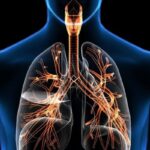
We explain what the muscular system is, its parts and different functions. Also, how it is classified and muscle diseases.
What is the muscular system?
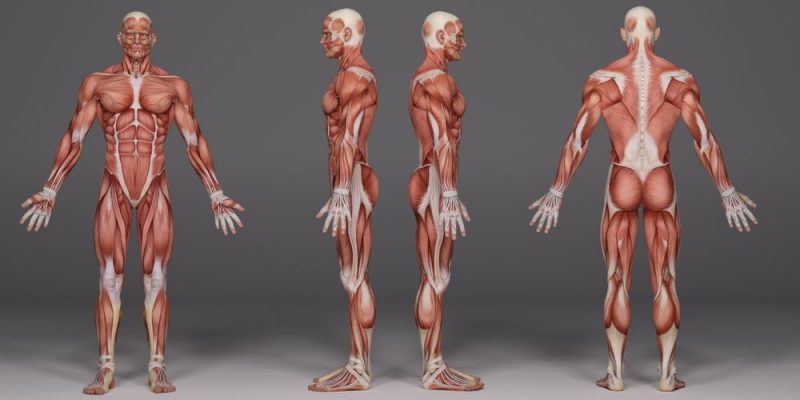
When referring to the muscular system, we speak of the set of more than 650 different muscles that make up the human body most of which can be controlled at will and allow us to exert enough force on the skeleton to move.
The human muscular system is vast and complex, constituting 40% of an adult's weight also generating most of their body heat. Together with the skeletal system (bones) and the articular system (joints), it constitutes the so-called locomotor system, responsible for the movements and displacements of the body.
The muscles that make up this system are in turn composed of cells with a high level of specificity, which gives them specific properties such as elasticity. These cells, called myocytesthey can undergo intense stretching and compression without putting their constitution at risk (to some extent). That is why muscle fibers are so resistant and elastic.
Muscles are also electrically excitable, and this is how the nervous system controls them.
There are three essential types of muscles:
- Skeletal or striated muscles They are called that because under the microscope they have striations, as well as a characteristic long shape. In addition, they are the ones that connect with the bones of the body and allow the movement or movement of the extremities.
- Cardiac muscles As their name indicates, they are the muscles of the heart wall (myocardium), and they are striated muscles with precise characteristics, since they need to be interconnected in order to contract and expand in a completely synchronized manner.
- Smooth muscles They are also known as visceral or involuntary, since they are not committed to the voluntary movement of the body, but rather to its internal functions (autonomous vegetative nervous system). For example, the movement of the intestines or digestive tract, or the opening or closing of the iris in the eye. They are easily recognized as they lack grooves like the previous types.
Parts of the muscular system

The muscular system is made up of a huge variety of muscles, among which we find:
- Fusiform muscles. Those with a spindle shape, thick in the central part and thin at the ends, like those present in the upper and lower limbs.
- Flat and wide muscles Present especially in the abdominal wall, they mobilize and protect the lower internal organs.
- Fan muscles. As their name indicates, they are fan-shaped, and two important examples are the pectorals (on the chest) and the temporals (on the jaw).
- Circular muscles. They are ring-shaped, so they serve to close (when contracting) or open (when relaxing) various ducts, such as the anal opening through which we defecate.
- Orbicularis muscles. Similar to fusiform ones, but they have a hole in the center, so they allow other structures to open and close. An example is the orbicularis muscle in our eyelids.
Functions of the muscular system
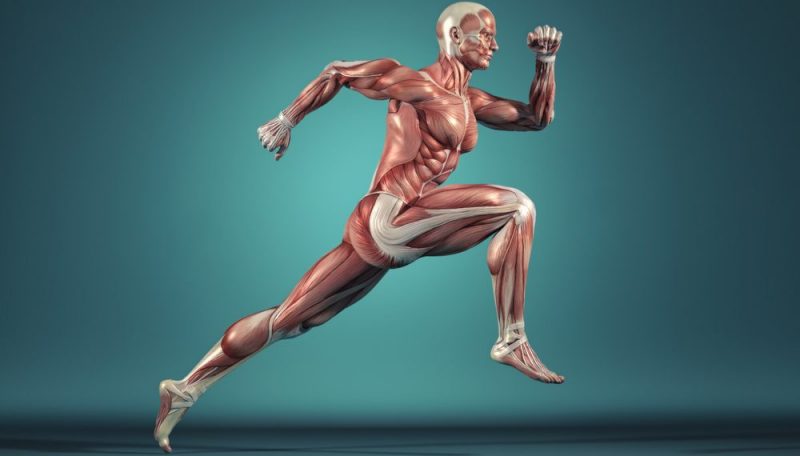
The muscular system is vital for the body, since it is responsible for keeping things moving. For example, the heart is an organ that cannot stop pumping blood, otherwise it would cause death.
Therefore, your muscles must be strong and designed for continuous exercise. In the same way, digestive movements, from the trachea to the intestines, are muscular responsibility, as are respiratory movements.
Secondly, musculature allows voluntary movement, which is the best way for living beings to deal with the environment: it allows us to mobilize the skeleton and move to change places, or use our limbs in a specific way and build food, caress our loved ones or defend ourselves from an attacker.
Even gestures as simple as moving our eyes or smiling are due to the specific action of some set of muscles in the body.
Diseases of the muscular system
Muscles can be affected by different types of ailments, such as:
- Tears Partial ruptures of muscle tissue that, although they can repair themselves over time, generally reduce motor capacity and are extremely painful.
- Cramps. Painful and involuntary contractions of a specific muscle, due to extreme fatigue or imbalances in muscle chemistry.
- Atrophy Due to prolonged disuse, illness, or major trauma, muscles can stop functioning and become atrophied, that is, lose tissue volume.
- Poliomyelitis Produced by a virus, this disease really affects the nervous system, but by paralyzing electrical impulses it causes artificial atrophy of the muscles.