We explain what the Mesoamerican classic period was and its characteristics. In addition, the civilizations that developed and more.
What was the classic period?
The Mesoamerican classic period, also known as the fourth period of the prehistory of America, It covered since 200 d. C. up to 900 d. C. . This period highlights the rise of the Mayan, Teotihuacanos and Zapotec peoples, which formed stratified societies and complex states.
The societies of the classic period large urban centers built that, in some cases, they had more than 100,000 inhabitants. In addition, they dominated better cultivation techniques that allowed the constant increase of the population and created different forms of social and state control.
The Invention of different writing systems It allowed them to register from the military conquests of their rulers, to the legends and genealogies of their gods.
Mesoamerican chronology

The classic period is between the preclassic period (2500 AC-200 d. C.) and the postclassic period (900-1521 d. C.) In addition, the Mesoamerican classic period is divided into the following stages:
- Early classic (200-550 d. C.).
- Medium classic (550-700 d. C.).
- Late classic (700-900 d. C.)
Characteristics of the classical period
The classical period of Mesoamerica was characterized by:
- The state organization . Two types of political and territorial organization were developed: a type of state in which a single ruler located at the top of the social pyramid (as in Mayan cities); and another, multi -ethnic type with a corporate organization in which social groups (and not individuals) functioned as political entities (as in the case of Teotihuacán). In both cases, the headquarters of the governments were in large urban centers and involved different forms of administration and organization of production.
- Organized urbanism . Together with the complexization of the political organization, the large urban centers appeared. In cities there was great internal social differentiation, based not only on access to goods and privileges, but also on occupation and trades. The construction of the cities was planned in a thorough manner, contemplating the location of administrative centers, religious, productive and commercials, in addition to the lands adjacent to homes.
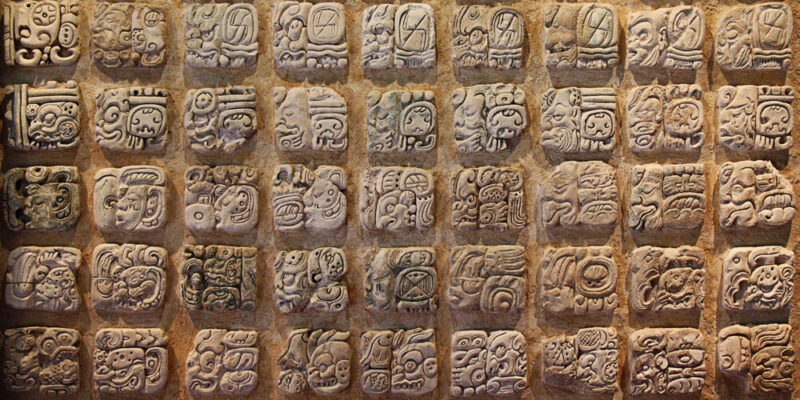
- The writing system . Different cultures of the classic period developed their own writing systems. In some cases, the level of complexity of the system was lower and the glyphs acted as figurative symbols that accompanied artistic representations. In others, the notation systems became logo-saillabic and integrated hundreds of glyphs, from which they could record narrative stories about the life of the rulers and myths of the gods.
- The colossal monuments . In the architecture of the time the monumental buildings stood out: temples and sanctuaries that, in each culture, were built and decorated with a characteristic style. The temples had huge pyramid bases and their position was diagrammed based on heavenly maps.
- The priestly power . The priests had great influence on social, cultural, economic and political organization. In many cases, they exercised political functions together with the ruler or advised through oracles about military and political decisions. In addition, they dominated writing techniques, which allowed them to organize the religious creed and register the worldview of their people.
- The construction of ceremonial centers . The development of urban centers around large monumental temples shows the importance of religion. In the characteristic polytheism of these societies, the gods of the storm and the rain had special relevance during this period.
- Sophisticated agricultural techniques . The improvement of agricultural activity allowed the transformation of societies, since it made possible the supply of food into large populations and promoted commercial capacity with other nearby populations.
- Specialized artisanal production . The complexization of the social framework in urban life gave rise to the appearance of artisans dedicated to producing luxury goods with complex and specialized techniques. In some cases, the ruling elites sponsored goldsmiths, classes and sculptors who worked with inputs imported from other regions.
Civilizations of the classical period
The main Mesoamerican cultures of the classical period were:
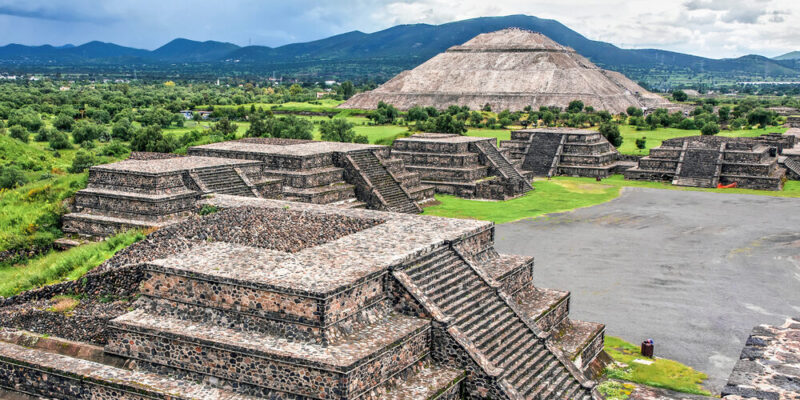
- Teotihuacana culture . This civilization inhabited the Northeast of the Valley of Mexico, around the city of Teotihuacán and its splendor was between 200 d. C. and 550 d. C. is one of the most mysterious cultures for archaeologists, who still discuss what their origins were and try to understand the causes of their disappearance. It is believed that the State did not have a single ruler but a collective co -government administered by a ruling class that represented the different ethnic groups that integrated the Teotihuacan society. This culture had great influence in other contemporary civilizations (as in Mayan cities) and later (as in Aztec civilization).
- Zapoteca culture . This civilization occupied the Oaxaca Valley and the Isthmus of Tehuantepec, between 500 a. C. and 900 d. C. From Monte Albán city, the Zapotecs conquered neighboring towns and extended their status. His political and social organization was strongly influenced by religious dogma and his artistic expressions had war and ceremonial features.
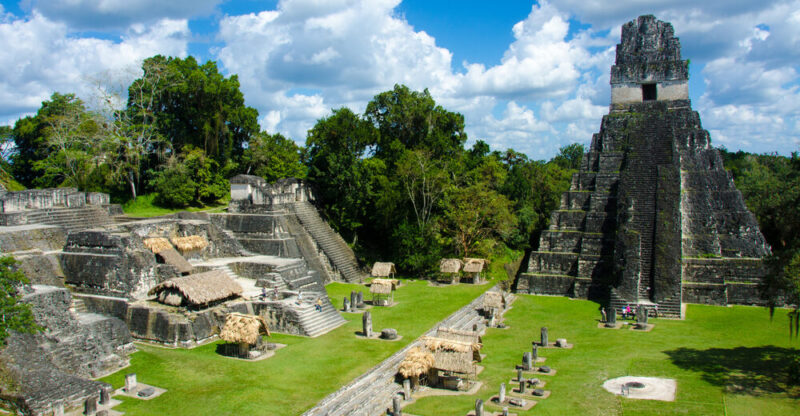
- Mayan culture . This civilization inhabited the Yucatan Peninsula between 2000 a. C. and 1527 d. C. Throughout their history, the Maya organized different independent cities-states with theocratic governments. During the classic period, the cities of Palenque, Copán, Tikal and Uxmal led the Mayan horizon. His temples were made of stone, shaped like a staggered pyramid and walls painted with bright colors. Mayan culture is recognized for its development in agricultural technology and astronomical knowledge.
End of the classical period
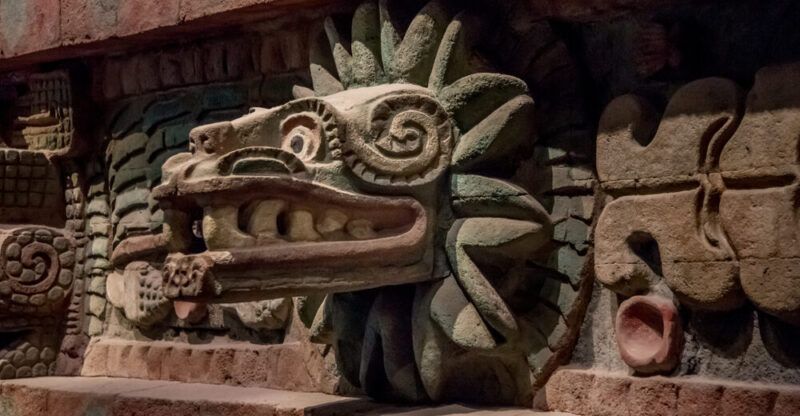
The end of the classic period It is linked to the decline of the dominant cultures of each Mesoamerican region during the ninth centuries and x d. C. Historians make the difference between this period and the following, called postclassic (900-1521 d. C.), from some changes that characterized the different Mesoamerican cultures of both periods:
- Military activity . In the post -classic period, the war activity became special importance in the relationship between the different Mesoamerican civilizations. There was an impulse in the development of arms technology (with the introduction of metallurgy) and a greater amount of war conflicts due to the domain of territories.
- Hegemony of warriors . During the classical period, the leading classes legitimized their power through religious beliefs and were mostly linked to priestly groups. In the subsequent period, the increase in military activity led to the leading groups directly linked to the war.
- Strengthening of merchant groups . The deepening of class differences within Mesoamerican societies allowed merchants groups to strengthen their place in the social scale. By bringing luxury goods that the leading classes used as a symbol of distinction, the merchants enriched and strengthened their power in the political framework.
- War pantheon . In the religious sphere, the cult of warrior gods such as Quetzalcoátl (the feathered snake), and the gods linked to the rains and fertility were relegated to a second place began to predominate.
References
- López Austin, Alfredo; and López Luján, Leonardo (2001): The indigenous past. Mexico City: The College of Mexico.
- Boehm of Lameiras, B. (1991). The State in Mesoamerica. Study on its origin and evolution. Spanish Journal of American Anthropology, 2111.
- Carmack, Robert et. to the. (1996): The Legacy of Mesoamerica: History and Culture of A Native American Civilization. Prentice Hall. New Jersey.
- Duverger, Christian (1999): Mesoamerica, Art and Anthropology. Conaculta-Londucci editors. Paris.
- “Ancient Americas: Maya” in History.