
We explain what were the main demographic, economic and political consequences of the Spanish Civil War.
What were the consequences of the Spanish Civil War?
The Spanish civil war was a military conflict that crossed Spain between 1936 and 1939. It began with The uprising of a part of the Spanish army against the government of the Second Republic .
On July 17, 1936, the rebels, who called themselves “the national side”, gave A coup d’etat that began in Melilla and extended in the north and west. However, they failed to be imposed throughout the country and the Republican government had popular support to suppress the coup.
Since then, and until 1939, Spain crossed a civil war, in which The country was divided into areas controlled by the different sides . To the battles for territorial control murders, disappearances, destruction of land and resources from both sides were added.
At the end of the war, the winning nationalist side imposed General Francisco Franco as a totalitarian dictator, in a regime that lasted until 1975. When assuming, The Government investigated and punished the war crimes of the defeated Republican side, pursued the militancy not related to the regime and censored any dissent .
The war crimes of the winning nationalist side, on the other hand, remained hidden and there were no real calculations on human and material losses during the civil war.
See more in: Spanish Civil War
Demographic consequences
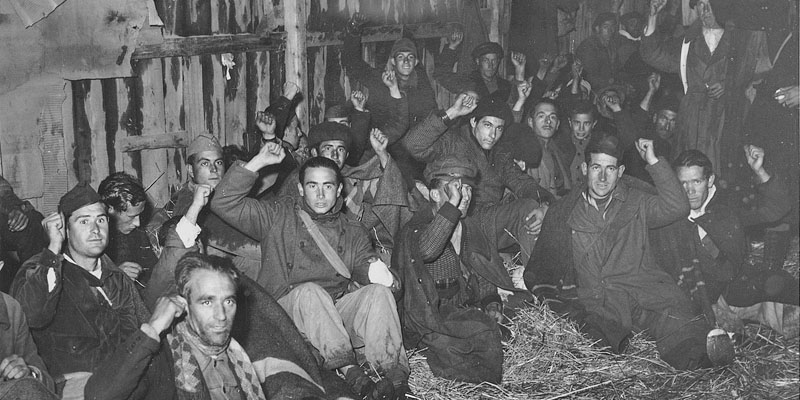
Very different figures have been given on the human losses caused by the conflict. In addition to dead on battle fronts, there were murders for repression in war and the immediate postwar period, killed by hunger, diseases and missing.
Currently, historians estimate that The number of fatal victims of the civil war is around 500,000 dead . This figure includes the victims for repression of both the areas controlled by the Republican side and those controlled by the nationalist side, the extrajudicially killed and executed by sentences of war councils and those prosecuted by the Spanish military government during the immediate postwar period.
Another key element of demographic consequences was the republican exile. Already during the conflict, The “Children of War” were evacuated to foreign countries but the great exodus took place in January and February 1939, a consequence of the conquest of Catalonia.
On the whole, It is estimated that there were more than four hundred fifty thousand exiles . Although some were returning during the dictatorship, many did not return to Spain or waited for the death of the dictator in 1975.
This exile supposed An important demographic loss for the country : A young and active population, which included a large part of the most prepared sectors in the country: the scientific, literary and artistic elites of the silver age.
Economic consequences
The human and material destruction of the war generated a serious economic crisis in Spain: national income and per capita He did not recover the level of 1936 until the 1950s.
Among the main elements that led to the economic crisis, are:
- The ruin of industrial fabric of the country, which caused the economy to be based primarily on agricultural and subsistence production during the 1940s.
- The destruction of housing and commercial and communications infrastructure.
- The increase in external debt and the Loss of gold reserves of the Bank of Spain, used by the Government of the Republic to pay Soviet aid.
Social consequences
The result of the war had deep consequences in the social network. With the new government, The landowner, industrial and financial oligarchy recovered its political and social hegemony . On the other hand, the working class lost the guarantee of its recently acquired labor rights and civil society in general saw the limitation of its elementary rights of freedom and expression.
On the other hand, war generated a moral crisis in the country. The whole society was crossed by the suffering of war and the repression of the long postwar period, the destruction of their homes, the disappearance or death of family, friends or close relatives. Franco’s regime did not seek the reconciliation of the Spaniards And, throughout the regime, It celebrated its warlike origin.
Political consequences
The result of the Spanish civil war was The political rise of the military faction which began the coup against the Second Spanish Republic. This ascent involved severe political consequences for Spain:
- The loss of legitimate and democratic government installed during the Second Republic.
- The implementation of a totalitarian regime for almost forty years, organized around a unique party of fascist features, with Francisco Franco at the head.
- The consolidation of political hegemony of the Spanish upper class, linked to the territorial aristocracy and the industrial bourgeoisie.
- The revinculation of the Catholic Church within the national political and educational system.
Continue with:
References
- Martorell, M. and Juliá, S. (2012). The Spanish Republic. In Manual of Political and Social History of Spain (1808-2011). Editorial UNED.
- Tusell, J. (2012). History of Spain in the twentieth century (II). The crisis of the thirties: Republic and Civil War. Taurus
- Valdeon, J., Pérez, J., Santos., J. (2003). Military rebellion, social revolution and civil war. In History of Spain. Mexican Calpe Espasa.


