
We explain what Franco was and who were the opponents pursued by Franco's regime. In addition, the most important events of 1950 and 1960 in Spain.
During the dictatorship of Francisco Franco in Spain (1939-1975) there were different sectors of the population that opposed the regime. However, for almost four decades, opposition organizations had to be maintained clandestinely, due to state repression and censorship of the Francoist government.
Among the main sectors that formed the opposition to Franco are:
- The Republicans (defenders of the Republic who suffered the coup d'etat of 1936 and put Franco in power);
- workers and unions;
- Basque and Catalan nationalists;
- the sectors of students and liberal professionals;
- The Catholic Church (which during the first period was an essential support of the dictatorial government, but in the second period it was part of the opposition sectors).
Post -war repression
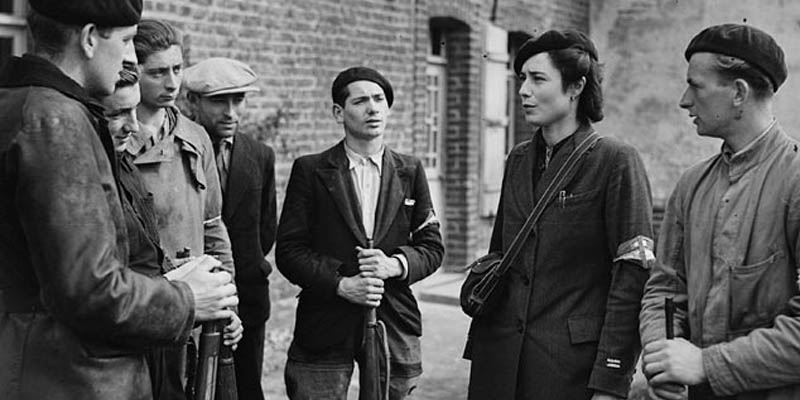
During the Spanish Civil War (1936-1939), the rebels against the Republican Government were increasingly occupying more and more territory, and imposing a military government. As Francoist troops occupying the different regions of the country, many republican left combatants fled from repression, “threw themselves to the mountain” and sought refuge in the mountains.
These groups dispersed over time organized and formed guerrilla groups, known as the maquis. They formed as the main opposition to Franco during the first period of government. His political affiliation was diverse and integrated socialist, communist and anarchist activists. However, the activity of the Spanish Communist Party (PCE) made the communist identity imposed over the rest of the political orientations.
Once the civil war was over, Franco's government was in charge of institutionalize the dictatorship and eliminate all possible sources of opposition . The objective was to achieve a homogeneous Spanish society based on a new nationalist, Catholic and military moral.
For this, essential political freedoms of citizenship, political parties, union associations and free expression were prohibited. Educational institutions were intervened to control programs and purge divergent mentalities. In that context, Any dissent was persecuted and a policy of extreme repression was maintained .
Republican leaders who fled the country in 1939 maintained the Government of the Republic abroad. His hopes were deposited that if Hitler was defeated in World War II, this would mean the intervention of allied troops and the end of Franco's dictatorship. However, at the end of the war, allied troops did not intervene in Spain. In addition, all these hopes ended when Spain entered the UN in 1955.
On the other hand, the hard repression and lack of support from the USSR government led to the PCE for the armed struggle and called the guerrillas to flee the country.
The repression of war and postwar dismantled the political and union paintings of the left . The first strikes in 1946 Y1947 were hard repressed and the opposition continued silenced.
In March 1951, the first mass strike against Franco was held. It was a boycott of the trams of Barcelona for the rise of rates. The population refused to use transport for two weeks and began to demonstrate in protests on the street claiming for the harsh living conditions that the Spanish population was going through since the Civil War.
In parallel, at the university, tensions were growing in demand for more freedom in the chairs and classrooms. The university discomfort culminated in the incidents of the Complutense University of Madrid in 1956, with clashes between students who wanted to organize freely outside of Francoism and the phalangists of the Spanish university union (the Franco student group).
These incidents caused the resignation of the Minister of Education Ruiz-Giménez and showed the appearance of a New generation that began its opposition to the dictatorship.
The 1960s: the union opposition and the nationalist movements
Social changes facilitated the extension of opposition activities to the dictatorship. Various protest movements converged in the final period of Franco:
- Labor movement. The labor movement began to be organized around the so -called “workers commissions”, which were representation bodies of the workers chosen in assembly. During the first part of the 1960s, the commissions could work and infiltrated the official union organization of Franco. However, in 1967 they were prohibited and suffered violent repression.
- Nationalist movements. The nationalist movements were reinforced in various social layers of Catalonia. In the Basque Country, along with an increasingly influential Basque Nationalist Party, Euskadi Ta Askatasuna (a nationalist organization known as ETA, which in Basque language means “Basque Country and Liberty”) He was increasing his prominence with his terrorist actions.
- Student movement Participating to the extent of the possible international context marked by youth protest, the student movement It extended and the student protests achieved an important social impact.
- Catholic opposition. The Second Vatican Council favored the extension of Catholic Movements critical of Francoism that collaborated with the opposition parties and the labor movement. Even influential sectors of the Catholic Church showed a growing distance from the dictatorship.
In short, without being able to collapse the Franco regime, opposition movements managed to create A wide social network of response to the Franco regime .
The repression was the only response of the dictatorship. The Political Police, the Political-social brigadehe pursued, stopped and tortured any political dissent. The opponents of the regime became tried by a court specially created to execute the repression, the Court of Public Order.
The impact of the 1973 world economic crisis (“oil crisis”) encouraged the workers' protests, increasingly loaded with political claims against the dictatorship. The most powerful union organization, workers commissions, grew remarkably in the last years of Franco. This clandestine union was strongly influenced by the Communist Party of Spain.
The cultural evolution of the opposition to Francoism
The dictatorship tried to implement on a very complex country the National-Catholic mentality on which it based its ideology. The extreme conservative positions on social morals and customs combined with nationalist exaltation. Meanwhile, a reality marked by poverty and corruption contrasted with what the regime tried to implement .
In the forties and fifty, the work of propaganda and a educational system controlled by the Church managed to promote this mentality in the population.
However, the economic development of the sixties and the massive arrival of the tourism They changed the society on which the national-catholic mentality was based. Quite quickly, Society (especially the new generations) embraced a way of seeing the most open, tolerant and liberal world.
The dissonance between what the regime proclaimed and what a growing number of Spaniards thought was increasingly evident. Thus, when the dictator died, society quickly adapted to a democratic system that corresponded much more with the predominant mentality.
The triumph of Francoism was the end of what is known as the Silver age of Spanish culture. The country, with most of its relevant intellectuals in exile or silence, became a cultural wasteland.
The regime used all means to control culture and use it as a propaganda weapon. The Catholic and traditional culture, the continuous reference to the Spanish State and the victory in the Civil War became key issues, which were reflected in the artistic works of architecture, painting and cinema.
Once all republican teachers and teachers, Education remained in the hands of the Catholic Church and the Falangist ideology. Ecclesiastical censorship was established on shows, press and books. During the forties and fifty, the official culture departed from the predominant currents in Western culture to try to establish a national-catholic Spain.
In spite of everything, in the late fifties and during the sixties, the hard control over culture was relaxing. Some intellectuals began gradually questioning the official culture. Figures such as Laín Entralgo, Ridruejo or López Aranguren, from Falangismo, began to move away from the regime. Others like Julián Marías or Tierno Galván, who had been on the Republican side, began to develop opposition work in universities. In some cases, they had to choose to leave the country.
Some periodic publications such as Western Magazine either Notebooks for dialogue They tried to overcome the ideological uniformity that the Franco regime intended.
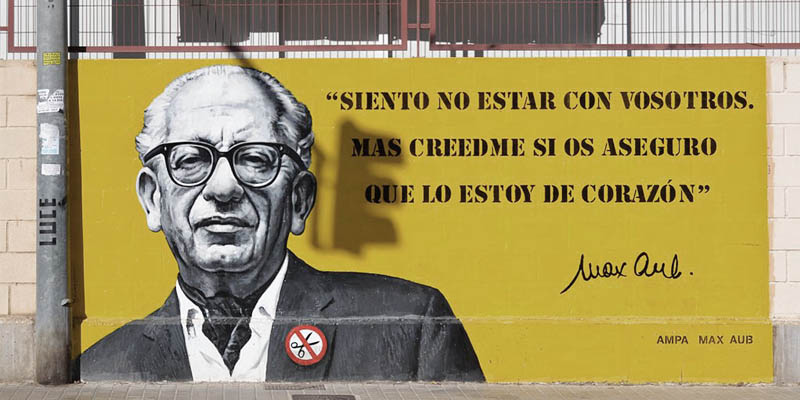
In the sixties, the relaxation of censorship allowed the publication of works by authors prohibited until that time as Ramón J. Sender, Max Aub or Antonio Machado. And a wide group of authors published works that demystified the vision of the victors of the Civil War: Miguel Delibes, Buero Vallejo, Torrente Ballester, Camilo José Cela, Blas Otero or Gabriel Celaya.
At the same time, the arts adapt to the predominant currents in the western world, and moved away from the model of the first Francoism. Architects such as Miguel Fisac or Francisco Javier Sáenz de Oiz Return from Spanish culture to modernity.
Opposition parties and unions
The different political and union groups adapted differently to the hard repression of Franco and the evolution of Spanish society. While the Spanish Socialist Workers Party (PSOE) became a weak and divided party among its leaders of exile and interior, the Spanish Communist Party (PCE) It became the main opposition party, with a strong clandestine structure.
Meanwhile, the anarchists, as well as the Republicans, practically disappeared. The opposition of liberals or monarchists only appeared at the end of the dictatorship around some media.
In the union field, the birth in 1962 of the workers commissions was highlighted. Promoted by the Communist Party, they were based on the use of legal fissures, which allowed Francoist legislation and infiltration in the union organization. Historical unions, the General Union of Workers and the National Confederation of Labor barely had a presence during the dictatorship.
Continue with:
References
- Juliá, S., García Delgado, JL, Jiménez, JC, and Fusi, JP (2007). Dictatorship. In 20th century Spain. MARCIAL PONS EDITIONS HISTORY.
- Martorell, M. and Juliá, S. (2012). The dictatorship of General Franco. In Manual of Political and Social History of Spain (1808-2011). RBA books.
- Villacañas Berlanga, JL (2014) Franco. In History of political power in Spain. RBA books.


