
We explain what deforestation is and what its causes are. Also, its characteristics and its main consequences.
What is deforestation?
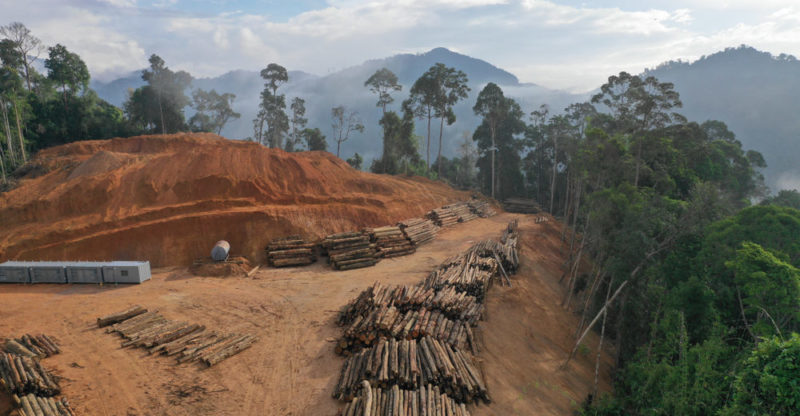
Deforestation is the destruction of native forests as a result of human action. . This process entails the irreversible loss of biodiversity, as well as the alteration of regional and global hydrological and climatic cycles.
The history of deforestation dates back to ancestral practices of communities that depended on agriculture for their survival. That is why they advanced on forested surfaces to be able to produce their crops. However, today, the arrival of modern technologies and the growing demand for large-scale timber and agricultural products have deepened the forest exploitation at unprecedented levels .
The causes of deforestation include the expansion of agriculture and livestock, the indiscriminate felling of trees for wood and paper, fires and the conversion of forest lands into urban areas.
The consequences of deforestation are related to the loss of biodiversity, soil erosion, alteration of regional climate patterns, reduction in oxygen production and the emission of greenhouse gases. This not only threatens ecological stability, but also directly impacts the quality of life of human communities that depend on forests for their survival.
Deforestation should not be confused with forestry activity. Deforestation refers to the loss of native forests and constitutes an environmental problem, while forestry activity occurs on forests that are planted to later be used economically. Forestry conceives forests as a crop: planting trees, waiting for their growth and then cutting them down for use. This economic activity is fundamental for the industrial production of different countries and does not constitute an environmental problem.
Characteristics of deforestation
Deforestation has the following characteristics:
- It is defined as the destruction of native forests by human actions.
- It has existed for centuries, but has accelerated noticeably in the last 150 years.
- The expansion of the agricultural frontier is its main cause at a global level.
- Among its consequences are the loss of biodiversity and the alteration of regional and global climate patterns.
- Environmental protection laws are the most effective measures that governments have to combat it.
Causes of deforestation
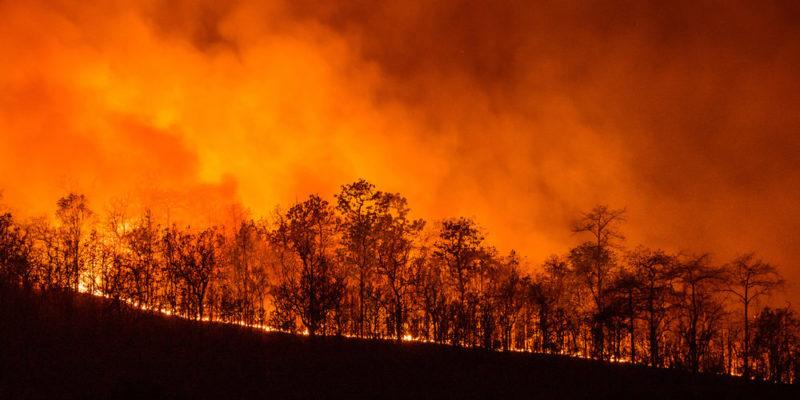
Deforestation represents an environmental challenge for authorities around the planet. The loss of forests that house ecosystems and biodiversity and provide environmental services fundamental to life compromises the integrity of natural balances and cycles on Earth.
The main causes of deforestation are:
- The expansion of agricultural and livestock activity motivated by growing food demand and unsustainable agricultural practices.
- Logging mainly for the use of the timber industry and the generation of firewood for fuel.
- The development and expansion of cities which advance on forest surfaces when they need to grow.
- forest fires which are almost always generated intentionally as a way to destroy large forest areas in a short time.
1. The expansion of the agricultural frontier
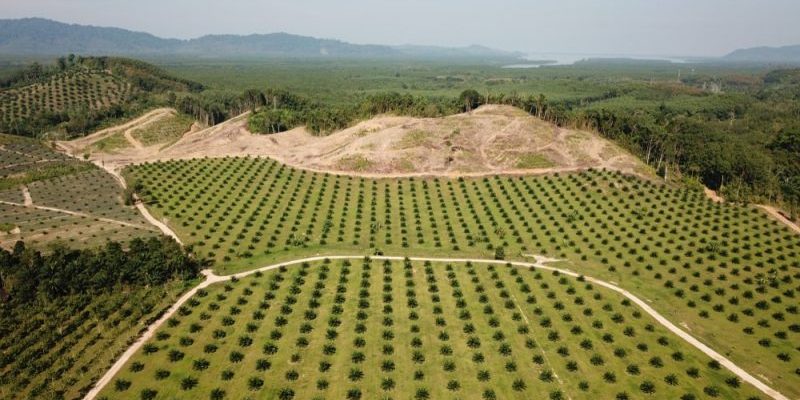
The expansion of the agricultural frontier is the main cause of deforestation worldwide. This process has experienced a notable increase with the development of intensive agricultural practices and the globalization of food production.
The transformation of forests into croplands not only causes the loss of biodiversity, but also contributes to the release of large amounts of carbon dioxide and reduced oxygen production.
Furthermore, trees have a much higher water absorption capacity than crops, so the replacement of forested areas with agriculture also contributes to increasing the intensity of flooding.
2. The use of wood
The increase in demand for wood globally and its unsustainable exploitation threatens the planet’s forested areas. Historically, this activity has been an important economic driver, but lack of regulation and overexploitation have led to the loss of large amounts of forests in recent decades.
Currently, deforestation for the use of wood occurs mainly in peripheral countries, especially in rural areas that do not have access to basic services such as natural gas. For this reason, people must use trees to obtain firewood for cooking and heating.
3. Urban expansion
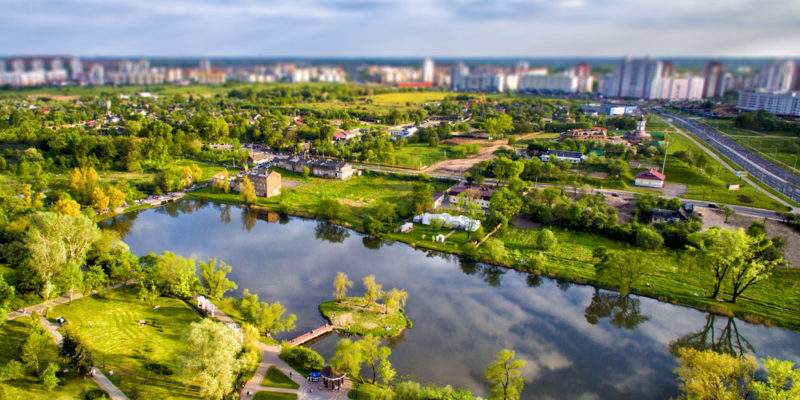
The expansion of cities contributes to deforestation. As cities grow outward, they increasingly need more space to allow them to extend urban infrastructure. In this way, the expansion of streets, avenues, routes and neighborhoods often produces the loss of forests.
For this reason, cities sometimes plan their expansion so that it has the least possible environmental impact. When this does not happen, it negatively affects forests, not only due to the loss of tree area, but also due to the alteration of the habitats, ecosystems and natural cycles of each region.
4. Forest fires
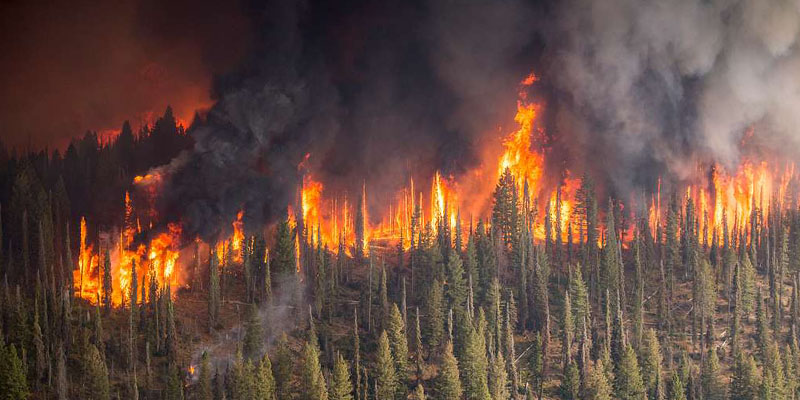
Forest fires can occur for three reasons:
- Naturally . They occur mainly in times of drought and high temperatures. The heat causes a fire to start and the lack of humidity contributes to the expansion of the fire. They are very rare.
- By accidental human action . They are caused by human negligence. People sometimes unintentionally start a fire by lighting a fire in a campsite or in a very dry place. They are rare.
- By intentional human action . Most forest fires are caused by deliberate actions of people, who start a fire in a forest with the intention of burning it. It is a quick and inexpensive way to deforest large areas of forest in order to then be able to economically use those lands.
Consequences of deforestation
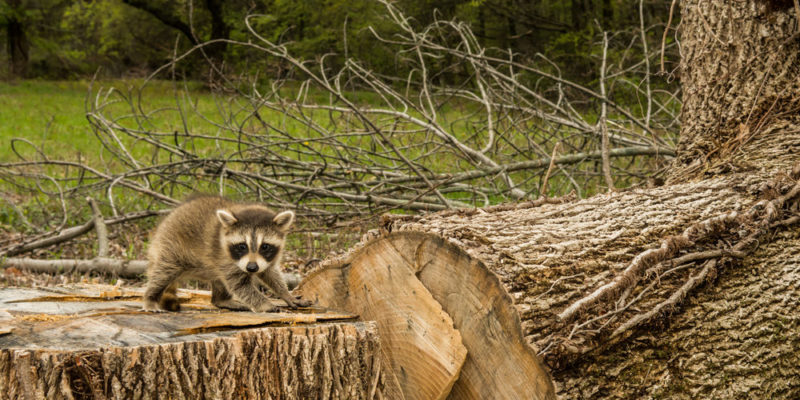
The main consequences of deforestation are the loss of biodiversity, a greater occurrence and intensity of floods and an increase in the global greenhouse effect.
1. Loss of biodiversity
Forests are home to a great diversity of animal and plant species, many of which directly depend on these ecosystems for their survival. The loss of forest areas causes the degradation and fragmentation of habitats, leading to a decrease in the complexity of ecosystems, the death of animals and the extinction of species.
2. Greater occurrence and intensity of floods
The greater occurrence and intensity of floods and avalanches constitutes another direct consequence of deforestation. Forests play a crucial role in regulating the hydrological cycle by gradually absorbing water. Mass tree removal reduces soil retention capacity, increasing surface runoff and the likelihood of flooding.
Furthermore, when deforestation occurs, the soil loses stability, which increases the frequency and magnitude of landslides and avalanches in mountainous areas that were previously protected by trees.
3. Increase in the greenhouse effect
Forests act as carbon sinks, absorbing carbon dioxide (CO2) during photosynthesis and produce oxygen. The loss of forests results in the massive release of carbon into the atmosphere, which intensifies the greenhouse effect and contributes to climate change.
For this reason, international environmental agreements suggest that countries implement public policies that protect native forests as a way to contribute to mitigating the increase in global temperature and the consequences of climate change.
Measures against deforestation

Some measures that States can adopt to protect their native forests include:
- Environmental protection laws. Some countries have laws that prohibit deforestation in certain areas. In other cases, deforestation is permitted, but requires authorization from the State and is only authorized after carrying out an environmental impact study.
- Payments for environmental services. Some States pay landowners with forested areas to conserve those forests and the environmental benefits they offer.
- Implementation of protected natural areas. The creation of protected natural areas, such as national parks or nature reserves, contributes to the ecosystem maintenance of forests and forest areas.
- Restoration and reforestation programs. On some occasions, States intervene in degraded forests to restore and reforest them. In these cases, we seek to plant trees that are native to the area to avoid incorporating exotic species that could affect the dynamics and ecosystem cycles of the forests.
- Environmental education. The purpose of environmental education programs is to inform and raise awareness among the population, public officials and businessmen about the importance of forests for the natural dynamics of the planet.
Difference between deforestation and forest degradation. Forest degradation is the reduction or destruction of some specific aspects of the forest, but not the forest as a whole. Some of its causes are pests or disease outbreaks that affect only one species, or the exploitation by humans of some specific resources, which alters the dynamics and natural cycles of forests. Although degradation is not as serious as deforestation, it also has negative effects on biodiversity and contributes to climate change.
How to avoid deforestation?
The fight against deforestation does not have a simple solution. Ideally, it would have to be the product of sustained efforts by States and Non-Governmental Organizations (such as Community Forestry International, WWF, Greenpeace and others).
It should also be the responsibility of the industries themselves log responsibly that is, at a rate that allows reforestation and that satisfies the strictly necessary needs of demand.
On the other hand, there is the idea of alternate felled forests allowing enough time for plant life to minimally recover. Activities can also be encouraged pulp recycling through the collection of waste papers and wood.
Consumers and businesses can also play a very important role in preventing deforestation. First, it is essential to achieve a process of awareness and sensitization through educational campaigns, so that consumers identify the problem and care about buying ecological products, coming from companies free of deforestation for their manufacturing.
Then, based on consumer choices and their pressure towards these products, many companies would choose new strategies and alternatives to produce deforestation-free.
Another strategy is the use of recycled paper, plastic and wood products, as well as the adoption of responsible consumption. This will result in less dependence on trees and, therefore, a reduction in deforestation.
At the same time, stricter legislations promote all of the above should be a priority in most countries.
Reforestation
reforestation is the effort to plant new forests or grow existing ones . It can be done through its protection or through the scattering of seeds, as well as individual planting by citizens.
Many of these initiatives have borne enormous fruit in the first years of the 21st century and it is considered that the amount of forest has grown in 22 of the 50 countries with the largest forest reserves on the planet.
Deforestation in Mexico
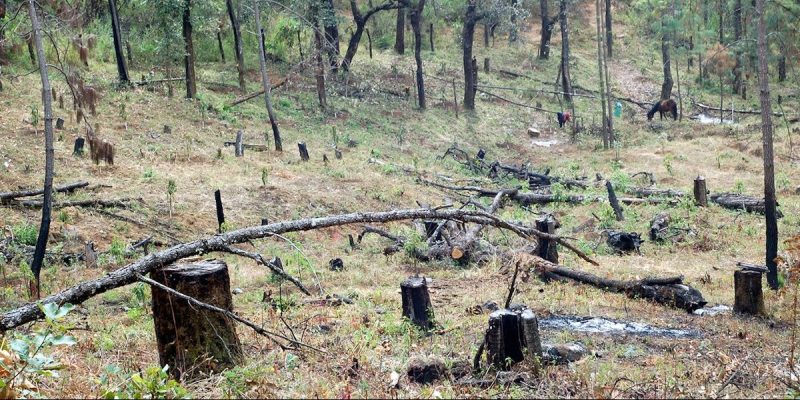
In Mexican territory there are 138 million hectares of forest vegetation, especially lush in the southern regions, where they meet the Central American jungle. Of all this 3.2 million hectares have been lost between 2001 and 2017, 6% of the forest territory which is bad news for the ecology of the region.
FAO studies estimate that 34% of the fauna of these forests is endemic, that is, it cannot live anywhere else on the planet. This means that 12% of the fauna will disappear completely in the coming years if nothing is done to prevent it.
This is a problem that Mexico shares with other Latin American countries, such as Brazil, Peru, Bolivia and Colombia.
Deforestation in the Amazon

The Amazon Rainforest is one of the largest forest areas in the world . One in every ten species known to humanity lives there, making it the largest reserve of planetary biodiversity. Furthermore, it is one of the planetary “lungs” since it fixes enormous amounts of carbon that would otherwise end up in the atmosphere.
However, the Amazon nations (Brazil, Bolivia, Peru, Colombia and Venezuela) exploit this resource in different ways, to provide land for agriculture, livestock and mining, or resources for timber industries.
The issue of Amazon deforestation, whose effects on the local climate are already being felt, came to light when thousands of hectares of forest burned during August 2019, mainly in the territories of Brazil and Bolivia.
This sparked international concern and outrage. However, Exploitation activities in the region have been denounced for years or decades by environmental activists and by spokespersons for the ancestral communities that still live far from civilization, in the bowels of the Amazon.
References
- The Country. (2018). Countries that manage forests well. The Country. https://elpais.com/
- Juste, I. (2021). Causes of deforestation. EcologyGreen. https://www.ecologiaverde.com/
- Soto, J. (2020). Deforestation, what is it, who causes it and why should we care? Greenpeace. https://www.greenpeace.org/


