
We explain what domestic animals are, examples and some of the main characteristics of these animals.
What are domestic animals?
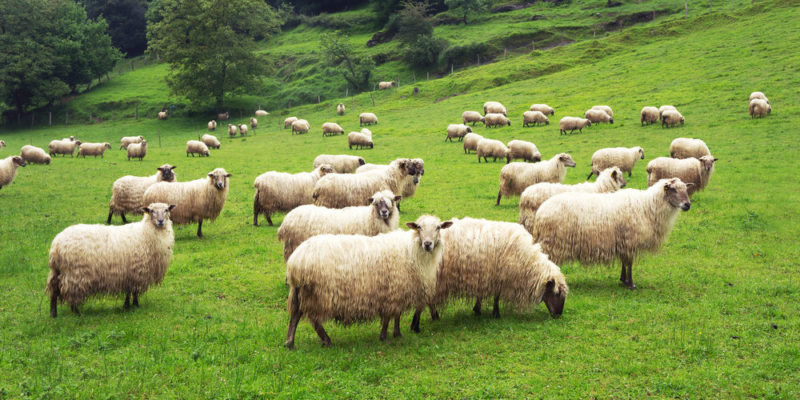
Domestic animals are understood to all those who have gone through a domestication process that is, they have learned to coexist with human beings to such an extent that in many cases it would be difficult for them to lead an existence apart from human society.
The process of accustom a wildlife animal or plant species to the terms of human existence that is, to live with human beings and adapt to the type of activities they carry out. It is a process that began thousands of years ago, at the dawn of our species, when the discovery of agriculture led to the need for robust animals that would provide human beings with the strength that their bodies lacked. This process was also key in the invention of livestock farming and other similar activities.
Also plant species, such as corn and wheat, were domesticated which adapted to proliferate in human-controlled spaces, rather than their natural environments. This process forever altered their evolutionary courses and subjected the species to artificial selection processes according to our needs as a species.
Today, domestic animals live with us in rural and urban environments serving us as company, food, transportation or labor force. In exchange, we offer them effortless, competition-free nutrition, a safe habitat and certain comforts, especially those we consider daily companions, such as dogs and cats.
Examples of domestic animals
Below is a list of the most common pets:
- Dog (Canis lupus familiaris).
- Rooster (Gallus gallus)
- Cat (Felis silvestris catus)
- Cow (Bos primigenius taurus)
- Zebu bull (Bos primigenius indicus)
- Goat (Capra aegagrus hircus)
- Pig (Sus scrofa domestica)
- Sheep (Ovis orientalis aries)
- guinea pig (Cavia porcellus)
- Donkey (Equus africanus asinus)
- domestic duck (Anas platyrhynchos domesticus)
- Horse (Equus ferus)
- Dromedary (Camelus dromedarius)
- Silkworm (Bombyx mori)
- common pigeon (Columba livia domestica)
- Camel (Camelus bactrianus)
- Calls (glama flame)
- Alpaca (Vicugna pacos)
- Guinea fowl (Numida meleagris)
- Polecat (Mustela putorius)
- Home mouse (Mus musculus)
- Gray-rosy dove (Sreptopelia roseogrisea)
- Turkey (Meleagris gallopavo)
- carp fish (Cyprinus carpio)
- domestic rat (Rattus norvegicus)
- domestic canary (Serinus canaria domestica)
- Guppy fish or million fish (Poecilia reticulata)
- domestic bee (Apis mellifera)
- Creole duck (Cairina moschata)
- Peacock (Pavo cristatus)
- Cockatoo (Cacatua galerita)
- Macaw (Ara Macao)
- land turtle (Chelonoidis carbonaria)
- Swan (Cygnus olor)
- Australian budgie (Melopsittacus undulatus)
- fruit fly (Drosophila melanogaster)
- Capybara, chigüire or capybara (Hydrochoerus hydrochaeris)
- Hamster (Mesocricetus auratus)
- red eared slider (Trachemys scripta elegans)
- domestic parrot (Psittacidae spp.)
Differences between domestic and wild animals
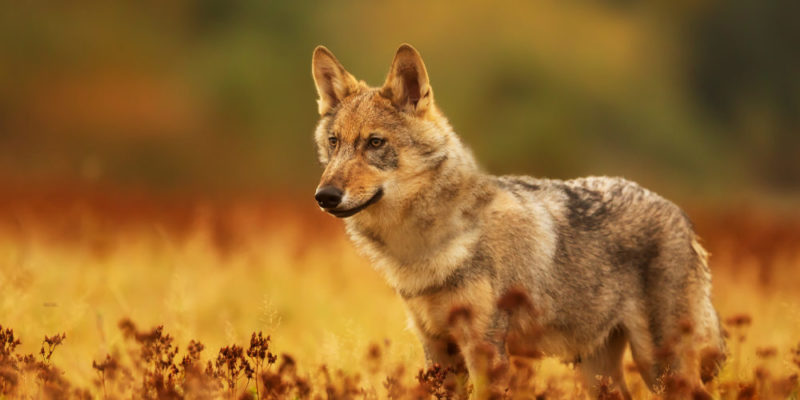
Although domestic animals are adapted to living alongside us, in some cases even inside our homes, and therefore forming a close bond with us, as if we were in some cases members of the same pack, this was not always the case. Before being domesticated, Animals lived in their natural habitat, subject to natural laws that is, in the wild.
Most animals in the world still live this way, which is why they are called wild animals, far from human intervention. Thus, while domestic animals live in our houses, on farms or in stables, wild animals live in their respective habitats: the jungle, the desert, the sea, etc.
the dog

We call dog a set of species of domestic canids, related to the wild wolf who around 10,000 years ago embarked on a way of life close to human beings, probably understanding that an association with our species could be beneficial in terms of easy access to food, heat and shelter, in exchange for protection and assistance in hunting.
The passage of centuries, however, ended up making the dog a companion animal with enormous variety between one breed and the other due in part to our interference through selective breeding.
The cat

Another of the most common pets is the cat, although apparently less completely domesticated than the dog, given that retains a good part of its hunting instincts intact . It is thought that it was introduced to human civilization as a way to hunt down the rodents that infested the food stores of the Ancient Egyptian civilization.
This type of medium-sized feline It was venerated by numerous eastern civilizations and condemned by Western Christianity, which saw in them a symbol of evil, surely due to their nocturnal and independent habits.
The parrot

One of the most sociable domestic birds known, typically green plumage although with other accessory colors the parrot stands out for its strong curved beak and its ability to imitate human language. It is not, however, that the parrot really “speaks”, since it is incapable of acquiring language; but it is capable of imitating various words quite faithfully, as well as making other sounds such as whistling, laughter, etc.
the cow
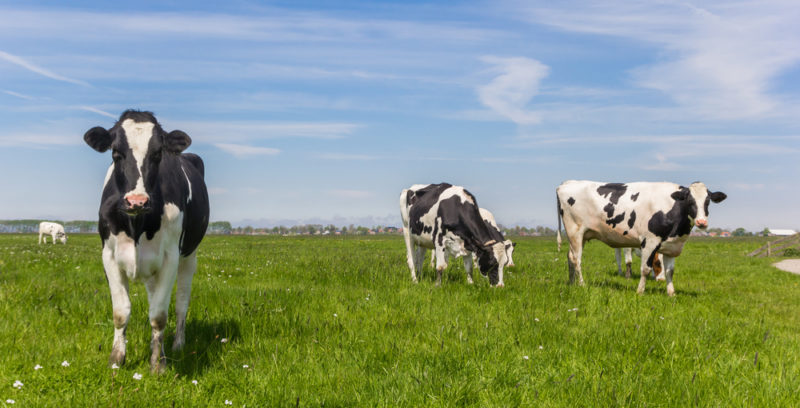
Perhaps the most important domestic animal in human history is the cow, or at least cattle in general. Not only because From it we obtain milk, the source of numerous food products and various types of meat or leather, to feed us or to protect us from the cold; but also because its introduction to primitive human civilizations allowed plowing to be carried out much more effectively, taking advantage of the brute force of the animal to open furrows in the earth and then be able to sow.
The horse

Another of the most significant domestic animals in our history, associated with strength, speed and wild spirit, served as human transportation for millennia either by mounting it directly or using it as traction for various wheeled vehicles (carts, floats, etc.). The domestication of the horse reaches such a level that we usually intervene directly in its body, nailing metal horseshoes to its hooves to protect them from wear, or removing teeth to insert bridles.
the camel

These African and Asian animals were domesticated by the cultures of desert habitats, who saw in their strength, their passivity and their ability to go up to 10 days without drinking water the ideal characteristics to serve as a beast of burden. This domestication is much more recent than that of other animals with similar uses, but it was key in the commercial development of desert regions, such as the Sahara.
References
- “Annex: Domestic animals” in Wikipedia.
- “Domestic animals” on Anipedia.
- “Domestic animals” (video) in Educational Technology.
- “Domestic and wild animals” in Junta de Andalucía.
- “Domestication” in National Geographic.
- “Domestication” in The Encyclopaedia Britannica.


