We explain what an earthquake is, how it occurs, its elements, causes and consequences. Also, what types of earthquakes exist.

What is an earthquake?
An earthquake (or quake), tremor, earthquake or telluric movement is called violent, sudden, and transient shaking of the Earth's surface produced by the release of energy accumulated in the subsoil, in the form of seismic waves that travel outward. That is, these are regular and sudden movements of the Earth's crust, which occur as a consequence of various natural geological phenomena .
Depending on their intensity, earthquakes can be almost imperceptible or bring with them gigantic disasters, not only because of their direct impact on life on the Earth's surface, but because can lead to other destructive phenomena such as tsunamis, volcanic eruptions or land cracks.
For this reason, and because they are difficult to predict accurately, earthquakes have been a source of fear for humanity since time immemorial.
Paradoxically, earthquakes give us a lot of information about the interior of the planet. Numerous institutions are dedicated to recording the movements of the Earth's crust and predicting its surface effects, in order to also develop construction and engineering technologies that are more resistant and less affected, helping to prevent tragedies. This science is called seismology.
How does an earthquake occur?
Earthquakes occur when, due to some underground phenomenon (generally plate tectonics itself), Energy accumulates in the Earth's subsoil, due to the set of forces that take place there among which are gravity, pressure, high temperatures of matter and the resistance of materials compacted over the millennia.
This energy must eventually be released through waves that shake the matter. It will always do so according to the physics of the subsoil elements, moving in all directions, and as they advance towards the Earth's surface they increase in intensity, as they encounter softer materials.
Causes of earthquakes
The main causes of an earthquake are natural, although they can also occur as an exceptional consequence of certain human activities. A list of common causes would include the following:
Natural causes :
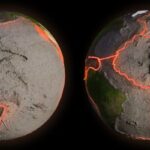
- The collision and friction of two tectonic plates which not only gives rise to seismic movements, but also different types of orogeny and geological changes.
- Violent eruptions of volcanoes which shake their surroundings as the trapped magma erupts to the surface.
- Massive landslides such as avalanches or underground geological collapses, such as the collapse of cave ceilings.
- Very sudden variations in atmospheric pressure as in the case of cyclones.
Human causes :
- The sustained use of geothermal electricity generation by suddenly cooling the subsoil by introducing water to evaporate, can cause small local earthquakes.
- “Fracking” or hydraulic fracturing for the extraction of hydrocarbons, a technique that consists of increasing the cracks or conduits in which the desired substances are housed, injecting water at very high pressures.
- Underground nuclear explosions and other high-intensity war experiments.
Consequences of earthquakes

An earthquake may not have consequences that are noticeable to the naked eye, at least for those of us on the surface. But it can also bring with it more or less disastrous consequences, capable of costing numerous lives, such as:
- Landslides and landslides such as avalanches, avalanches or partial landslides.
- Soil ruptures and liquefaction since when surface materials are subjected to sudden and intense movement, they can break, separate or lose their cohesion, becoming in the latter case a white or semi-liquid substance.
- Tidal waves, floods and tsunamis in cases where the tremor occurs near large bodies of water, the waves can be transmitted to the liquid and produce large waves of enormous size and other unusual behaviors.
- Fires and urban damage as a result of the collapse of buildings, exposing gas pipes and collapsing power lines.
Types of earthquake

Depending on their tectonic characteristics, earthquakes can be classified into:
- Interplate earthquakes also known as subduction earthquakes, occur in contact regions between two tectonic plates, when the pressure between them overcomes the mechanical resistance that blocks them and a displacement occurs in some direction. Its intensity, in fact, depends on the amount of movement produced.
- Medium and high depth intraplate earthquakes similar to the previous category, but produced inside the plate and not at its ends in contact with another. They are, however, much less common.
- Cortical or superficial earthquakes produced at low depth, as a consequence of the deformations and stresses suffered by the continental plates of the lithosphere, being found at a point of convergence of tectonic plates.
- Ocean plate earthquakes produced as their name indicates in underwater tectonic plates, especially at the beginning of subduction processes, they are usually associated with tidal waves.
- Transform fault earthquakes produced by the collision of two tectonic plates, but not at the meeting point itself, but far beyond, due to the transmitted forces and the lateral displacement produced between the plates encountered.
On the other hand, a second common way of classifying earthquakes is the one that takes into account the depth of their focus. According to this, we would have only three categories:
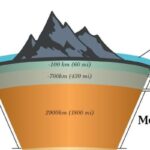
- Shallow earthquakes produced in a strip of the Earth's crust no further than the first 70 kilometers deep.
- Intermediate earthquakes produced at a greater depth that ranges between 70 and 300 kilometers underground.
- deep earthquakes produced outside the limits of the lithosphere, beyond 300 kilometers deep.
Elements of an earthquake
The systematic study of earthquakes has revealed that they have certain common elements, such as:
- The seismic focus or hypocenter which is the point of origin of the underground earthquake, found somewhere in the lithosphere.
- The epicenter on the other hand, is the vertical projection on the earth's surface of the hypocenter, that is, the point on the earth's surface that is directly above the focus of the earthquake, and is the place where the greatest amount of damage traditionally occurs.
- The magnitude which is the strength or intensity with which the earthquake occurs, and which can be measured on different seismological scales, the most famous of all being the Richter Scale, named in honor of the American seismologist Charles F. Richter.
References
- “Earthquake” on Wikipedia.
- “Earthquakes and earthquakes” at the United Nations Office for Disaster Risk Reduction.
- “What is an earthquake?” in the Ministry of Security of Argentina.
- “Different types of earthquakes” (video) on TV Estado de México.
- “EARTHQUAKES: Causes, characteristics and impacts” in the Mexican Geological Service.