
We explain what the French Revolution was, its causes and consequences. Your social organization and revolutionary groups.
What was the French Revolution?
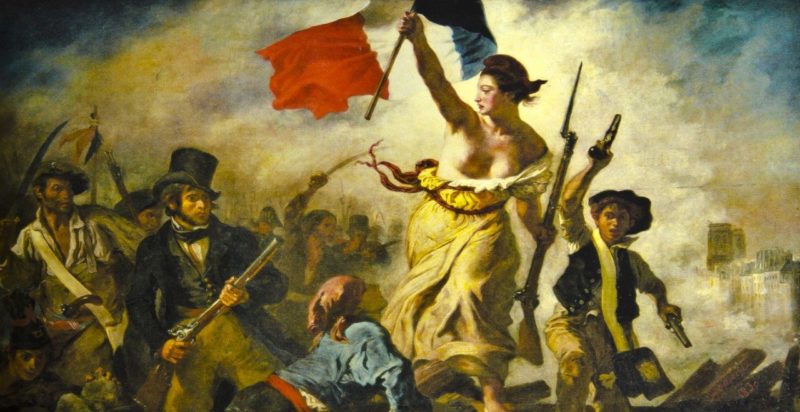
The French Revolution was a process of social and political transformations that began in 1789 and ended approximately in 1799. It began as an uprising starring bourgeois, noble and popular sectors against the absolutist monarchy and against the privileges of the nobility in France. Over the years, it became a period of violent conflicts not only against the supporters of absolutism, but also between different factions within the revolutionary side.
The French Revolution was influenced by the ideas of illustration and liberalism as well as due to economic and social circumstances, and had such a political and ideological impact that influenced revolutionary episodes of other countries (as in Latin America) and is usually considered the beginning of contemporary age.
Among the outstanding facts of the French Revolution are the abolition of feudalism, the declaration of the rights of man and citizen, the drafting of a constitution and the establishment of a republic. The training of political clubs, the implementation of measures contrary to noble and clerical privileges, and the wave of violence that led to the king’s decapitation (Louis XVI) and the Queen (María Antonieta) .
Frequent questions
What was the French Revolution?
It was a process of social and political transformations promoted by the French bourgeoisie against the absolute monarchy and its privileges. It was a period of violent conflicts, which began in 1789 and ended in 1799, and whose revolutionary ideas impacted many countries during the contemporary age.
What was the motto of the French Revolution?
Freedom, equality, fraternity. (In French: Liberté, Égalité, Fraternité)
What are the stages of the French Revolution?
The stages of the French Revolution are:
- The National Constituent Assembly (1789-1791)
- The Legislative Assembly and the Constitutional Monarchy (1791-1792)
- The Convention (1792-1795)
- The Board of Directors (1795-1799)
- The Consulate (1799-1804)
French society before the revolution
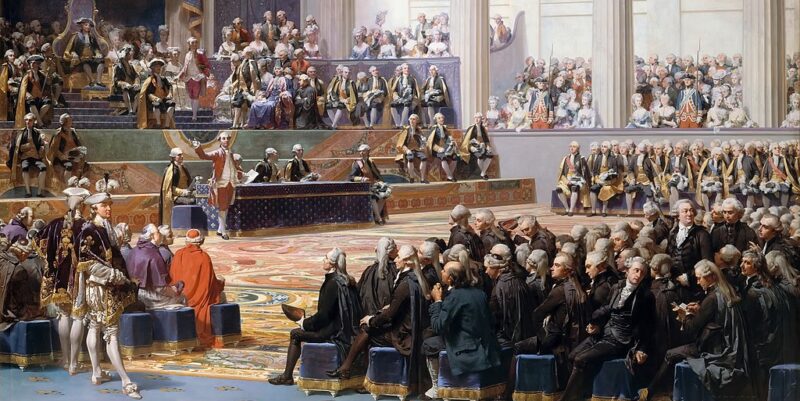
Before the revolution broke out, the French society was composed of three estates called states :
- First state . It was made up of the clergy, both high (of noble origin) and low (of plebey origin). He did not pay taxes and received from the peasants a tithe or contribution, which consisted of 10 % of his crops. Teaching was given and controlled by the Church, which could also censor publications.
- Second state . It was made up of the nobility, owner of land and whose privileges were hereditary. Nor did he pay taxes and received, on the other hand, stately taxes of the peasants. He also occupied courtly and administrative positions.
- Third state . Also called “Plain State”, it was made up of the bourgeoisie (merchants, bankers, professionals, intellectuals), the peasantry (small owners, tenants or day laborers) and the urban crafts (sometimes grouped in guilds). They paid taxes and lacked power and political rights.
The first and second state formed a privileged caste that represented approximately 3 % of the population. The third state represented around 97 % of the population but he had to maintain with his taxes the other two states. However, the third state lacked representation to decide on tax policy, since the general states (assemblies convened by the King so that the three states o’clock separately on tax matters) were not summoned since 1614.
The political organization before the revolution
France’s social and political order before the revolution was called the old regime . In addition to being divided into three levels or states, the old regime was organized into an absolute monarchy whose King, Louis XVI, concentrated political power and ruled “by divine law”, legitimized by the high clergy.
Court charges and administration were generally occupied by sectors of the high nobility. Louis XVI, together with Queen Consort, María Antonieta, and the courtiers, made Opulence samples from his palace in Versailles while the plain state had to keep the nobility, the clergy and the monarchy with their taxes.
The bourgeoisie (which integrated the third state) had general intellectual instruction was influenced by the ideas of the Enlightenment and liberalism, and stopped economic power. For this reason, he aspired to gain political influence to decide on fiscal matters and, finally, undermine the privileges of the nobility, replace absolutism with democratic forms of government and promote their economic activities to the detriment of the feudal structures of the old regime. The peasants and the urban plebs, on whom the greatest tax weight fell, also aspired to social change.
You may be interested: Illustrated despotism
Causes of the French Revolution
The causes that triggered the French revolution were multiple. Among them, they stand out:
- Changes in social structure . The Old Regime Society remained largely tied to feudalism, a system implemented from the Middle Ages in which the noble owners worked by day laborers or usufructuary. There were also stately rights for which the nobles could raise taxes and tolls of peasants and small owners, and the Church charged a tithe.
But urban life and the expansion of trade accelerated the growth of a new economic elite, made up of merchants, bankers and professionals (the bourgeoisie), which began to aspire to obtain political rights. The presence of artisans and humble sectors in the city was also expanded, which sometimes could receive education and participate politically by reading newspapers or club assistance. In the field, the traditional technology and technologies of feudalism prevented adaptation to the growing demand for food. - The increase in population . The French society had reached a better quality of life, even among plebeian sectors that, in some cases, had access to education. The reduction of the mortality rate and the increase in life expectancy generated a significant increase in the population, which in 1789 reached 26 million inhabitants, which made France the most populated country in Europe. The growing demand for food became difficult to satisfy, especially when a bad harvest affected the field in 1789.
- The dissemination of enlightened thought . In those years, a cultural and intellectual movement called Illustration took vigor, which considered that the only way to explain the world was the use of reason, which allowed to “illuminate” the truth where the darkness of religious orthodoxy imposed before.
The ideas of the Enlightenment (such as the works of Montesquieu, Voltaire or Rousseau) influenced bourgeois, and even noble sectors, who questioned the “divine right” to govern that the absolute monarchs (such as Louis XVI) were thrown. In return, they proposed balanced government mechanisms, based on the division of powers, the legal formulation of rights and obligations, and the principle of national sovereignty. - The economic crisis . Between 1788 and 1789 an economic crisis was aggravated that was the result of two facts: the debt contracted by the French crown following its participation in the United States Independence (1775-1783), which deepened the financial problems that the kingdom already crossed; and a succession of frost and bad harvests, especially in 1788 and 1789. This generated food shortage, increased prices of flour and bread, decreased commercial activity, impoverishment, unemployment and social discomfort. The king tried to increase the tax burden but was forced to summon the general states, with representation of the clergy, the nobility and the third state.
The beginning of the French Revolution

When the general states met in Versailles in May 1789, representatives of the third state and the nobility claimed changes in the voting system, but these were rejected. June 17, The representatives of the third state proclaimed themselves which meant an institutional challenge to the monarchy.
The king ordered the room where the National Assembly met, so he moved to a ball play field and his members swore together to proclaim a constitution. They joined some nobles and members of the low clergy. Shortly after, they formed a National Constituent Assembly .
The King mobilized troops in Paris and Versailles, and decided to dismiss his Minister of Finance, Jacques Necker, for considering him too tolerant with the third state. On July 14, 1789, The town of Paris reacted to these facts by taking to the streets to support the National Constituent Assembly . In a confrontation that lasted a few hours, he managed to take the Bastille, a Parisian fortress that functioned as a prison and armory, and that was also a symbol of the monarchy.
This episode was replicated with loyal uprisings to the National Constituent Assembly in different parts of France, burns of titles that enshrined stately rights in rural areas, the abolition of feudal privileges (August 4) and the Declaration of the Rights of Man and Citizen (on August 26) . For this reason, on July 14 it became the symbolic date of the beginning of the French Revolution, and since 1880 it is commemorated as the National Festival of France.
The stages of the French Revolution
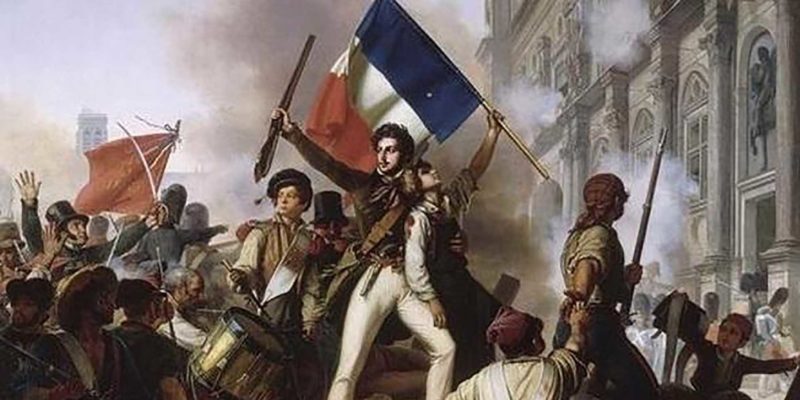
The revolutionary process lasted approximately ten years and crossed different stages:
- The National Constituent Assembly (1789-1791) . During this stage, the declaration of the rights of man and citizen was promulgated, the Civil Constitution of the clergy was established (together with other measures contrary to the privileges of the Church), and the discussion began to write a Constitution. In the assembly two trends were distinguished, which were located in different areas of the room: on the right were the supporters of the old regime, while on the left were the supporters of deep reforms.
In addition, clubs and political groups were formed that exerted pressure, such as the Jacobins and the stringers (both of republican trend). The king wanted to flee and was taken prisoner. When the Constitution was voted in 1791, Louis XVI was forced to swear and a constitutional monarchy was formed. - The Legislative Assembly and the Constitutional Monarchy (1791-1792) . Once the Constitution that established the division of powers was sworn, the National Constituent Assembly was dissolved and the Legislative Assembly was formed. At this stage the discrepancies between two groups were important:
- On the one hand, the Jacobins (represented by professionals and small owners with influence in popular sectors, who aspired to radical changes, such as putting an end to the monarchy and founding a republic with masculine universal suffrage).
- On the other hand, the Girondinos (spokesmen of the high bourgeoisie, who aspired to moderate changes, such as limiting real power without abolishing it, or restricted suffrage). A war against Austria and Prussia was also unleashed (which other nations were later allied), which had conspired with Louis XVI to restore absolutism in France.
- The Convention (1792-1795) . On August 10, 1792 there was an insurrection in Paris that implied the assault on the Palace of the Tubleías, where the king was staying. It was headed by Georges-Jacques Danton and led to the King’s dismissal. On September 20, the abolition of the monarchy and the establishment of the Republic was formalized, which ruled through a convention and a committee of public salvation, and officially adopted the slogan “freedom, equality, fraternity.” It was integrated by sectors identified as Gironda (moderate), plain (center) and mountain (mostly jacobin).
In 1793, Louis XVI and María Antonieta were executed in the guillotine, accused of conspiring against the Republic. Next, under the government of Jacobino Maximilien Robespierre in the Public Salvation Committee, a stage known as “Terror” began in which thousands of people accused of supporting the counterrevolution were guillotined. In 1794, a revolt of moderate sectors against Robespierre ended the life of this, also executed in the guillotine. - The Board of Directors (1795-1799) . The Convention approved a new Constitution in 1795 (year III of the Republic, since the revolutionary government had begun to count the years from the proclamation of the Republic), which replaced the masculine universal suffrage with the census suffrage, and formed a directory that replaced the convention. During its years of government, the directory faced both the realistic sectors (which they sought to restore the monarchy) Jacobin sectors (which were looking for more radicalized measures). In military matters, General Napoleon Bonaparte stood out, which was successful in various campaigns in the service of the Republic.
- The Consulate (1799-1804) . When a series of revolts occurred in France, Napoleon Bonaparte returned to the country and led a coup d’etat that established a consulate and issued a new constitution that allowed him to concentrate political power. In 1804, Emperor was crowned.
Consequences of the French Revolution

Among the main consequences of the French revolution are:
- The suppression of feudal privileges and personal servitude which had lasting effects in France after its promulgation in 1789 and that allowed the political and economic modernization of the nation, despite the absolutist reactions that happened.
- The Declaration of the Rights of Man and the Citizen (1789) whose principles influenced the constitutions that were written in France and other nations at the end of the 18th and early nineteenth century, and which is the precursor document of human rights policies. Among other statements, it established that all men are born free and equal (women are not mentioned), who have natural right to freedom, property and security, that sovereignty resides in the nation, among others. This document was inspired, in turn, in the Enlightenment, Liberalism and the US Constitution (written in 1787).
- Some symbols of the Revolution and the Republic such as the tricolor climbing and the anthem “La Marseille”, which became symbols of the French nation until today.
- The Napoleonic Code which was the first modern Civil Code and, although it was created in 1804, codified a good part of the legislation that had been prepared during the years of the Revolution (including the abolition of feudalism and property rights) and had lasting effects in Europe.
- The inspiration of the revolutions of 1830 and 1848 as well as other revolutionary and republican experiences in France and the world, despite the fact that the political transformations of the French Revolution had been frustrated after Napoleon’s coronation as Emperor (1804) and absolutist restoration (1815).
References
- Bergeron, L., Furet, F. & Koselleck, R. (2011). The time of European revolutions 1780-1848. 21st century.
- Britannica, Encyclopaedia (2022). French Revolution. Britannica Encyclopedia. Britannica
- Davies, P. (2014). The French Revolution. A brief introduction. Alliance.
- VOVELLE, M. (2000). Introduction to the History of the French Revolution. Criticism.


