We explain what the independence of Mexico was and what were its causes and characters. In addition, its general characteristics and stages.
What was the independence of Mexico?
The independence of Mexico was The process by which the old territory of New Spain, which was part of the Spanish Empire, became an independent state . He was part of the Spanish -American independence wars that followed the Napoleonic invasion of Spain in 1808.
The movement that led to the independence of Mexico began with the armed uprising known as shout of Dolores on September 16, 1810 and continued with the war of independence between realistic and insurgents that ended on September 27, 1821.
The independence of Mexico was achieved after the realistic troops of the military Agustín de Iturbide joined the insurgents, formulated the Iguala Plan in February 1821 and formed the trigrator army that entered Mexico City in September 1821. On September 28, 1821, the Independence Act was signed .
Once independence was achieved, the form of government that the Mexican State should acquire was a cause for conflicts. The declaration of independence consecrated Mexico as an empire And, shortly after, Iturbide was proclaimed emperor. However, in March 1823 Iturbide was forced to abdicate and in 1824 a federal constitution was approved that established a republic, called United Mexican States.
Key points
- The independence of Mexico was the process by which the territory of New Spain became independent from Spain at the beginning of the 19th century.
- The war of independence between insurgents and realistic began with the insurrection of Miguel Hidalgo on September 16, 1810 and continued over eleven years.
- In 1821, the formation of the trigrator army was the union of ancient realists to the ranks of the insurgents with the common objective of achieving independence.
- The independence of Mexico was achieved when the trigrator army, led by Agustín de Iturbide, entered Mexico City on September 27, 1821.
Causes of Mexico’s independence
Internal causes
The main internal causes that promoted the independence of Mexico were:
- Social inequality and caste system. During the colonial era in Mexico, the indigenous population lived in poverty and was subject to a tough economic exploitation, so since the seventeenth century various indigenous rebellions took place. The natives formed the base of the caste system along with other groups that also suffered exploitation, such as Africans or Afro -descendants, and who descended from different ethnic groups. The mestizos proper (descendants of Spanish and indigenous women) were also differentiated from the “whites” (Spanish and Creoles), because they did not have the same privileges. This system caused a deep social discontent.
- Creole patriotism. Another sector disagree with the colonial regime were the Creoles, descendants of Spaniards but born in America. Although they used to have high economic power thanks to the exercise of trade, they were developing a feeling of belonging to the viceroyalty over the Iberian Peninsula. In addition, their interests were often harmed by the economic decisions taken by the Spanish crown, which imposed limitations to free trade.
- Bourbon reforms. In the mid -18th century, the Spanish monarchy began to apply a series of reforms in the administration of colonial territories in America with the aim of increasing the exploitation of its resources. This implied greater control of the Peninsula authorities on the institutions of the Viceroyalty of New Spain, the exclusion of the Creoles from administrative positions and an increase in taxes. All this caused discomfort among the Creoles.
External causes

The main external causes that promoted the independence of Mexico were:
- The ideas of the French Enlightenment and Revolution. From Europe the ideas of the Enlightenment arrived in America, which questioned the divine right of the monarchies and defended the equality of people based on reason. These ideas especially influenced many Creoles, who also took as a model the liberal principles of the French Revolution that, in 1789, led to the overthrow of the absolutist system of the old regime in France.
- American independence. In 1776, thirteen English colonies in the current territory of the United States declared their independence from the British Empire, which laid a precedent for the entire American continent and, in particular, for its neighboring New Spain. American independence was ratified in 1783, after the triumph in the war of independence against Great Britain, and made it clear that a similar process could be carried out in Latin America.
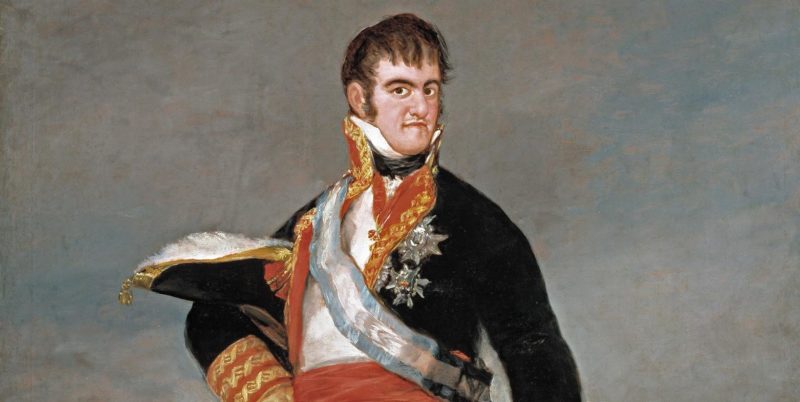
- The French invasion of Spain and the arrest of Fernando VII. In 1808, the French troops invaded Spain and King Ferdinand VII, who had accessed the throne after the abdication of Carlos IV, was forced to abdicate and imprisoned in a castle in France. Napoleon Bonaparte placed his brother, José Bonaparte on the throne of Spain, but many Spaniards of the Peninsula and America did not know the authority of this new King of French origin. This generated a void of power that motivated the formation of government boards in the Peninsula and in the colonies that recognized the legitimacy of Fernando VII but presented themselves as depositories of popular sovereignty.
Protagonists of the independence of Mexico

Some protagonists of Mexico’s independence were:
- Miguel Hidalgo y Costilla (1753-1811) . He was a Catholic priest in New Spain who led the first stage of the War of Independence against Spanish colonial domain from the shout of Dolores of September 16, 1810, with which he called the population to be armed against the Spaniards. He was captured and shot by realistic soldiers in 1811. He is currently known in Mexico as the “father of the country.”
- Ignacio Allende (1769-1811) . He was a military in New Spain who stood out in the first stage of the Mexican Independence War. He participated in the taking of the Alhóndiga de Granaditas, the Battle of Monte de las Cruces, the taking of Valladolid and the battle of the Calderón bridge, among others. He was captured and executed by the realists in 1811.
- José María Morelos (1765-1815) . He was a priest of New Spain who led the revolutionary struggle in the second stage of the War of Independence, after the death of Hidalgo. He participated in the revolts of southern Mexico and was in charge of taking important cities in the center and south of the country and the successful rupture of the Cuautla site. Organized the first independent legislative body in Mexico: the Anahuac Congress. Finally, he suffered several losses and was captured and executed by the realists in 1815.
- Josefa Ortiz de Domínguez (1768-1829) . He was one of the organizers of the first stage of the War of Independence. Since her husband worked for the Spanish crown, she had an important information that allowed her to give notice to the insurgents of the moment they had to start the revolts.
- Vicente Guerrero (1782-1831) . He was a military from New Spain who led the insurgents from 1816 and who, in 1821, starred with Agustín de Iturbide the hug of Acatempan who united ancient realists with the insurgents to achieve independence. He was president of Mexico in 1829.
- Agustín de Iturbide (1783-1824) . He was a military from New Spain who integrated the realistic army during the War of Independence until he starred in Acatempan’s hug with Vicente Guerrero. From then on, he formed the trigrator army that fought for independence and entered Mexico City on September 27, 1821. Between 1822 and 1823 he was emperor of the brief Mexican empire.
Stages of the War of Independence of Mexico
Scream of Dolores and First Stage (1810-1811)

The act that began the War of Independence of Mexico was the shout of Dolores which took place on the morning of September 16, 1810. It was the notice given by the priest Miguel Hidalgo y Costilla to his parishioners to initiate the insurrection against the Spanish domain through the touch of bells of his parish, in the town of Dolores.
The insurrection began after the authorities discovered the so -called Conspiracy of Querétaro, a clandestine plan that sought to establish an own government board. This fact inaugurated the First stage of the independence struggle, during which the revolutionary forces were disorganized and had no clear objectives, except for the purpose of ending the “bad government” of the Spaniards.
Some insurgents proposed independence while Others defended the king of Spain, Fernando VII, but claimed greater autonomy For American leaders. On the other hand, the popular sectors demanded improvements in the distribution of land or other resources. This disorganization stage concluded shortly before the death of Miguel Hidalgo, who was executed by the realists on July 30, 1811.
Second stage (1811-1815)

From 1811, the insurgent forces reorganized and concentrated on a clear end: the independence of Mexico. José María Morelos became one of the main leaders of the independence cause after the death of Hidalgo.
In 1813, Morelos delivered the speech Feelings of the nationwhich became the ideology of this stage. In addition to raising the objective of independence, it aimed to put an end to inequality and organize a government in which sovereignty resided in the people.
After a stage of military triumphs, which allowed to take control of much of the center and southern Mexico, Morelos’s troops suffered various defeats and the insurgent leader was captured For the realists. He was executed on December 22, 1815.
Third stage (1815-1820)
After the murder of Morelos, the insurgents disorganized themselves and their military activities dispersed In a kind of guerrilla war. The Spanish forces weakened the insurgents, who in many cases accepted the pardons offered by the authorities to convince them to abandon the fight. The clashes continued only in the south.
However, at this stage Figures such as the insurgent Vicente Guerrero and the Spanish military Francisco Javier Mina, who collaborated with the independence cause were highlighted in command of an expedition that seriously threatened the realists but was finally defeated. Mina was shot in November 1817.
Fourth stage (1821)
The fourth stage of the War of Independence led to the triumph of the independentistas in 1821 . In general, historians recognize that the facts that were taking place in Spain contributed to this outcome.
In 1812, the Cortes of Cádiz in Spain had written a liberal constitution, known as the Constitution of Cádiz, which among other things did not know the author’s authority imposed by Napoleon Bonaparte during the French occupation of Spain. When the French retired from Spain in 1813, Fernando VII recovered the Spanish throne, annulled the Constitution of Cádiz and established an absolutist regime.
However, In 1820 a liberal government was imposed in Spain that forced Fernando VII to swear the Constitution of Cádiz which should be applied both in the Peninsula and in the colonies. The clergy and aristocracy of New Spain were harmed by this liberal constitution. For this reason, these two sectors that had so far opposed the independence of Mexico, began to support it.
The revolution resumed strength and achieved its success in a few months. Agustín de Iturbide, who until then had commanded the realistic troops, made a deal with insurgent leaders especially with Vicente Guerrero. In this way, he achieved that both insurgents and ancient royalists joined the trigrator army that had the mission of carrying out the Plan of Iguala formulated in February 1821, whose main objective was the independence of Mexico.
Iguala plan
The Iguala Plan, also called the three guarantees plan, It was a document proclaimed by Agustín de Iturbide on February 24, 1821 shortly after the union between the insurgents of Guerrero and the former realistic of Iturbide. It was disseminated in numerous copies and established three principles:
- The independence of Mexico
- Catholicism as the only religion in the Mexican territory
- The union of all individuals in New Spain were Creoles, Spanish, Africans or Asians.
The Iguala Plan declared Mexico as a constitutional monarchy that it should be under the sovereignty of King Ferdinand VII or some of his relatives, but proposed the creation of a provisional Government Board. The trigrator army, which had to extend throughout New Spain the three principles or guarantees included in the Iguala Plan, was directed by Iturbide.
Mexico Independence Act
As the Trigarrante Army gained ground and accessions, the superior political chief of New Spain, Juan O’Donojú, agreed to sign with Iturbide the treaties of Córdoba, for which the retirement of Spanish troops and the recognition of the independence of Mexico was agreed.
The Spanish monarchy did not recognize the treaties and, therefore, did not admit independence. However, On September 27, 1821, the trigrator army entered Mexico City without finding resistance, so The independence of Mexico was consummated.
The next day, the Independence Act of the Mexican Empire was signed drafted by a government provisional board. Shortly after, a congress appointed Iturbide as Emperor of Mexico, crowned with the name of Agustín I on July 21, 1822. However, Spain did not recognize the independence of Mexico until 1836.
Follow in:
References
- DE LA TORRE VILLAR, E. (1992). The independence of Mexico. Economic Culture Fund.
- Parkes, H. et al. (2022). Mexico. Britannica Encyclopedia. https://www.britannica.com/
- Von Wobeser, G. (coord.) (2014). History of Mexico. Economic Culture Fund.