We explain what industrialization is, its characteristics, causes and consequences. Also, its relationship with imperialism.
What is industrialization?
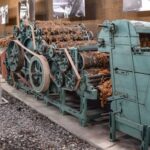
Industrialization is the transition towards industrialized societies, that is, the process of building a socioeconomic order that revolves around industry and therefore whose main economic activity is the transformation of raw materials into manufactured products, adding value to them in the process.
industrialization It was a central phenomenon in the West's entry into modernity hand in hand with the Industrial Revolution and capitalism, at the end of the 18th century and throughout the 19th century. It originated in Great Britain, through the increasing mechanization of artisanal work, allowing the rapid and massive production of goods that were previously made manually.
This model was then exported to the United States and the rest of Europe, and finally to the rest of the world, which managed to make the leap towards industrialization in a particularly uneven way.
On the other hand, industrialization is today associated with economic (and therefore political) power, so that The nations of the so-called First World also tend to be industrialized nations . On the other hand, agricultural societies or those that subsist based on the sale of raw materials, are the ones that mostly constitute the so-called Third World, the poorly industrialized nations.
Characteristics of industrialization
Industrialization is characterized by the following:
- It consists of the incorporation of industrial activity to the core of the countries' economic activity.
- It emerged in Great Britain between the 18th and 19th centuries with the Industrial Revolution.
- It was driven by nascent capitalism and by the accumulation of wealth as a result of mercantilism and Imperialism.
- It transformed the production relations of the world, since gave rise to the factory and the working class .
- It caused a rural exodus to the cities and thus an enormous growth of the cities.
- It was part of the end of feudal society that gave rise to modern society .
Causes of industrialization
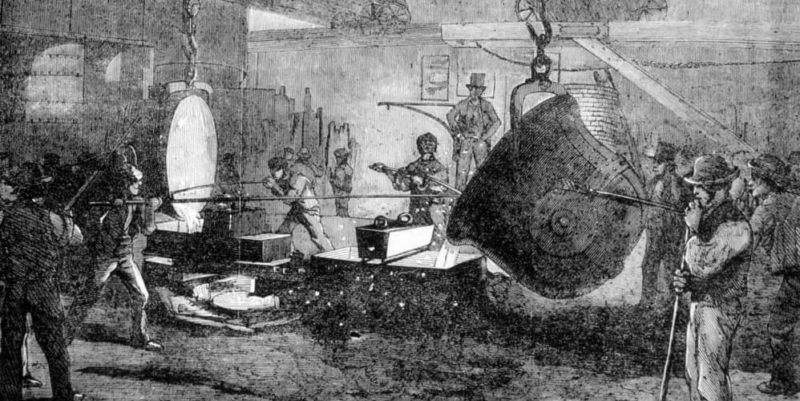
There are many explanations for how societies that were previously agricultural or rural entered the industrial world. The main one had to do with the end of the feudal system that prevailed in Europe during the Middle Ages, which freed large quantities of peasant labor, which had to be incorporated into a free labor market.
Thus, instead of harvesting the feudal lord's land, these people could offer their labor power to the bourgeoisie and participate in the consumer goods market.
In that way, the emergence of capitalism as a system and the bourgeoisie As a ruling class, it reorganized the productive forces of the world, creating jobs not linked to land ownership and agriculture, but rather to technological advances and the transformation of matter, that is, manufacturing. Mining and heavy industries, and the commercial boom that existed at the time, played a particularly vital role in this.
As soon as it was known that said manufacturing could be done faster and more massively using machines, the first step was taken towards an unstoppable modernization process. Thus, in just over two centuries, the world changed much more radically than the entire Middle Ages.
Finally, societies that still struggle to industrialize today do so with the spirit of competing on a more equal footing with the industrial powers of the planet, and therefore must do so at the same time that they deal with their own economies of dependency.
Consequences of industrialization
The consequences of industrialization changed the world forever. The main ones were:
- It transformed the peasant labor force (peasantry) that supported production during the Middle Ages, into a working class (proletariat) that sells its labor power to the system in exchange for a salary.
- Impulse a huge rural exodus in the West that overpopulated the cities and made them grow enormously, transforming them into the new scenario of power and modern life.
- Exhausted most resources minerals and natural resources of Europe, laying the foundations for imperialism and colonialism.
- He laid the foundation for the expansion of capitalism in the world definitively establishing the bourgeoisie as the new ruling class.
- Introduced the machine as a work tool in the popular imagination, which also brought with it its resistance.
- Allowed the increase in world production to inaugurate the future consumer society.
- It gave rise to the exploitation of numerous natural resources especially fossils (coal, gas, oil), given that the energy needs of industrial society never stopped growing.
Industrialization and imperialism
The construction of an industrial society, whose factories grew and needed to be constantly fed with raw materials, had the consequence of quickly depleting Europe's resources, thus creating the need to turn to those from the rest of the planet.
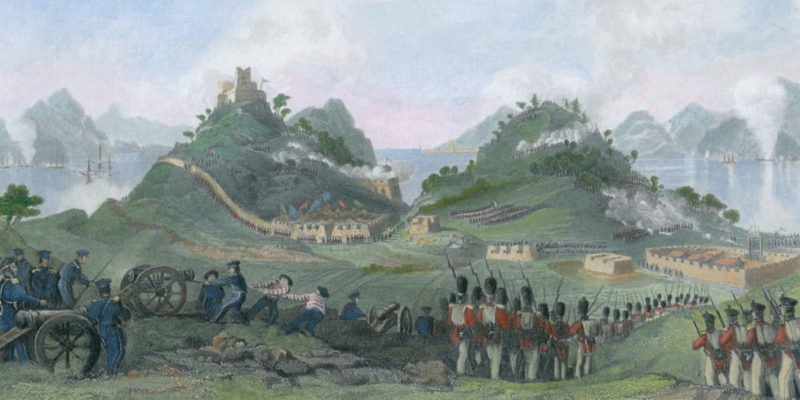
But trading under these conditions would have meant the political weakening of the industrial nations. Therefore, The way to obtain raw materials was through military and political domination of other nations and cultures, through colonialism and imperialism.
Thus, the European empires that had already had periods of colonial expansion in America and Asia, They proceeded to divide Africa also. They approached the less industrialized countries in an aggressive and dominant manner, in order to be able to trade with them on terms more convenient for Europe.
This stage is known as Imperialism, and although it began with the European colonial Empires (Great Britain, France, Holland, Spain, Portugal and to a lesser extent Germany), they were later joined by the United States.
Imperialism inevitably led to the clash of interests between colonial Empires which laid the foundations for a series of conflicts, including the First and Second World Wars in the 20th century. After the latter, the European empires collapsed and the United States became the imperial power of the world, in competition with the socialist bloc led by the USSR.
Industrialization in Mexico
The Mexican economy, like that of many countries colonized by Spain on the American continent, was fundamentally rural until the mid-20th century. Therefore, many of their struggles and conflicts were due to land ownership and the ways of life of the peasantry.
All this changed significantly starting in 1940, with the arrival to power of Manuel Ávila Camacho (1897-1955), a time of transition from military to civilian leadership. So HE created an ambitious industrialization plan that he had the favor of the United States, with whom Mexico had had countless border conflicts.
Thus, basic industries were established and increased, the territory's oil reserves were exploited and the steel demand of the allied countries at war was met. This meant, among other things, the electrification of the country and the expansion of the existing railway network, as well as the set of roads.
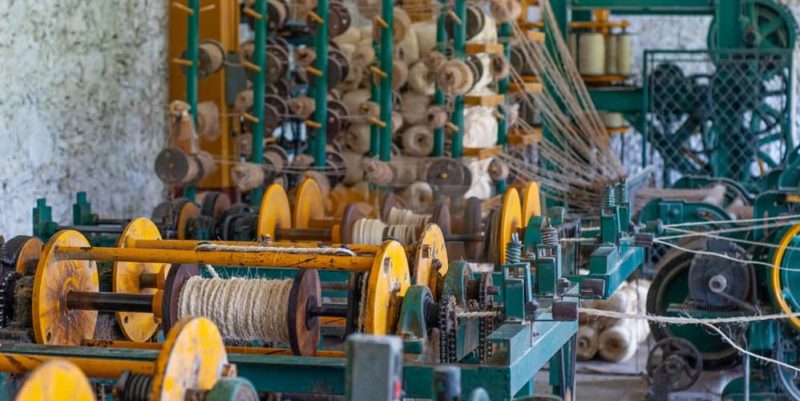
The main industries born at that time were textile, food, steel, chemical, paper, oil, cement and paper, in addition to the energy industry. Despite the important changes that this brought to society and the Mexican economy, The production volume from 1947 began to decline .
This decrease was due in part to the absence of raw materials, and in part to the pressures that industrialization put on the peso, since the demand for imported machinery and resources not produced locally led to a devaluation and a sustained increase in the peso. inflation.
References
- “Industrialization” on Wikipedia.
- “Industrialization in Mexico during World War II” on Wikipedia.
- “The social effects of industrialization” by Gonzalo Abad on NUSO.org.
- “Industrialization” in Investopedia.
- “Industrialization” in The Encyclopaedia Britannica.