We explain what the Iron Age is and what are its characteristics. In addition, its advances, importance and the end of the era of metals.
What is iron age?
Iron age is the Prehistoric period in which iron use is systematized in the manufacture of tools, weapons and utensils . This era is part of the age of metals, after the age of copper and the age of bronze. The chronologies to date this periodization vary in the different regions of the world because the developments of metallurgical technology occurred at different times.
Archaeological evidence indicates that The popularized use of the oldest iron occurred towards 1200 a. C. Virtually simultaneously in the East, in the Aegean Sea region and in India.
Iron age is usually considered as the last period of prehistory since it is established that it ends with the invention or adoption of writing in each society (fact that marks the beginning of history, with the ancient age). However, some societies, such as ancient Egypt and Sumerian cities-states, developed metallurgical technology after the invention of writing and the creation of centralized states.

Iron Age Characteristics
The iron age was characterized by:
- The discovery of iron, as metal harder than bronze and more abundant in nature.
- The slow dissemination of iron foundry techniques, more complex than bronze for requiring greater temperature.
- The increase in populations of greater density and armed clashes.
- The use of iron to manufacture weapons, armor and tools.
- The disparate of iron between the different populations of the world.
Importance of iron
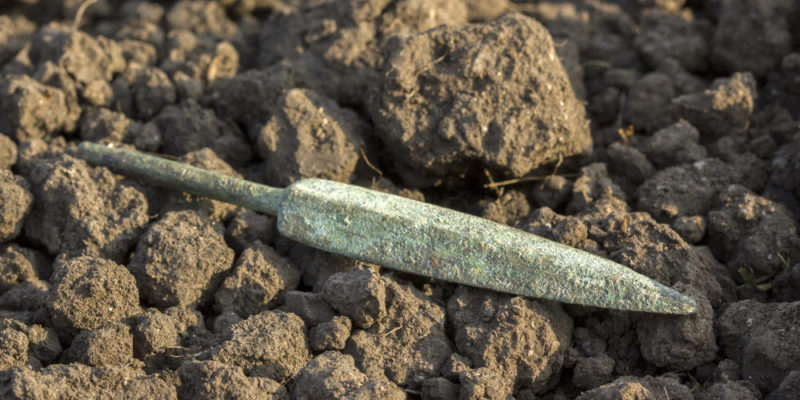
The importance of iron filed in two aspects. On the one hand, enabled the manufacture of more resistant armaments that granted a military superiority. On the other, it allowed to develop great advances in agriculture due to the new tools to work the land.
Iron work implied sophisticated advance compared to the work of other metals due to the highest temperatures of the furnaces, its structure and materials to manipulate it.
Main civilizations of the Iron Age
The development of iron metallurgy was carried out by civilizations of Africa, Asia and Europe . In America and Oceania there was no native development prior to colonization and contact with foreign peoples.
In the regions of Caucasus and Anatolia, the iron and work of iron to the fourteenth century a. C. It is believed that the hititas were among the first to use iron for the manufacture of weapons and war technology and that this gave them a fundamental military superiority for the expansion of their empire. From there, the use of iron for the manufacture of tools became popular and extended to the East and West.
In India, the oldest evidence of the extended use of iron date from 1200 a. C. although some findings seem to indicate that since some previous centuries, in the Uttar Pradesh region, it had been experimenting with different forms of foundry and forge. Instead, in China, the arrival of iron is quite posterior. The oldest records of their systematized use date just from the seventh century BC. C.
In Europe, the use of iron was introduced to the 10th century BC. C. and expanded throughout the continent during the later centuries. In the Aegean Sea region, the first uses of iron are attributed to the Dorias tribes that were imposed on the Mycenaean states.
The Etruscans (in the Italian Peninsula), the Gauls in the current France, the Iberians (in the Iberian Peninsula) and the Celts (in the North and the British Isles) were the most prominent peoples of the European iron age.
In Africa, on the other hand, the development of iron manipulation technologies was native . Towards 1000 a. C., the Nok culture (from Western sub -Saharan Africa) refined iron through foundry techniques.

References
- Eiraa, JJ (2003). NOTITIONS OF GENERAL PREHISTORY. Grupo Planeta (GBS).
- Food, MH, & Steve, MJ (eds.). (1989). Prehistory (Vol. 1). 21st century of Spain editors.
- “Iron Age” in History.
- “Iron Age” in Britannica.
- “Iron Age” in history National Geographic.