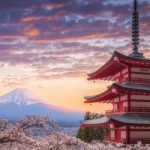
We explain everything about Japan and its physical and cultural characteristics. In addition, how is its economy, religion and the history of this country.
Japan
Japan is a country made up of 6852 islands Located in the Pacific Ocean, in East Asia. It is separated from Russia, China, North Korea and South Korea by the Sea of Japan, which is west of the country. Its political organization is the parliamentary constitutional monarchy.
For its location in the Pacific Fire belt, Japan is characterized by being a volcanic and seismically very active area so volcanic eruptions and earthquakes are very frequent. Given this, most of the country’s infrastructure are prepared with antisismic technology, and the population usually does training and drills to know how to act in the face of these natural disasters.
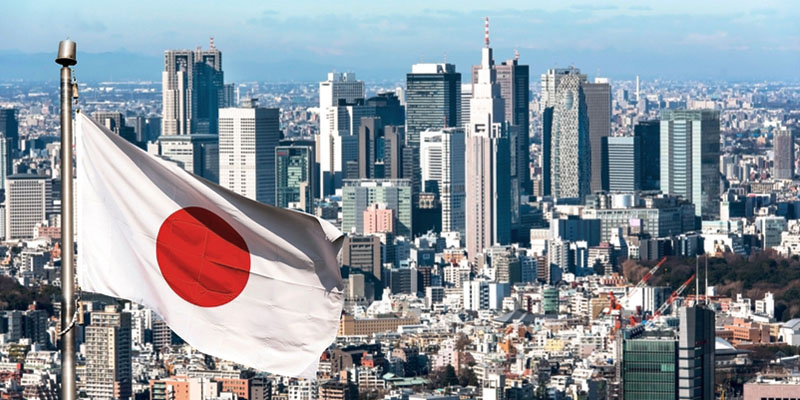
The capital of Japan is the city of Tokyo and is located on the island of Honshū. With a metropolitan area of more than 37 million inhabitants, This is the most populous city in the world .
Why is it called “Japan”? The name comes from the term “nihon” or “Nippon”, and means “the origin of the sun.” For this reason it is also known as the country of the rising sun.
Japan characteristics
Some characteristics of this country are:
- Its population is 125,000,000 inhabitants.
- It has an area of 377,915 square kilometers and a population density of 330.7 inhabitants per square kilometer.
- Its capital is Tokyo, which with more than 37 million inhabitants is the most populous city in the world.
- The predominant climate is the temperate oceanic in the north and the warm subtropical in the south.
- The relief is mainly mountain and volcanic.
- Because of the Pacific Fire belt, earthquakes and volcanic eruptions are frequent.
- The official language is Japanese and the predominant religion is Tintoism.
- His official currency is the Japanese yen.
- Its main economic partners are the United States, China, South Korea and Australia.
- Its main activities are industry and services. Some of the most important companies in the world in these areas are Japanese: Toyota, Mitsubishi and Sony are some of them.
Extension, population and capital of Japan

Japan has an extension of 377,915 square kilometers . It has a population of 125,000,000 inhabitants which makes it the eleventh most populous country in the world and the fifth most populous in Asia. Its population density is 330.7 inhabitants per square kilometer.
Japan is divided into 9 regions that are in turn subdivided into 47 states called “prefectures” . The most populous prefecture is that of Tokyo, where its capital is located, with 14 million inhabitants. They are followed by Kanagawa with 9.2 million, Osaka with 8.8 million and Aichi with 7.7 million. The least populated prefecture is Tottori, with 549,000 inhabitants.
The prefectures of Tokyo, Kanagawa, Saitama and Chiba make up the Metropolitan Area of Tokyo, where more than 37 million people live, which represents 29.6 % of the country’s total population.
Japan is one of the few countries that has been experiencing a significant reduction of its population for some years. It is estimated that the country has about 600,000 inhabitants less every year. Specialists believe that this demographic situation may be due to the low birth rate, to the progressive aging of its population due to the improvement in life expectancy or poor immigration, since historically Japan has had extremely restrictive immigration policies.
Climate, relief and hydrography of Japan
About 84 % of the Japanese territory It is volcanic and mountainous and his higher peak is mount Fuji with 3,776 meters . Because of the Pacific Fire belt, the volcanoes of Japan are all in activity, and volcanic eruptions are a frequent phenomenon. The same goes for earthquakes: as the country is located in the edges of the Euroasy and peaceful plaques, earthquakes are natural phenomena that also happen very frequently.
The north of the country is characterized by having a Oceanic temperate climate in the north and a warm subtropical in the south closer to Ecuador. In both types of climate, rainfall is abundant, and they differ in the fact that the warm wet subtropical has higher temperatures both in summer and winter.
For the characteristics of the relief and the climate, The rivers of Japan are short but caudalous and with a lot of slope . They are used for hydroelectric use and crop irrigation. The most extensive in the country are the Shinano River, which leads to the sea of Japan and has 367 kilometers of extension, and the Tone River, which has 322 kilometers long.
Japan Flora and Fauna
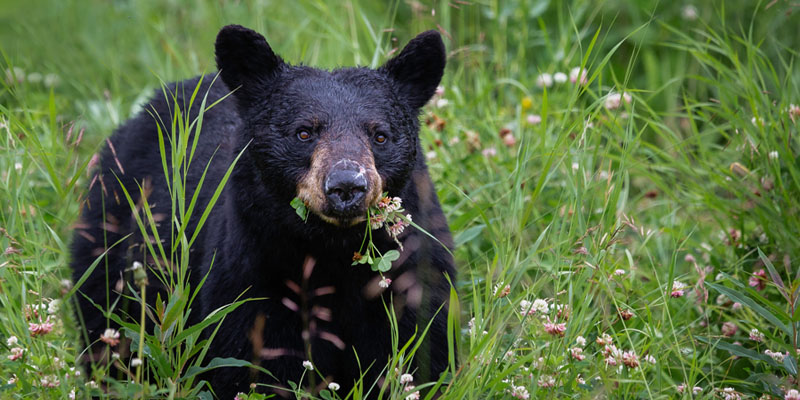
Japan’s fauna includes Birds, reptiles, amphibians, fish and mammals among which are the Asian black bear, the brown bear, the wild boar, deer, antelope, theos, the mapache dog, the fox, the wild cat, marine lion, the Japanese wolf, the coppery pheisan, the green foisan and the Asian Azor eagle.
Japan’s flora is varied and abundant. Among its more than 17,000 species Japanese Castaños, yours, red pines, Korean pines, birch and ashs stand out. You can also find white and red plums and bamboo plants.
Culture of Japan

Japan’s official language is Japanese which uses three writing systems: Kanji (Chinese characters), Hiragana and Katakana (both syllabaries). In addition to Japanese, other minority languages are spoken in some regions of Japan, such as Ainu In Hokkaido and the Ryukyuan in the Ryukyu Islands.
Almost 50 % of the population of Japan practices the Sitist religion . The second religion in importance is Buddhism, practiced by 46.5 % of the Japanese. Other religions such as Christianity and Islam are also present but to a much lesser extent.
Traditional Japanese music is characterized by the use of instruments such as Shamisen (a rope instrument), the Koto (a Japanese harp) and the flute Shakuhachi. The best known internationally known musical genre is gagaku . Some of the referents of Japanese music are Akira Ifukube and the plastic artist and singer Yoko Ono.
As for painting, the traditional Japanese style stands out for ink paint Sumi-ethe scroll rolls Emaki and paint on screens byōbu . Some influential artists of Japanese painting are the painter Katsushika Hokusai in the 18th century and the sculptor, recorder and painter Yayoi Kusama during the twentieth century.
Japan’s gastronomy is recognized worldwide. Rice, fresh fish, vegetables and algae They are fundamental ingredients in Japanese cuisine . Some typical dishes include sushihe Sashimihe Ramenhe Yakitoriand the Okonomiyaki. In addition, the tea ceremony, known as ChanoyuIt is a traditional practice of Japanese culture.
Homeland symbols of Japan
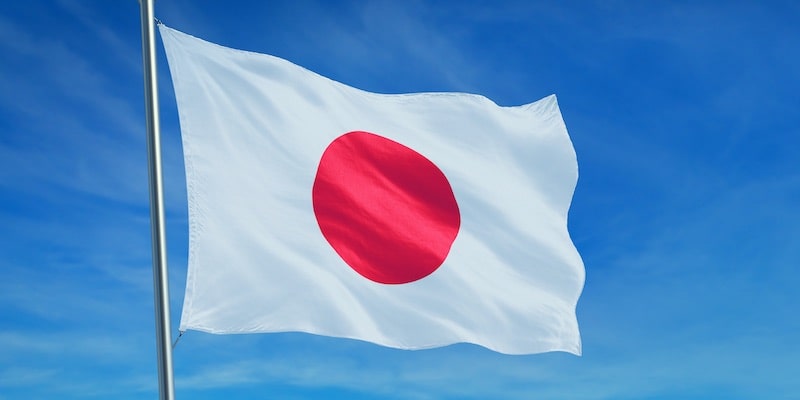
The national symbols of Japan are:
- The flag of Japan. It is known as NISSHOKIwhich means “disk -shaped sun flag” or Hinomaru which means “solar disk.” It was officially adopted in 1999 and consists of a red circle on a white background.
- The national anthem of Japan. It is known as Kimigayowhich means “his majesty the emperor.” His lyrics was composed of an anonymous poet in the ninth century and the composer of his music was Hayashi Hiromori in 1888.
- The imperial emblem of Japan. It is one of the oldest symbols in Japan. It is called “Crisanthemus flower emblem”, and was adopted in 1183. Chrysanthemum is considered a sacred flower in Japan. The emblem shows a chrysanthem of 16 golden petals.
Economic Activities of Japan
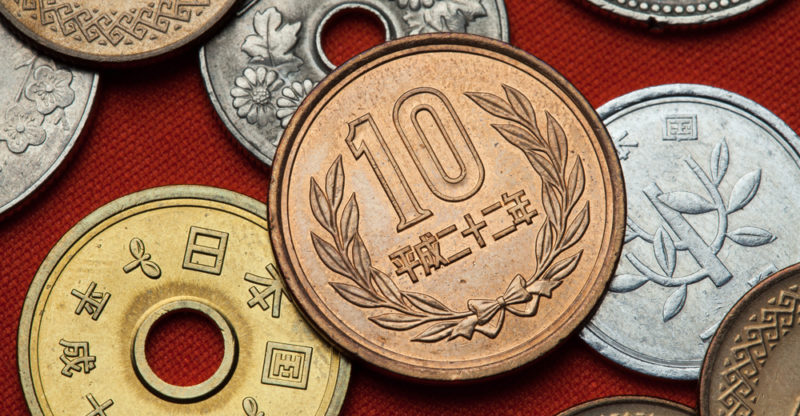
Depending on your internal gross product (GDP), the economy of Japan is considered the third largest worldwide At present, after those of the United States and China.
Its main economic activities are:
- The industry. It contributes almost 25 % of your GDP. Industries such as automaker, telecommunications, technology and entertainment stand out. Some of the most recognized industrial companies in the world are Japanese: Honda, Toyota or Mitsubishi, among automotive; Canon, Toshiba, JVC and Hitachi in Technology, and Sony and Nintendo in entertainment.
- The services. They contribute almost 75 % of the country’s GDP. Insurance, real estate, financial, tourism, education and commercial services stand out.
Its main commercial partners are the United States, China, South Korea and Australia and its official currency is the Japanese yen.
History of Japan
The first ceramic culture known in Japan corresponds to the Jōmon period (10,500-300 BC). Then, during the Yayoi period (300 BC.-300 AD), rice cultivation was implemented and generalized. In the Yamato period (300-710) a wide kingdom was formed, Chinese writing was adopted and Buddhism was introduced from Korea.
In 710 the capital was established in Nara and the administrative system was strengthened. However, in 794 the capital moved to Heian (current Kyoto), where the Aristocratic Fujiwara family exerted a lot of influence on the emperors. The aristocrats obtained land and organized their own armies in a context of regional conflicts. Samurai warriors began to acquire power at this time.
In 1192, the Minamoto Guerrero No Yoritomo received the title of Shogun (Army Commander) after an important military victory and founded the Kamakura Shogunate, the first of the three military regimes of the feudal era in Japan. The last shogunate concluded in 1868, when Emperor Meiji regained central power. During the Meiji era, feudalism was abolished, political modernization began, industrialization was promoted, the capital was moved to Tokyo and the Empire of Japan was born.
After the victories against China (1894-1895) and Russia (1904-1905) and the annexation of Korea (1910), Japan participated in the First World War on the side of the entente. In 1931 the militaristic sectors within the government promoted the invasion of Manchuria and in 1937 a war against China began. When World War II broke out, the Japanese government signed the tripartite pact with Germany and Italy (1940) and entered war with the United States in the Pacific (1941).
The representatives of Emperor Hirohito signed the surrender on September 2, 1945, a few days after the launch of Two American atomic bombs on the cities of Hiroshima and Nagasaki which caused more than one hundred thousand immediate deaths.
After an allied occupation stage (1945-1952) that promoted democratization, there was a remarkable economic growth known as “Japanese miracle.” This growth led Japan to be one of the technological pioneers Already being for many years in the second position of the world’s biggest economies (currently occupies the third place).
References
- EAE Business School (2021) 5 leading Japanese companies in their sector. EAE
- Go Go Nihon (2021) The historical wealth of traditional Japanese music. GOGONIHON
- Ministry of Foreign Affairs (2023) Japan. Country record. Diplomatic Information Office of Spain. Exterior
- Nippon.com (2022) The population of Japan is reduced in all prefectures except for Okinawa. Nippon
- Nippon.com (2022) The 10 main mountains and rivers in Japan. Nippon