We explain what Lamarck's theory of the evolution of living beings is, its errors and successes. Also, who was Jean-Baptiste Lamarck.

What is Lamarck's Theory?
Lamarck's Theory is a scientific theory about the evolution of species, proposed by the French naturalist Jean-Baptiste Lamarck in 1809. It was the first evolutionary theory in history a fundamental predecessor of the one later proposed by Charles Darwin in 1859.
Lamarck proposed that more complex forms of life came from simpler past forms.
in his book Zoological philosophyLamarck proposed an evolutionary mechanism to explain the transformation of one species into another, over time. He postulated the law of use and disuse, and the inheritance of acquired characters as possible processes that explain biological evolution.
The evidence for Lamarck's Theory was supported by the fact that fossils of extinct species had been found, which had structural characteristics very similar to current life forms.
The best known and most used example to illustrate this theory is that of stretching the neck of giraffes. According to Lamarck, giraffes had to stretch their necks to get food and they had passed this characteristic on to their descendants.
Both in the past and today, Lamarck's theory received great criticism for lacking sufficient evidence. However, their contributions laid the foundations for more elaborate evolutionary theories.
During the second half of the 19th century Charles Darwin developed his own theory of evolution, in which he established differences with Lamarck's theory.
The main difference between these two theories is in the mechanism they proposed to explain biological evolution. Lamarck was based on the inheritance of acquired characters and on the law of use and disuse. Instead, Darwin proposed the intervention of chance and the process of natural selection.
Why is Lamarck's Theory called “transformism”?
Lamarck's theory is known as transformism because it proposed that complex organisms may have emerged from simpler organisms that were progressively modified. Transformism opposed fixism, which assumed that living beings cannot change, nor have they ever changed.
Postulates of Lamarck's Theory
Lamarck's Theory is based on two postulates.
1. Law of use and disuse
Lamarck interpreted that living beings respond to a need for change that, in turn, depends on the conditions of the environment.
The idea was that, as the external environment changes, organisms must “use and disuse” certain parts of the body. The most used organs are developed further for better use while the organs that are not used end up atrophying, until they disappear.
Lamarck called acquired characters to the characteristics of living beings that could undergo modifications due to habit.
2. Inheritance of acquired characters
The inheritance of acquired characters is the idea that Lamarck adopted to complete his evolutionary theory, along with the law of use and disuse. This idea assumes the ability of living beings to transfer to their heirs the characteristics acquired when adapting to new environments.
For Lamarck's Theory, the acquired characters were heritable: they could be passed from generation to generation. The example most used to explain Lamarckism is the one that explains why giraffes' necks are so long.
The example of Lamarck's giraffes
The lengthening of the neck of giraffes is the best known example and used to illustrate Lamarck's Theory.
Lamarck hypothesized that the giraffes had to stretch their necks to get food and they had transmitted this characteristic to their descendants.
From the fossil record, Lamarck hypothesized that the ancestors of today's giraffes had shorter necks. This feature did not allow them to access the branches of trees that were at high altitude.
According to Lamarck's Theory, at some point the lower plants were no longer enough to feed the giraffes. Then, some giraffes began to stretch their necks to reach the highest leaves. Consequently, Their necks began to lengthen a little .
Lamarck proposed that the descendants of giraffes with stretched necks inherited this characteristic and were born with longer necks. At the same time, the new giraffes also stretched their necks to reach even higher leaves. So, his heirs were born with even higher necks .
Thus, generation after generation, the giraffes would have progressively lengthened their necks, until giving rise to the current giraffes.
More examples of Lamarck's Theory
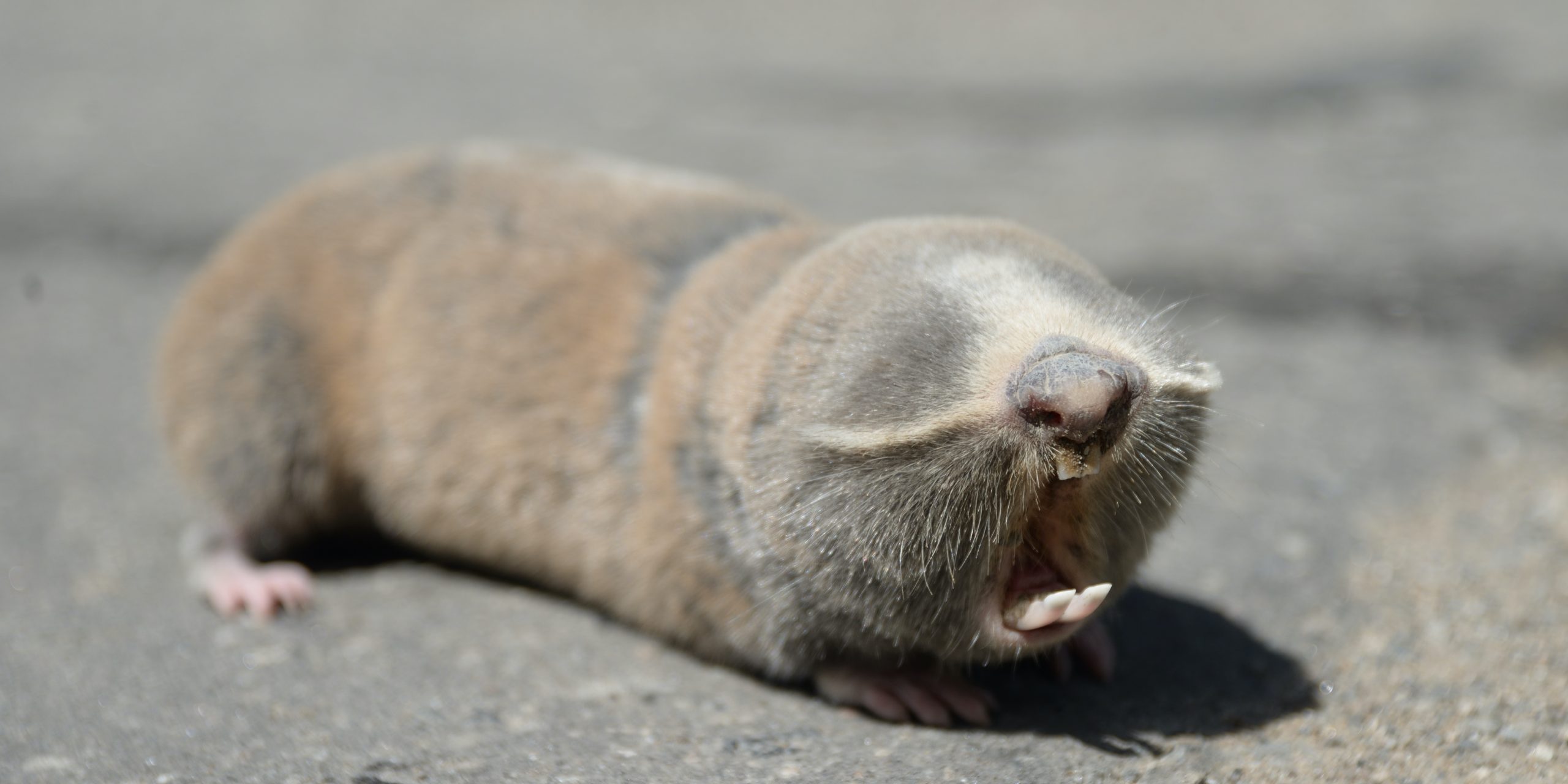
Another example used to explain Lamarck's theory is the case of topos of the genus Spalax. These rodents live underground and are completely blind. Even their eyes are covered with skin and hair.
Lamarck's explanation for the eyes of moles was that, living underground, they used their sense of smell more than their sense of sight . Therefore, generation after generation, the eyes fell into disuse, until they finally atrophied.
Some experts claim that Lamarck also dared to use examples in human beings. With his theory he provided an explanation about the size of the human stomach and its relationship with the type of diet.
Differences between Lamarck and Darwin
Although Darwin and Lamarck agreed on the idea that species can change over time, they had differences in how they did so.
Darwin's theory proposed a different mechanism of biological evolution than Lamarck's theory.
According to Darwin, the way in which species change over time has nothing to do with the inheritance of characters acquired through use and disuse. Darwin hypothesized a new mechanism of biological evolution which he called natural selection.
According to the theory of natural selection, changes in individuals in a population occur by chance . They don't have a goal or a direction.
In this way, some individuals may carry some type of random advantage or disadvantage in relation to the environment, which makes them more or less adapted to the environment that surrounds them.
In summary, the main difference between Lamarck's ideas and Darwin's ideas is that, according to Darwin, hereditary variations occur by chance, not because organisms make an effort to adapt to the environment.
Why was Lamarck wrong?
In the 19th century, Lamarck's theory was not widely accepted because it opposed fixism and catastrophism (which stated that species are essentially immutable, unless there are very sudden, violent and unusual changes). These theories were proposed by George Cuvier, who had a lot of prestige and respect from his colleagues.
As fixist and catastrophic ideas were deeply rooted, the majority of naturalists of the time thought that Lamarck's postulates failed to provide sufficiently firm support for his evolutionary theory.
There is now evidence that Lamarck's theory could be wrong. Modern knowledge about genetics indicates that the inheritance of acquired characters has not been demonstrated
It has been shown that it is only possible to inherit characteristics if there are changes in the genetic material of the gametes. That is, for a property or ability to be transmitted from generation to generation, it is necessary that there be chemical modifications in the DNA.
Curiously, from the first decade of the 21st century, The most advanced knowledge about epigenetics has revived some of Lamarck's ideas regarding the inheritance of acquired characters.
Importance of Lamarck's Theory

Although it is known today that evolution does not behave exactly as Lamarck proposed, his contributions are of great importance for scientific knowledge.
Lamarck's theories emerged in an extremely hostile context, when evolutionary precepts were just emerging as a consequence of the application of the scientific method. In that sense, they were even more revolutionary than Darwin's own.
Lamarck was the first to propose a complete theory of biological evolution and he dared to question the ideas of fixism, postulated by George Cuvier.
According to Cuvier, living organisms could not change. The species were fixed and appeared spontaneously and suddenly (with more or less divine influence).
Lamarck's transformism completely broke the paradigm proposed by fixism
In fact, in Lamarck's time the natural sciences were limited to describing living beings. The appearance of his Zoological philosophy It marked a turning point that resulted in the emergence of modern biology.
Who was Lamarck?
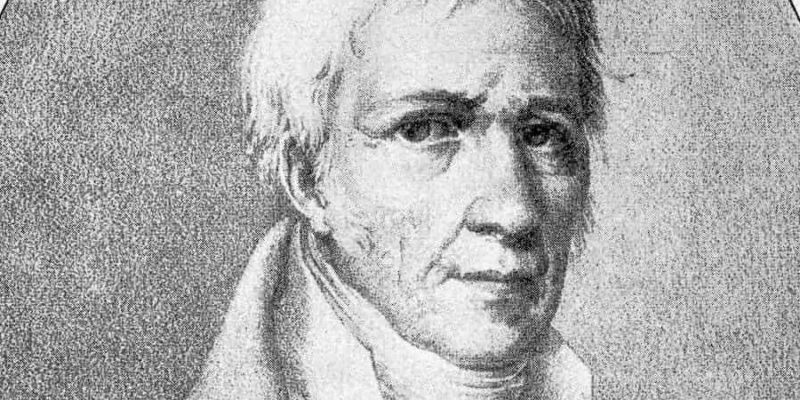
Jean-Baptiste Pierre Antoine by Monet Chevalier by Lamarck born in Bazentin (France) on August 1, 1744 in a noble family and descendant of soldiers. He had a Jesuit education and began to study the military arts, and participated in the battle of Villinghausen (1761) in the Seven Years' War.
However, his true vocation was science, so he trained in medicine, a discipline that he never practiced. Furthermore, he was part of the Plant garden until 1793, when it became the Museum of Natural History at his idea. His magnum opus, Zoological philosophywas published in 1809 .
Lamarck became blind in 1819, so his last works were written through dictation from his daughters. He died in 1829.
References
- Curtis H., Barnes N., Massarini A., Schnerck A., BIOLOGY. 7th Edition. Panamericana Medical Editorial (2008).
- Audesirk T., Audesirk G., Bruce E., BIOLOGY 3: Evolution and ecology. 6th edition. Pearson education (2003).
- Bombara N., Godoy E., et al. BIOLOGY 2: Origin, evolution and continuity of biological systems. 1st edition. Santillana (2018)