
We explain what meteorology is, what this science studies and the branches that comprise it. Also, its characteristics and objectives.
What is meteorology?
Meteorology is the science which studies the phenomena that take place in the atmosphere in the short term . To do this, it analyzes parameters such as temperature, humidity, atmospheric pressure, wind intensity and precipitation with the aim of understanding and predicting what may happen to the weather in the near future.
Meteorology is usually reported in media such as television, newspapers and radio, and on social networks. It offers short-term weather forecasts to warn the population about the possibilities of rain, heat or cold waves and possible storms or other meteorological phenomena that require making predictions.
Weather information is obtained thanks to satellite technology and radars that monitor the different elements of the climate, and the information provided by the meteorological stations that are on the surface. With all this information, meteorologists prepare their reports, forecasts and forecasts.
Meteorology or climatology? Meteorology focuses on predicting short-term atmospheric behavior, while climatology studies changes in the atmosphere over long periods of time (at least 30 years). The job of climatology is to study climate models of the past, present and future. In this way, it allows us to understand the future of the climate in the world and can anticipate long-term effects, so its object of study is much more statistical and global than short-term predictive.
What does meteorology study?
Meteorology is the scientific discipline that studies the Earth's atmosphere and the atmospheric phenomena that affect it . Meteorologists focus on understanding and predicting changes in weather and providing information about current atmospheric conditions.
Its object of study is everything related to climatology and meteorological weather forecasting. It also deals with the effects of solar radiation on the Earth's atmosphere and the behavior of water (liquid, solid or gaseous).
Meteorological phenomena
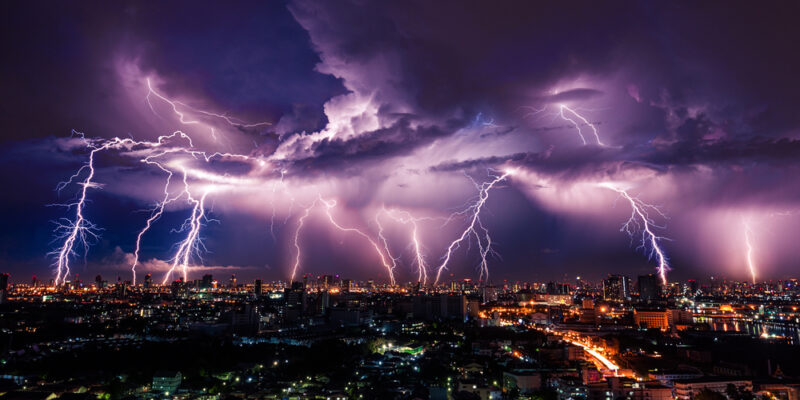
The atmospheric elements studied by meteorology are:
- Temperature . It is the amount of heat in the atmosphere. Along with rain, it is the main information element of the weather forecast. When the temperature is very low or very high, it is necessary to alert the population to take preventive measures.
- Rain . It is the fall of water droplets from the atmosphere to the Earth's surface. It can occur in various intensities, from a drizzle to a torrential downpour in the form of a storm. When temperatures are very low it can occur in the form of snow. Sometimes rain also falls as ice stones of different sizes (a meteorological phenomenon called “hail”).
- Humidity . It is the amount of water vapor available in the atmosphere. Its monitoring is important because an increase in humidity can produce precipitation in the short term.
- atmospheric pressure . It is the weight of the air. It is monitored because when atmospheric pressure is very low, temperatures are usually high and storms of varying intensity can also be forecast.
- Wind . It is the moving air produced by differences in temperature and atmospheric pressure.
- Fog . It is the formation of low clouds on the Earth's surface. They tend to reduce visibility and it is essential to know their location for vehicular circulation on routes and highways.
Meteorological equipment and instruments
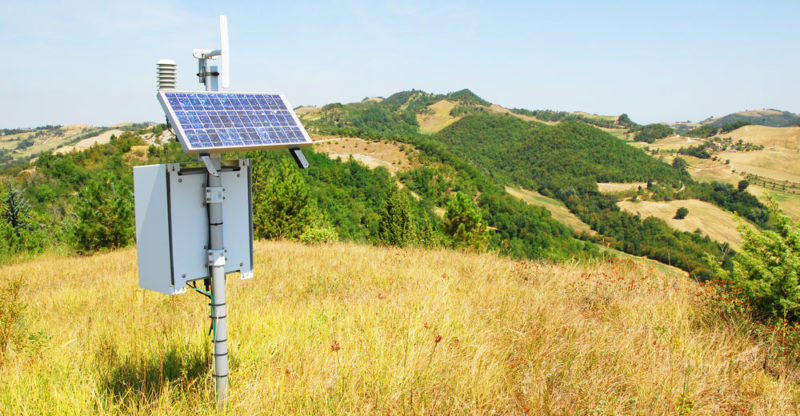
The instruments used in meteorology can be grouped into two types:
The weather stations
Weather stations are sites intended for constant real-time recording of the atmospheric conditions of a specific region, and are equipped with various measuring instruments:
- Anemometer . Measures wind speed.
- Vane . Indicates the direction of the wind based on the cardinal points.
- Barometer . Measures atmospheric pressure.
- Heliograph . It records the amount of solar energy that impacts the Earth's surface.
- Hygrometer . Measures ambient humidity.
- Rain gauge . Measures the amount of rain fallen.
- Thermometer . Measures air temperature.
weather satellites
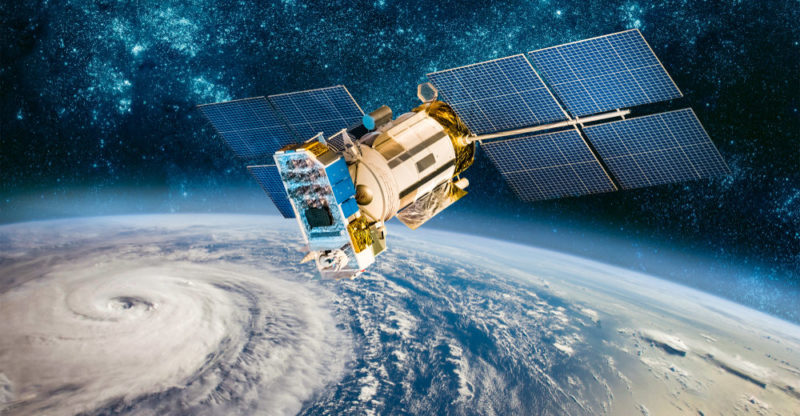
Artificial satellites in orbit around the planet offer, as a whole, a global view of the Earth's weather system. In addition to monitoring the weather, they record other indices and phenomena, such as pollution, ocean currents, tropical storms, etc.
Branches of meteorology
The main branches of meteorology are:
- Synoptic meteorology . It is dedicated to predicting future climate, through continuous, real-time observation of the atmosphere. Seeks to understand weather systems to be able to forecast short-term weather.
- Macrometeorology . It differs from the synoptic in that its approach is much more comprehensive. It seeks to analyze the climate on the entire planet, understood as a system of flows and interactions at a global level.
- Mesometeorology . It studies meteorological conditions on a medium scale, that is, in an area of up to 2000 square kilometers.
- Micrometeorology . Study the weather conditions in a small area of maximum 2 square kilometers.
- Hydrometeorology . It focuses on the dynamics of water (gaseous, liquid or solid) in the atmosphere: rain, snowfall, atmospheric vapor, etc.
There are other aspects of this science, applied to specific areas of human activity, such as aeronautical meteorology, agricultural meteorology and maritime meteorology, among others.
History of meteorology
The observation and recording of atmospheric phenomena is an activity that various cultures have carried out since ancient times.
In ancient Greece, meteorology began to acquire a solid theoretical basis when Aristotle, in the 4th century BC, wrote his work Meteorological. In this work Aristotle classified and described phenomena such as rain, wind, and lightning. although their explanations had a more philosophical than climatic perspective.
Meteorology grew along with the human sciences until in 1735 the scientist George Hadley was able to describe the circulation of air and winds. This laid the foundation for understanding the complex system of relationships between air, sun and water and how they affect the climate on Earth.
In the 19th century, many scientists dedicated themselves to understanding the atmospheric mechanism from different perspectives. Among them, Gaspard-Gustave Coriolis and William Ferrel stand out.
The incorporation of electronics and computing into meteorological sciences allowed the formulation of complex climate models and the processing of enormous volumes of information. Artificial satellites and extraplanetary observation completed the picture of contemporary meteorology.
Why is meteorology important?
meteorology allows populations to be alerted in time about extreme weather phenomena such as hurricanes, storms or tornadoes .
The prevention and early warning systems for this type of phenomena depend on meteorological information to be able to take precautionary actions with the population that could be affected. Knowing the formation and trajectory of extreme weather events allows the population to get safe and protect their lives in time.
Its association with other human economic activities is of great help for productive and commercial planning. Meteorology can be applied in the agricultural area but also in other activities such as maritime and commercial air transport, and industry.
References
- Friends of the wind (sf) Meteorological instruments. https://www.amigosdelviento.org/
- INEC (sf) Generalities I. Meteorology. National Institute of Statistics and Censuses of Panama. https://www.inec.gob.pa/
- Nuñez, S. (2023) What is meteorology? Green Ecology. https://www.ecologiaverde.com/
- Tarbuck, E. and Lutgens, F. (2005). Earth Sciences. An introduction to physical geology. Pearson Education.


