We explain what Peronism, its origin and how were the mandates of Juan Domingo Perón. In addition, the characteristics of your ideology.
What is Peronism?
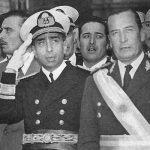
Peronism is a political movement that emerged in the mid -1940s in Argentina around the figure of Juan Domingo Perón. The Peronist movement is nationalist, anti -communist and antiliberal and is based on the social pact between the leader and the working classes.
For Peronism, the State must intervene in economic relations to reconcile the interests of the different sectors and achieve social harmony. Its foundations are the principles of social justice (through the redistribution of wealth), national economic sovereignty and political independence.
Perón was an Argentine military and politician who had great popular support because he promoted state measures that improved the living conditions of the working class. From the Ministry of Labor and Welfare, he carried out a policy that transformed labor legislation in favor of workers. Later, he won two elections in a row that held him in the presidency between 1945 and 1955, until he was overthrown by a coup d’etat and had to exile for almost two decades. In 1973, he returned to the country and again assumed the presidency until he died in the exercise of functions in 1974.
During his first two presidencies, Juan Domingo Perón carried out measures that transformed the economic structure of the country. Through an import substitution policy, promoted industrial development to the detriment of agricultural production . In turn, it established a series of labor laws that improved the quality of life of the working classes (collective work agreements, pay holidays, bonus, retirement, among others).
Perón’s second government was interrupted in 1955 by a coup d’etat and Peronism was banned in the following decades . However, Perón returned to power for a third government (1973-1975) and Peronism continued to exist as one of the main political movements of Argentina.
Key Points of Peronism
- It is an Argentine political movement that emerged in the 1940s around the figure of Juan Domingo Perón.
- He is nationalist, anti -communist and antiliberal.
- Defend the state intervention and is based on the pact between the leader and the working class.
- Its fundamental pillars are social justice, economic independence and political sovereignty.
- At present, Peronism is a heterogeneous movement that continues to go through Argentine politics.
Background of Peronism

During the 1930s, There was a period known as the Infamous decade (The name was given by the contemporary journalist Juan José Torres). In 1930, civil cadets of the Military College carried out a coup d’etat, overthrew President Hipólito Yrigoyen and replaced him with José Félix Uriburu.
From then on, the military forces consolidated themselves as a political force in Argentina and promoted the ideology that legitimizes the military intervention of the State.
The Uriburu military government abolished Congress, intervened the provinces and established the State of Siege and martial law (which limited the constitutional rights of persons). Then, he celebrated fraudulent elections that held Agustín P. Justo (1931-1937), Roberto M. Ortíz (1937-1940) and Ramón Castillo (1940-1943).
These governments reflected the Argentine social structure: the upper classes were composed of family oligarchies and the average and popular sectors were limited their possibilities of social and economic promotion. In turn, the international economic crisis context known as the great depression led to military governments implementing important changes in the country’s economic policies.
In 1933, the Roca-Runciman pact was signed that sought to keep the United Kingdom as the main buyer of the raw materials that Argentina exported, in exchange for reducing customs tariffs of British imports. On the other hand, the industry began to be developed to replace those imports that, due to the international crisis, no longer reached Argentina.
Throughout the 1930s, the rhythm of industrial growth was greater than that of the economy as a whole and, in 1939, the level of industrial production equated that of agricultural production. The Argentine economy was no longer based solely on the agro -export model .
One of the main effects of this transformation was the internal migration of Argentina. Thousands of rural workers migrated from inside the provinces to the main cities to become industrial workers. Buenos Aires, Santa Fe and Córdoba lived an acceleration of urbanization.
In parallel, unemployment increased because the industry did not occupy the entire available labor. In Rosario and in the city of Buenos Aires the first “misery villas” inhabited by Argentine migrants who could not be inserted laborly appeared.
Perón’s rise

The coup d’etat of 1943
In 1943, a group of officers carried out the second coup d’etat of national history. The coup was led by the United Officer Group (Gou), a secret association of nationalist military who thought it was necessary to intervene the government before the next fraudulent elections were held. The Gou wanted to maintain the neutrality of the country in World War II and avoid the growth of communism in Argentina.
The coup d’etat overthrew President Castillo and installed Pedro Pablo Ramírez as the new president. However, the military who formed the coup were a heterogeneous group, with different expectations and without a clear government plan.
In that context, Colonel Juan Domingo Perón assumed the positions of Secretary of Labor and Welfare President of the National Post -war Council and, since 1944, Minister of War and Vice President of the Nation.
In charge of the Ministry of Labor and Welfare, Perón came into contact with the demands of the union leaders. He argued that the State should intervene in labor relations to achieve class conciliation. The government had to act as a neutral referee in conflicts between businessmen and workers with the aim of achieving social harmony.
The main actions of Perón as Secretary of Labor and Welfare were the establishment of collective work agreements, minimum wages, payments, insurance for occupational accidents, salary increases and the extension of the pension benefits (retirement) to different guilds. With these measures Perón won the support of the working class.
Perón’s political program
Perón understood that in a short time the de facto government would have to hold elections and establish a legitimate government. In that context, Armed his political project based on workers’ support And in search of the alliance with businessmen, different political parties, the army and the Church.
However, Entrepreneurs denied their support for Perón Because they were harmed by the actions carried out in support of workers as Secretary of Labor and Security. They believed that their political activity was more dangerous than the possibility that the labor movement turned to the communist left. For their part, political parties also denied their support because they did not want to appear linked to a military man who was part of the de facto government.
In this way, the workers became the axis of the Peronist political program. In addition, Perón had the support from the army and the Church.
The birth of Peronism
In 1945, the opposition to the de facto government carried out the “March of the Constitution and Freedom” to claim that elections were convened and the functioning of the State was normalized. The Military Government reacted by installing the state of siege and intervening universities (which were one of the main opposition spotlights).
On the other hand, some military in the regime questioned Perón’s social policy and its public prominence, and pressed Edelmiro Julián Farrel (which happened to Ramírez in the presidency since 1944) to dismiss him on all the positions he held in the Government. Perón resigned and then was arrested to be transferred to Martín García Island . However, for health reasons he was taken to the Military Hospital.
Perón’s departure from the government generated a strong opposition from workers who wanted to defend their work conquests. On October 16, the CGT (General Confederation of Labor, the association that grouped the different unions) convened a general strike for the next day. Spontaneously, thousands of workers from the industries of the Buenos Aires Conurbano began to organize to demand the release of Perón and marched to Plaza de Mayo.
For the night of October 17, 1945, in the square More than 300,000 workers congregated to claim for Perón’s release . This forced the military authorities to negotiate with Perón, who returned to the rows of the government with a much greater influence.
On October 17, 1945 he is known as the “Peronist Loyalty Day” and marks the birth of Peronism as a political movement. Loyalty day symbolizes the unity between the leader and his followers.
In 1946 the presidential elections were held. Perón appeared as a candidate for president with Jasmine Hortensio Quijano as vice president. It was supported by the Labor Party and the Renovating UCR-JUST, the Military Regime, the Church and, above all, the unionized workers. The opposition parties were presented as a democratic Union and applied to José Tamborini and Enrique Mosca.
The results of the elections gave Perón the triumph That, in addition, it obtained 70% of the benches of the Chamber of Deputies, 28 of the 30 benches of the Chamber of Senators and all the provincial governments (except currents).
The doctrine of Peronism
During the first years of his government, Perón formed a doctrine to unify and give ideological coherence to his political movement, which was heterogeneous base and with very varied political trends.
Perón had a nationalist, anti -communist and antiliberal ideology. One of the basic premises of his doctrine was the idea of an “organized community.” In it, The State has the function of arbitrating conflicts between the different sectors of society .
In their political speech, political parties represent the sectorial interests that go against the National Unity; Instead, he defined the Peronist movement as a popular movement and established a general identification between the government, the State, the people, and Peronism. This way, He presented himself to Peronism not as a political party but as a movement which represents the whole of the nation.
To achieve this identification, during their Governments Perón carried out a series of measures that were based on three pillars: social justice, economic independence and political sovereignty.
The notion of social justice represents the objective of achieving a more equitable redistribution of wealth And it is the basis of the support of the popular sectors (by this notion it is that Peronism is also called “justicialism”). Economic independence and political sovereignty refer to greater autonomy in the country’s foreign relations.
The first governments of Perón
The first Government of Perón was between 1946 and 1951. In this period, most of the measures that established the basis of its social, economic and political doctrine were carried out. In 1952, He was re-elected under the Perón-Perón formula, since he ran together with his wife Eva Duarte de Perón as vice president.
This second government was interrupted in 1955 by a coup d’etat known as the Liberating Revolution. The third government of Perón was between 1973-1976 and had very different characteristics, marked by the deep tensions that Argentina was going through.
Social transformations
During the first two presidencies of Perón, the State assumed the role of referee in conflicts between workers and entrepreneurs, promoted the unionization of workers, controlled the prices of basic foods and rentals, established the bonus and generalized the Pags holidays. In addition, it extended the social forecast system (retirement).
Other public policies were the granting of bank loans for access to their own housing, invested at all levels of education (especially in the technical secondary level) and in health (with construction of hospitals, emergency rooms and vaccination campaigns). In addition, the State extended drinking water and sewers services.
Economic transformations
With the aim of reducing the economic dependence of Argentina regarding the world market, Perón sought to diversify the economic structure of the country . In this sense, the industrialization process started in the previous decade to replace imports.
Perón argued that from full employment (that is, the reduction of unemployment) and the increase in the purchasing power of the popular sectors, the internal demand for the consumption of goods would increase and maintain the economy. To foster the industry, it restricted the imports that could be produced locally and subsidized the creation of industries and the installation of factories.
Besides, nationalized a series of industries and services of the communication and transport areas. He also created the National Directorate of State Industries (DINIE) to coordinate and regulate the activity of some key industries such as the production of steel, oil and gas.
To finance the grants to the industry, it established a regulation that seriously affected agricultural production. Created the Argentine Institute for the Promotion of Exchange (IAPI) that forced producers to sell crops to the State at a lower price than the international . In this way, the State then sold production in the external market and stayed with a difference that allowed him to sustain the industrialization and social spending process.
Political transformations
In the political field, two fundamental changes were introduced during the first Perón government: the modification of the National Constitution and the women’s vote law.
In 1947, through Law 13.010 Women’s right to electoral political participation was recognized an ancient claim of feminist and socialist militants. By identifying this demand, Perón achieved among women votes a massive support for their candidacy for the 1952 elections.
On the other hand, in 1949 the reform of the National Constitution was approved that included the recognition of social rights, introduced the justicialist doctrine as the foundation of the State’s actions and its intervention in the economy and enabled the presidential re -election .
Opposition to Peronism
For the 1952 elections, the opposition to Peronism was fragmented due to different positions on how to react to the measures carried out by the Government and what strategy to follow. In addition, part of the sectors that had formed the opposition in the previous elections adhered to the Peronist movement in the following years.
At this time a deep distinction between Peronism and antiperonism was born which marked Argentine political life in the following decades. The main criticisms of the antiperonist opposition were the preponderance of the Executive Power over the rest of the powers of the Republic, the growing presence of the State in the private areas of social life and the enormous public spending.
During the second Government of Perón (1952-1955), tensions between the government and the opposition were radicalized. Perón carried out a series of measures that threatened against democracy and freedom .
The provinces governed by the opposition and universities intervened. In addition, he carried out a boycott against the independent media. He used the government’s power to prevent the media from buying paper, closed journalistic production venues and expropriated some important opposition media (such as the newspaper The press). He also directly banned the Communist Party.
On the other hand, the economic situation began to get worse during the 1950s and Perón had to take measures contrary to its economic independence plan initiated during its first government. Given the agricultural crisis and the lack of consumer goods, the price paid to the producers for their crops and, in turn, increased, in turn, in turn, He had to lift many of import restrictions . In addition, it enabled foreign investment in base industries. This led to many of the nationalist military to withdraw their support.
For its part, The Catholic Church (which in its early years supported the Peronist government) became one of its main opponents . The Peronist government had a policy of growing state intervention in areas that were traditionally controlled by the Church. The government organized charity and social assistance campaigns, established secular education, eliminated the sacred parties of the official calendar, legalized prostitution and marriage divorce.
The Liberating Revolution
In 1955, the tensions between Peronism and the different opposition sectors were radicalized. June 11, A traditional Catholic religious celebration became an opposition manifestation to Peronism where an Argentine flag burned. The government held the organizers responsible, ordered the arrest of several priests and expelled two senior ecclesiastical positions in the country.
On June 16, there was a coup attempt. A Fleet of Marine Airplanes Bombardeó La Casa Rosada and Plaza de Mayo . The goal was to kill Perón and sow fear in the population in order to break the Peronist support. Instead, they killed more than three hundred civilians for the intense bombing and Perón remained alive. Many Peronist militants reacted to the attack, began disturbances and burned churches. In response, the Pope excommunicated Perón.
In the following days Perón tried to reconcile with the opposition. However, on September 16, another coup d’etat led by General Eduardo Lonardi and supported by the opposition political parties, the Church and the Armed Forces began. Perón was exiled and a government began that defined “liberating revolution” .
The following governments carried out a process of “waste” of society. They outlined Peronism, repealed most of the measures of the Government of Perón and sought to eliminate all their influence.
The proscription of Peronism
After the liberating revolution of 1955, Perón lived almost two decades in exile . At that time, the economic and social situation of Argentina went through several transformations that led to political radicalization in the sixties and the erosion of the liberal democratic program.
With the proscription of Peronism, the left -wing movements grew greatly between the popular sectors and paramilitary organizations appeared against the Government. Military regimes imposed repression and censorship to limit the actions of the left. However, they could not maintain social order.
At the beginning of 1970, a serious political crisis began. The workers manifestations intensified and de facto governments controlled by the Armed Forces had to renounce repeatedly. Finally, Alejandro Agustín Lanusse (Commander in Chief of the Army) was appointed as president with the objective of organizing a democratic transition controlled by the military.
Peronism was still proscripted and Perón was prohibited from running for elections. However, he had enormous popular support. Therefore, Perón organized from the exile the candidacy of the delegate Héctor José Cámpora.
Under the slogan “Cámpora to the Government, Perón to Power”, the National Liberation Front Front (Frejuli) party had the support of the CGT (which is considered the right of the Peronist movement) and of the revolutionary tendency of the left, such as Montoneros and the ERP (revolutionary army of the people).
On March 11, 1973, Frejuli won the elections with 49.5 % of the votes, and the UCR decided not to appear at the ballot. Cámpora assumed the presidency on May 25, 1973 and Perón returned to the country on June 20 .
In the act to receive the leader, there were riots between the different factions that supported him: the trade union organization and the CGT (the Peronist right) faced with Montoneros (paramilitary group of the radical left), and the personnel in charge of the security of the event shot at the protesters and caused several dead. Perón accused Montoneros for the riots and leaned on the CGT to press the resignation of Cámpora.
New elections were convened for September 23, in which Perón appeared with his wife Isabel as vice president. The Perón-Perón presidential formula won the elections with 62% of the votes .
The third government of Perón (1973-1974)
The third Government of Perón was marked by the social and political conflict, and the end of the balance between the sectors that faced themselves within Peronism. Perón bowed to the right -wing sectors (including the CGT and part of the trade union movement) and sought to limit the revolutionary left, such as Montoneros, ERP and other radical left groups.
The Government established the signing of the “social pact” to reconcile the interests of the bourgeoisie with the labor movement. In exchange for stopping with union strikes and demands for a period of two years, the bourgeoisie accepted a 20 % salary increase and a price control for essential items. However, part of the bourgeoisie, the middle class and the workers not aligned with the government and the CGT opposed the agreement.
A few days after the assumption of Perón, the general secretary of the CGT, José Ignacio Rucci was killed but no organization was awarded the attack. Consequently, Perón consolidated his alliance with the right of the movement and began to face the left revolutionaries directly .
On January 19, 1974, the ERP attacked the Military Barracks of Azul, province of Buenos Aires. In the confrontation nine people died. Perón took advantage of the attack to press the resignation of Buenos Aires governor Oscar Bidegain, who belonged to the leftist sector of Peronism.
Then, he achieved the reform of the Criminal Code that harden the penalties for guerrilla crimes. Consequently, eight deputies of the Peronist left renounced their benches in Congress. In addition, he appointed Alberto Villar as a police officer, one of the leaders of the Argentine Anti -Communist Alliance (better known as Triple A, a right -wing paramilitary group).
In February, after a police coup in Córdoba, Perón intervened the province and forced the resignation of another of the governors who belonged to the left of his movement and, in the following months, he achieved the same with the governor of Mendoza.
On June 12, 1974, in an act organized in the Plaza de Mayo by the CGT, Perón was last addressed to the public. A few days later, on June 16, He died from the complication of a chronic blood disease .
The Government of Isabel Perón
When Perón dies, The government assumed his wife María Estela Martínez de Perón (whose nickname was Isabel), who was the vice president of the nation. Isabel’s intention was to advance the call for presidential elections. However, during their presidency, social and political tensions increased more and more. The left and right paramilitary groups increased their attacks.
During his government, Isabel relied on José López Rega, Minister of Social Welfare, Archbishop Pío Laghi and Emilio Eduardo Massera, the head of the Navy. The three belonged to an anti -communist Italian lodge called Propaganda Due. In addition, López Rega was one of the main leaders of the Triple A that, during this period, it is estimated that he murdered between 700 and 1500 people for his leftist militancy.
On the other hand, Montoneros (which merged with the revolutionary armed forces, better known as FAR, another left -wing guerrilla group), increased its attacks, carried out millionaire kidnappings to finance its operations and focused the armed struggle against the Armed Forces.
The impact of the international economic crisis for the increase in the price of oil led to A general increase in prices of all consumer goods . This led to the rupture of the “social pact” signed the previous year and the resignation of the Minister of Economy, which was replaced by Celestino Rodrigo.
The new minister announced a package of liberal measures that seriously affected the quality of life of the popular sectors and the middle class (increase in public services rates, monetary devaluation, increased fuel). In response, the CGT organized for the first time a general strike against a Peronist government, which was called “Rodrigazo” (for the surname of the Minister of Economy).
In turn, with the increase in the attacks of the paramilitary groups, the military forces became involved in the political scene. Finallythe Armed Forces carried out a coup on March 24, 1976 and overthrew the government of Isabel Perón.
Peronism after Perón
The Peronist movement remained a key element of the Argentine political scenario after Perón’s death. During the dictatorship (1976-1983) Peronism was proscribed and the left groups were persecuted by state terrorism.
With the return to democracy in 1983, Peronism was defeated in the elections by the Radical Civic Union with the candidacy of Raúl Alfonsín. In 1989, Peronism took Carlos Saúl Menem to the presidency with the Justicialist Party, which held the position until 1999.
Menem changed the political position during his government and took measures contrary to the Peronist ideology: he implemented a liberal economic policy of mass privatizations, market deregulation and labor flexibility. In addition, “convertibility” was established, a monetary law that established the equivalence of the Argentine peso with the US dollar. In the long term, these measures led to a hyperinflationary crisis that exploded in the Argentine crisis of 2001.
In 2003, the Peronist movement returned to power with the presidency of Nestor Kirchner . Within Peronism, Kirchnerism was consolidated in the following years under the leadership of Cristina Fernandez de Kirchner, who exercised the presidency between 2007 and 2015, and Alberto Fernández between 2019 and 2023.
Continue with:
References
- De Amézola, Gonzalo, and Cowen, M. Pablo (2005). “Peronism and mass democracy (1943-1955)” and “of the ‘Argentine Revolution’ to the third Peronist experience (1966-1976”. Argentine and Latin American History II. Rule.
- Rankin, Monica A. (2010). “Argentina”, “Perón, JD”, “Perón, María Eva Duarte de”. Encyclopedia of Latin America. Volume IV: The Age of Globalization (1900 to the present). Facts on File.
- Tato, Mi, Bubello, JP, Castello, AM, Campos, E. (2011). “The legacy of the Peronist years” and “Argentina between 1966 and 1976”. History. Second half of the twentieth century. Estrada