
We explain what radioactive contamination is and what its causes and consequences are. Also, its characteristics and possible solutions.

What is radioactive contamination?
Radioactive contamination (also called radioactive or nuclear) is called the presence of radioactive substances in the environment in concentrations higher than those normally present in nature .
Radioactive substances can contain natural and artificial radioisotopes (unstable atoms that contain excess energy in the nucleus and release it to transform into stable atoms). Natural radioisotopes are those that have existed in nature since the formation of planet Earth, for example, uranium-235 (235U) and polonium-210 (210Po). Artificial radioisotopes are those that have been created by man in laboratories, for example, plutonium-239 (239Pu).
Radioactivity is a process by which an unstable atomic nucleus releases energy to transform into a stable atomic nucleus . This energy is released through the emission of radiation or certain particles. Both the radiation and the emitted particles can alter the constitution of the molecules that make up living beings and cause serious damage and even death.
This process, called radioactive decay, emits radiation (alpha, beta, gamma and neutron), which can pass through matter and alter its molecular constitution. Its effect can be lethal to the chemical balance of life. This process takes fractions of a second for some elements, while for others it can take thousands of years.
Radioactive elements
Among the most common radioactive elements are:
- Polonium (Po)
- Astatine (At)
- Radon (Rd)
- Francium (Fr)
- Radius (Ra)
- Actinium (Ac)
- Thorium (Th)
- Uranium (U)
- Plutonium (Pu)
- Neptunium (Np)
- Lawrencio (Lr)
- Berkelium (Bk)
- Californio (Cf)
Causes of radioactive contamination
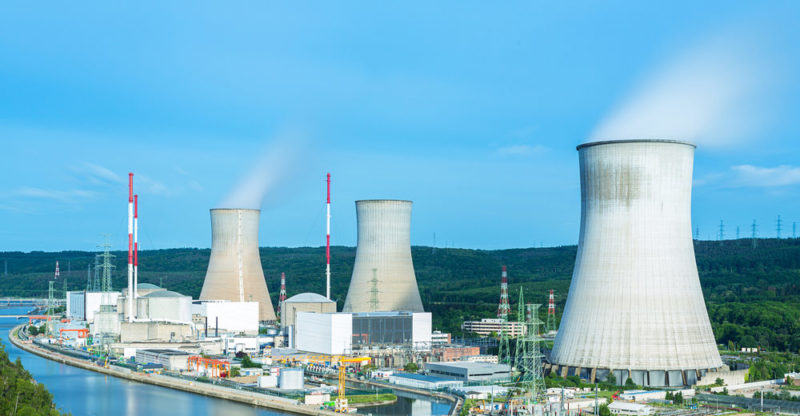
The main causes of radioactive contamination are artificial, that is, they occur as a consequence of human activities such as:
- Atomic bomb explosion . In 1945, the United States dropped two atomic bombs on the cities of Hiroshima and Nagasaki in Japan. The consequences of the radioactive contamination generated persist to this day in children who continue to be born with genetic malformations.
- Mismanagement of nuclear waste . Nuclear plants generate plutonium (Pu), a very radioactive heavy metal that takes at least 88 years (there are isotopes that take up to 24,000 years) to decompose into lead. Improper disposal of nuclear waste can also cause pollution.
- Nuclear accidents . Technical failures in nuclear plants usually produce very severe contamination since radioactive chemical material that is highly dangerous to life is thrown into the air, water and soil.
Consequences of radioactive contamination
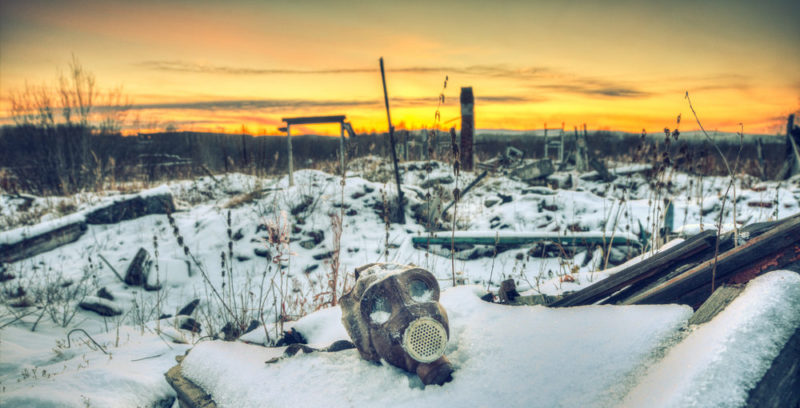
Radioactive contamination can have various consequences depending on the amount of radiation emitted and the duration of people’s exposure.
Radiation is an energy that is not only lethal, but also mutagenic, that is, capable of altering the functioning of vital DNA in unpredictable ways. For this reason, radioactive contamination is considered one of the most dangerous.
No form of life remains immune to its effects. These include cancer, leukemia, infertility and genetic malformations. In some cases, it can cause immediate death or the hereditary transmission of birth defects.
How can radioactive contamination be avoided?
Prevention is usually the best measure to avoid radioactive contamination. To do this, it is necessary:
- The sanction and execution of strict laws regarding the use of hazardous materials, which include safety and prevention measures, regulation of emissions and penalties in case of accidents.
- The establishment of controls on the safe handling of radioactive waste.
- Awareness and environmental education for workers and the general population about prevention measures that can be implemented to reduce the risks of radiation exposure.
Possible actions against radioactive contamination
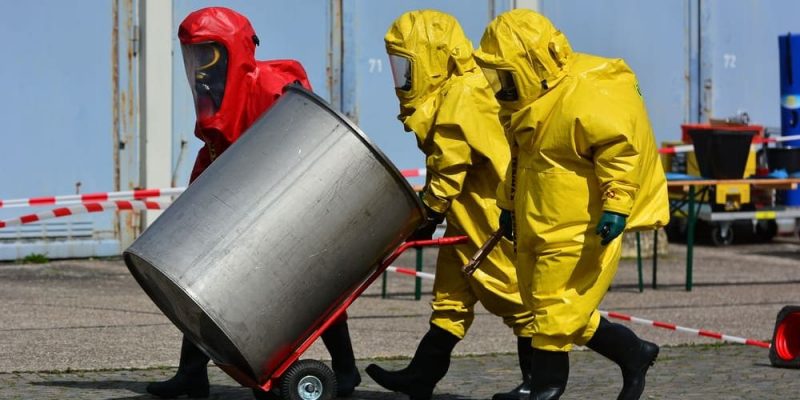
Once radioactive contamination has occurred, the actions that governments can implement are:
- Evacuation and confinement . In the event of a radioactive emergency, the evacuation of the population from the affected areas or their confinement in safe places may be ordered to minimize exposure to radiation.
- Information provision . It is important that governments provide information about the event and its risks, as well as protection and precautionary measures.
- Food and water quality monitoring . Authorities must regularly monitor the quality of food and water to detect any radioactive contamination that may appear and take appropriate measures to protect the population.
- Decontamination of affected areas . Areas affected by radioactive contamination must be decontaminated in the shortest possible time.
- Isolation and storage of contaminated materials . Contaminated materials must be stored and isolated appropriately to prevent their release into the environment.
- Medical follow-up . People who have been exposed to radiation (and their future children and grandchildren) should receive lifelong medical follow-up to detect and treat any health effects that may occur after radiation exposure.
- Environmental impact assessment. Authorities must conduct an environmental impact assessment to determine the extent and severity of the effects of radioactive contamination and take measures to mitigate them.
Contamination risk levels
In nature there is no element exempt from a certain range of radioactivity. However, if we talk about particularly radioactive materials, exposure to them can be categorized into two levels:
Low exposure
Low levels of exposure to radioactive materials mean less risk of harm, although this depends on the nature of the radioactive agent. Their effects on life depend on the absorbed dose and, unless some living being is repeatedly exposed to them, the risks of harm should be low.
When small amounts of radioactive material are incorporated into the body of living beings, this material is eliminated through the waste of each organism, such as feces, urine and sweat. On the other hand, when living beings suffer a small external exposure to radioactive material, the effects are the same as those suffered in everyday life when exposed to non-radioactive materials such as radiography (X-ray) equipment.
High exposure
High levels of exposure to radioactive material, whether due to its incorporation into the body or external exposure, causes serious damage to living beings.
When large amounts of radioactive material are incorporated into the body of living beings, this material cannot be completely eliminated in a short enough time for the damage to be minimal. Then, damage can be generated to the cells that can lead to their death or the formation of tumors and genetic mutations.
How is radioactive contamination measured?
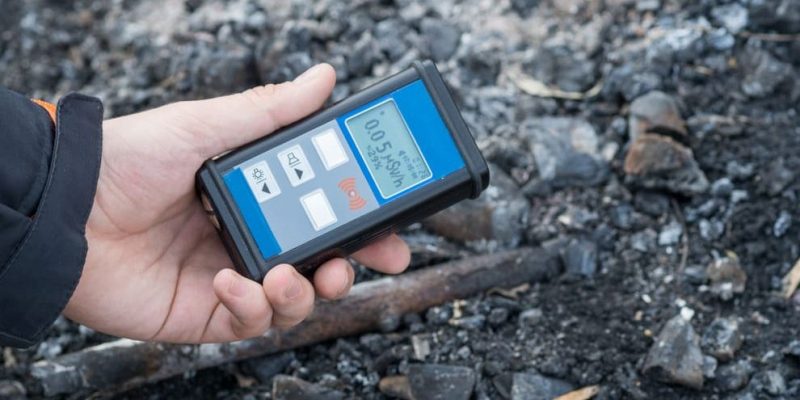
The unit established in the International System (SI) to measure radioactivity is the Becquerel (Bq), equivalent to 1 disintegration per second. Previously, Curio (Ci) was used, which was identified with the activity of one gram of radium (Ra).
This measurement can express two types of contamination:
- Superficial . Surface pollution is expressed in units of activity per unit area, such as becquerels per square meter (Bq/m2). This type of contamination occurs in the soil and on people’s skin.
- Volumetric . Volumetric pollution is expressed in units of activity per unit volume, such as becquerels per cubic meter (Bq/m3). Volumetric activity measurements are used to measure radioactive contamination of indoor locations.
Types of radioactive contamination
In principle, two types of radioactive contamination are distinguished, depending on their origin:
- natural pollution . It can occur due to the presence on the Earth’s surface of radioactive elements that are a natural part of the terrestrial or atmospheric cycles. For example, pollution generated by cosmic rays from outer space.
- artificial pollution . It depends on human activity, especially war and energy, such as atomic bombs and nuclear power plants. These activities involve physicochemical processes that generate radioactive materials that affect the environment. These materials are generally synthetic and do not exist in the natural world, so there are no safe levels of their presence in ecosystems.
Warning symbols
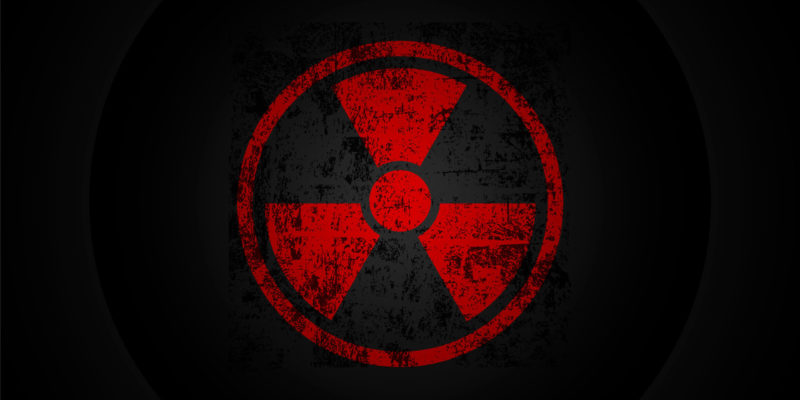
The international symbol of radioactive contamination is a central circle from which three triangular wings emerge. They usually have a yellow background with a triangular shape, as danger signs usually have.
In some cases, depending on the severity of the contamination risk, this symbol may be green (low risk), yellow (medium risk), orange (medium-high risk) or red (maximum risk).
Examples of nuclear accidents
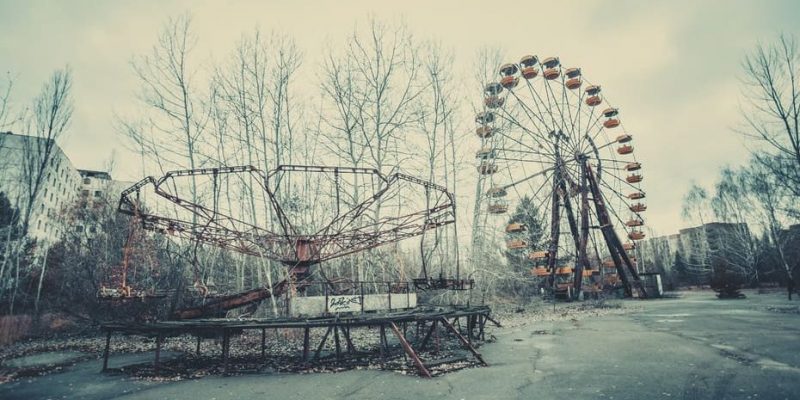
- The Chernobyl accident. In 1986, at the nuclear plant near the city of Pripyat in present-day Ukraine, one of the reactor cores overheated. This led to a series of errors that ended with the escape into the atmosphere of a huge amount of uranium dioxide, boron carbide, europium oxide, erbium and zirconium and graphite alloys. The radioactive effect of this leak was equivalent to the dropping of 500 atomic bombs. The radiation spread hundreds of kilometers around and more than 100,000 people had to be evacuated.
- The Fukushima accident. This nuclear accident took place in Japan during the earthquake and subsequent tsunami in 2011. The accident produced a series of explosions that released large amounts of radioactive materials such as iodine and cesium into the atmosphere. More than 150,000 people had to be evacuated and restrictions were imposed on fishing and agricultural production to prevent the consumption of contaminated food.
References
- Environmental pollution (sf) Radioactive contamination. https://contaminacionambiental.net/
- Scientific culture notebooks (sf) What is radioactivity and why does it pose risks? https://culturacientifica.com/


