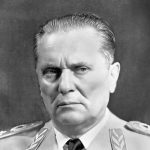
We explain what the Yugoslav Schism that broke the relations between the communist regime of Tito and the USSR was. In addition, the historical context.
What was the Yugoslav Schism of 1948?
The Yugoslav schism was The break between the communist regime of Yugoslavia led by Marshal Josip Broz Tito, and The Block of Communist Countries Headed by the Soviet Union (USSR), led by Iosif Stalin. It occurred in 1948, at the beginning of the Cold War, and resulted in the first communist experience not aligned with the directives of the Communist Party of the Soviet Union (PCUS).
At the end of World War II (1939-1945), the countries of Central and Eastern Europe that went on to integrate the eastern or communist bloc were under the control of the Soviet Union. This was due to the fact that the victory over the axis powers in that region was largely starring the Red Army.
However, Yugoslavia was able to preserve its independence from the Soviet government Thanks to the expulsion of the troops of the axis of its territory, it was not headed by the Red Army but by the communist partisans led by Tito.
Although the Yugoslav regime was initially ally to the eastern block and participated in the foundation of the Kominform (coordination body of communist countries), soon Tito's initiatives were seen as deviations from Soviet orthodoxy by Stalin and this led to, in June 1948, Yugoslavia was expelled from the Kominform . Although the Soviet government tried to dethrone Tito, he remained in power until his death in 1980.
Frequent questions
What was the Yugoslav Schism?
The Yugoslav Schism was the political rupture between Yugoslavia and the USSR, which took place in 1948. It meant the separation of the communist regime of the Marshal Tito with respect to the Soviet block headed by the URSS of Iosif Stalin and composed of the “popular democracies” of central and eastern Europe. The Yugoslavia de Tito was the first communist regime that challenged the hegemony of the USSR.
When was the break between Yugoslavia and the USSR?
The break between the Yugoslavia de Tito and the Eastern Block headed by the USSR occurred in 1948. After an exchange of letters between Tito and Stalin, which included serious accusations against Tito for deviating from the Soviet orthodoxy, Yugoslavia was expelled from the Kominform on June 28, 1948. In September 1949, the USSR diplomatic with the Yugoslav government.
Why did the Yugoslav Schism occur?
The Yugoslav government of the Marshal Tito refused to subordinate himself to the dictates of the Soviet leadership on matters such as international politics, the political order in the Balkans and the organization of the socialist regime at a national scale. On the other hand, Stalin considered that the political decisions of all “popular democracies” should follow the line of action marked by the Kominform under direct control of the Soviet Union and, therefore, rejected Tito's nationalism.
The historical context
In 1941, during World War II (1939-1945), Yugoslavia was invaded by the axis powers . This fact caused a guerrilla war in which a group of communist partisans, led by Josip Broz (better known as Tito), fought against invaders and their local collaborators with the aim of achieving national liberation and establishing a communist regime.
Under the direction of Marshal Tito, LA Yugoslava communist guerrillas managed to expel the troops from the axis of his country practically without the help of the Red Army. This allowed the communist regime established in the Popular Federative Republic of Yugoslavia, chaired by Tito, had from the beginning a more independent policy of the Soviet Union than other “popular democracies” from central and eastern Europe.
Yugoslavia began as an allied country of the eastern block headed by the Soviet Union at the beginning of the Cold War, but its rejection of becoming a puppet state of the Soviet regime caused tensions with the Kremlin (the headquarters of the Soviet government).
The Yugoslav support to the Greek communist guerrillas or the Balkan Federation projects with Bulgaria were some of the Marshal Tito's initiatives that were not well seen by Stalin. This did not prevent the Kominform (Coordination Organ of the countries of the Communist Block) from 1947 to set its headquarters in Belgrade, capital of Yugoslavia.

The beginnings of the break between Tito and Stalin

The sharpening of international tensions caused Stalin to stop tolerating Yugoslavia's independent initiatives . In February 1948, the Soviet leader called the Kremlin to Tito (who sent Edvard Kardelj as a delegate) Georgi Dimitrov (Bulgarian communist leader).
Stalin reproached them that they had adopted external measures without consulting the Soviet Union and warned them against any particular initiative in international politics. From now on, All “popular democracies” should faithfully follow the guidelines emanating from Moscow .
The reaction of the Yugoslavia Communist Party (Future League of the communists of Yugoslavia) It was to challenge Stalin's demands . The absence of the Red Army in its territory and the nationalist feeling encouraged this challenge. For its part, the Soviet Union decided not to comply with the Agreement of Trade agreed for 1948 and withdraw from Yugoslavia its civil and military directors and instructors.
Between March and May 1948, Stalin sent a series of letters in which he accused the Yugoslav regime of “deviationist” while the Yugoslav authorities denied the accusations and reaffirmed that Yugoslavia followed the way to socialism.
Stalin sought to foster internal opposition to the Tito Directorate and the rise of a group of communists faithful to the Soviet government. The reaction was the opposite: Kremlin supporters in Yugoslavia (Sretan Zujovic and Andrija Hebrang) were expelled from the party and judged as spies of the Soviet Union . The rupture was already open.
The expulsion of Yugoslavia of the Kominform
On June 28, 1948, the Kominform formally condemned Tito's supporters of deviating from the Marxist-Leninist line (that is, of Soviet orthodoxy), He expelled Yugoslavia from the organization and called the “healthy forces” of the Communist Party of Yugoslavia to impose a new direction. However, The attempt to move to Tito of Power failed .
Finally, In September 1949 the Soviet Union broke diplomatic relations with Yugoslavia condemned the Tito regime (accused of “deviationist” and “enemy of the Soviet Union”) and expelled from Moscow the Yugoslav ambassador.
The Yugoslav regime sought and achieved the financial and military support of the western block, which probably contributed to avoid a Soviet invasion. Nevertheless, The Tito regime remained a communist And, in the early sixties, it became one of the key countries of the movement of non -aligned countries.
In 1963, the country changed its name to that of Yugoslavia Socialist Federative Republic. In 1980 Tito died and about ten years later, between 1991 and 1992, the disintegration of Yugoslavia occurred.
- Hungarian Revolution (1956)
References
- Allcock, JB & Lampe, JR (2023). Yugoslavia. Britannica Encyclopedia. https://www.britannica.com/
- Banac, I. (2023). Josip Broz Tito. Britannica Encyclopedia. https://www.britannica.com/
- Powaski, Re (2000). The Cold War: the United States and the Soviet Union, 1917-1991. Criticism.
- Swain, G. (2011). Titus. To Biography. Ib Touris.
- Žarković, P. (2017). Yugoslavia and The USSR 1945 – 1980: The History of a Cold War Relationship. Yu Historija. https://yuhistorija.com/