We explain what the conquest of Mexico and its characteristics was. In addition, the importance of Hernán Cortés, its objectives and more.
What was the conquest of Mexico?
The conquest of Mexico was an important event that began in 1519 and was consumed in 1521, when The Mexican people were subjected by a small group of Spaniards which was supported by other allied indigenous peoples.
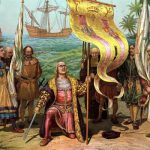
Hernán Cortés was the Spanish who led the expedition, on behalf of the Crown of Castile, and who persuaded several indigenous populations enmity with the Mexicans to conquer Tenochtitlán, the capital of the Aztec empire (also called the Mexican empire).
The true magnitude of the invasion is unknown because it was rebuilt based on chronicles written almost exclusively by Spaniards (known as “Chronicles of the Indies”) and in a few vestiges that historians could gather long after the event. Some sources also look at the defeated indigenous people, such as the work of the Franciscan missionary Bernardo de Sahagún (1499-1590).
The conquest of Mexico was One of the consequences of the exploration trips that followed the expedition led by the navigator Genoese Christopher Columbus who thanks to the sponsorship of the Catholic Monarchs arrived in America in 1492 when he planned to reach the Asian continent by an alternative route.
Characteristics of the conquest of Mexico

The conquest of Mexico It was characterized by involving negotiations, military alliances and a display of excessive violence that had as its protagonists the Spanish troops commanded by Hernán Cortés, as well as its allies Tlaxcaltecas and their Mexican enemies. The result was not only the conquest of the Aztec Empire but the annihilation of a good part of the indigenous population of Tenochtitlán.
The Spaniards had firearms, armor and horses In addition to spears, swords and crossbows. The Mexica used spears, arches, darts, shields and other artifacts. Despite this technological advantage of the Spaniards, the reasons for victory seem to also be linked to the use of pre -existing conflicts between populations of the Aztec Empire, the introduction of diseases and the strategic and tactical decisions of Hernán Cortés.
This achieved its goal of conquest through various strategies:
- Disobeyed the orders of his superior, the governor of Cuba Diego Velázquez de Cuéllar, and took the initiative of the conquest.
- He established alliances with some indigenous peoples who were unhappy or enemy with the government of the Aztec empire, especially the Tlaxcaltecs.
- Forced other indigenous peoples to fight against the Aztecs.
- He forced his Spanish troop to fight in the continent after drilling his ships with the aim of avoiding any dropout.
- He took advantage of the knowledge of indigenous languages and customs of “La Malinche”, a woman of Nahua origin who acted as her interpreter and counselor.
Causes of the conquest

The European explorations of the early 16th century used to be motivated by the desire for territorial conquest of dissemination of Christianity and the acquisition of wealth through the exploitation of human resources (sometimes through slavery) or obtaining precious goods (especially gold and silver).
The Spanish crown used to promote these trips but the conquerors also acted according to their own interests. Many of these belonged to minor strata of the European nobility and sought opportunities and overseas adventures. In the case of Hernán Cortés, I possibly sought to conquer new lands for the crown and spread the Christian religion and obtain military glory and wealth derived from the exploitation of indigenous labor in haciendas and mines of precious metals.
The search for gold was one of the most frequent motivations For this type of company. When Cortes received gold from Moctezuma as a way of negotiating or appeasing his desires to conquer Spanish, and his troops saw, however, one more reason to appropriate the city. One of Moctezuma’s successors, Cuauhtémoc, was tortured after the capture of Tenochtitlan by the Spaniards, who wanted him to confess where the gold that supposed to be more abundant than they had found should be hidden.
History of the conquest of Mexico
In October 1492, an expedition commanded by Christopher Columbus and funded by the Catholic Monarchs, whose objective was to achieve the Indies that were in Asia, instead arrived in American territory . This significant fact triggered a series of deep transformations in Europe, America and other parts of the world.
One of the consequences of the European discovery of America was the realization of successive exploration campaigns and conquers that They gradually imposed land domination and American populations.
Some of these territories were inhabited by indigenous societies with centralized governments that exercised their authority over broad domains, as was the case with the Inca and Aztec empires.
The Spanish campaigns were legitimized by the crown and led by conquerors who acted simultaneously as military commanders, as rulers and as farm administrators in the regions they invaded. One of them was Hernán Cortés, who was in charge of the conquest of Mexico.
The role of Hernán Cortés

Hernán Cortés (1485-1547) It was the Spanish explorer who led the conquest of Mexico . His role was crucial since he woven alliances with other indigenous peoples to join in their armed struggle against the Aztec empire.
Cortés left his university studies in Spain, embarked towards Cuba to serve the conqueror and then governor Diego Velázquez de Cuéllar and At 33 years of age it was already a prosperous military agent . From then on, he did not stop in his eagerness to conquer territories and treasures of the New World.
The expedition to Mexico
While Cortés was in Cuba, Governor Velázquez assigned various expeditions with the aim of exploring the territory and knowing more about native cultures. In 1518 Velázquez entrusted him to direct an expedition to the coast of Mexico But then he tried to stop him, so Cortés hurried and left Cuba with the intention of undertaking a series of conquests.
In March 1519 Cortés and its troop arrived on the coast of Mexico . After several clashes with the native populations and as a result of these wars, twenty women’s slaves of the Maya were offered to serve the Spaniards.
Among these women was “La Malinche” named Malintzin and baptized as “Doña Marina” by the conquerors, who dominated several indigenous languages and soon learned Spanish, so he served as an interpreter for Cortes. It was a key figure for the concretion of the conquest.
La Malinche described Cortés the way of making the Mexican war and its enmity with neighboring or subjected peoples, information that the conqueror knew how to weave alliances (especially with the Tlaxcaltecas) and expand their army in order to defeat the Aztec empire through the conquest of its capital, Tenochtitlán.
Cortes in Tenochtitlan
After episodes of war and negotiation, Cortés was received in Tenochtitlán in November 1519 by Emperor Moctezuma (whose title in the Nahuatl language was “Huey Tlatoani”). The Spanish conqueror was accompanied by his troops and a thousand enemy tlaxcaltecs of the Mexicans. When misgivings began to emerge between the newcomers and the locals, the Spaniards arrested Moctezuma.
In May 1520 Cortés had to deal with an expedition sent against him by the governor of Cuba and when he returned to Tenochtitlán he found the beginning of a rebellion. The Mexica were unhappy with the Spanish presence and Pedro de Alvarado commanded a slaughter of nobles during the realization of a ritual of human sacrifice (the massacre of the Templo Mayor) that caused in response the siege of his garrison.
On June 30 the Spaniards fled the city in what Hispanic historiography baptized “the sad night” . During the withdrawal there were clashes and persecutions that were charged with the lives of many Spaniards and Tlaxcaltecas. Before this fact, Moctezuma had also died, although it is not clear in what circumstances (perhaps killed by the Mexicans themselves or by the Spaniards).
Moctezuma’s death

The death of Emperor Azteca Moctezuma occurred just before “The sad night”, in which the Spaniards had to flee from Tenochtitlán. Due to the repeated attacks of the Spaniards who were installed in the city, the Mexicans were unhappy and a Moctezuma speech enraged them in which he tried to calm anger. According to the most accepted version, The Mexican people stoned him, was seriously injured and died shortly after . Other versions suggest that he could be killed by the Spaniards.
After the death of Moctezuma, Cortés and his troops fled from Tenochtitlán to subsequently plan their reconquest . Meanwhile, the title of Emperor or “Huey Tlatoani” of the Aztec Empire first fell to Cuitláhuac, who died from the effects of smallpox in November 1520, and then in Cuauhtémoc, who led the Mexicans until the defeat against the Spaniards. Thus began a period of Spanish colonization of Mexico that lasted from 1521 to 1821.
The Tenochtitlán Reconquest
The Spaniards took refuge in Tlaxcala after overcoming a Mexican attack in the battle of Otumba in July 1520. From that moment they planned with the Tlaxcaltecas the siege and the reconquest of Tenochtitlán.
A factor that favored the Spaniards was A smallpox epidemic that affected the Mexica since September 1520 product of contact with Europeans and caused them with important casualties. Cortés made it disassemble the ships from the coast and assemble them in the lake that surrounded Tenochtitlán to favor the siege. Cortés’ troops achieved the blockade of the Mexican capital in a siege that lasted between May and August 1521 and decimated the population.
Finally The Spaniards captured the city on August 13 date that marks the end of the Aztec Empire. Among the conquerors were distributed booties made up of goods and slaves. The symbols and statues of Mexican gods were convicted as pagan idols and a Christianization campaign that lasted over the years began.
After the conquest they followed the looting and the destruction of Tenochtitlán on whose ruins the capital city of the colony of New Spain (today Mexico City) was founded. This region became part of the Spanish crown and acquired a viceroyalty character a few years later. Various common diseases in Europe (such as smallpox that had affected the Mexicans before the siege) were transported by the conquerors themselves and began reproducing in the new continent, but the indigenous people lacked natural immunity to resist them. The deaths were incalculable.
References
- “Hernán Cortés” Horses, EM (2021). A biography for the 21st century. Criticism.
- “The Conquest of Mexico” By Fitch, N. (SF) in American Historical Association.
- “Guns, Germs, and Horses Bought Cortés Victory Over The Mighty Aztec Empire” By Hernández, B. (2018). In National Geographic.
- “Hernán Cortés” By Innes, RH (2022) in Britannica Encyclopedia.
- “Hernán Cortés, the conqueror of the Aztec Empire” in history National Geographic.