
We explain how the transition from the Franco dictatorship to democracy in Spain was. In addition, the history of democratic governments.
What is democratic Spain?
The term democratic Spain refers to period of the history of Spain that began after the death of Francisco Franco in 1975 and that lasts today. It is usually divided into several stages:
- THE TRANSITION (1975-1978) that is, the passage of Franco’s dictatorship to a democratic regime
- The constitutional governments of Adolfo Suárez and Leopoldo Calvo Sotelo (1979-1982) of the Democratic Center Union (UCD) party
- The governments of Felipe González (1982-1996) of the Spanish Socialist Workers Party (PSOE)
- The governments of José María Aznar (1996-2004) of the Popular Party (PP)
- the governments of José Luis Rodríguez Zapatero (2004-2011) of the PSOE
- The governments of Mariano Rajoy (2011-2018) of the PP
- The governments of Pedro Sánchez (2018-currentity) of the PSOE in coalition with unidos Podemos.
From the time of the transition, Spain It is a parliamentary monarchy which is organized by the Spanish Constitution of 1978.
The Spanish transition
Transition political forces
After the death of Francisco Franco on November 20, 1975, Juan Carlos I was proclaimed king in a political context of great uncertainty. Thus began a complex process of transition that led From the dictatorship to a democratic system .
The political forces of the transition were divided into two large groups: Francoist and opponents.
In the case of Francoists when Franco died, the differences between two sectors were exacerbated:
- The “bunker” organized around figures such as Blas Piñar, who defended the Francoist order.
- The “Aperturists” which accepted the implementation of reforms. Among the latter there were veteran politicians of the dictatorship who were convinced of the need for change, such as Manuel Fraga or José María de Areilza, and young people who were going to play an important role in the transition. The key figure of this group was Adolfo Suárez.
Opposition forces They were made up of various figures and organizations:
- The forces of the liberal right They were very weak and grouped around figures such as Joaquín Ruiz Giménez and José María Gil Robles or the supporters of Juan de Borbón, father of the monarch.
- The Democratic Convergence of Catalonia directed by Jordi Pujol, stood out among the nationalist forces in Catalonia.
- In the Basque Country, The Basque Nationalist Party (PNV) It was the majority force, and the terrorist organization ETA (Euskadi Ta Askatasuna) became increasingly active.
- The Communist Party of Spain (PCE) He stood out between The leftist forces, directed by Santiago Carrillo.
- The PSOE He had celebrated a congress in Surresnes (France) in 1974, in which a new leading group organized around Felipe González and Alfonso Guerra had been formed. Enrique Tierno Galván’s popular socialist party was another left -wing force that ended up joining the PSOE.
- In The union world The communist hegemony was also reflected. Workers’ commissions, linked to PCE, It was the most powerful union, while the UGT (General Union of Workers), related to the PSOE, began to reorganize. The historic CNT (National Work Confederation), of anarcho -syndicalist trend, managed to rebuild but became a minority force.
Disagreements between the PCE and the PSOE prevented the democratic opposition from gathering in a single alliance. Therefore, two coalitions emerged: the Democratic Board, dominated by the PCE and with strong mobilization capacity, and the democratic convergence platform, where the PSOE, the PNV and the UGT were the main forces.
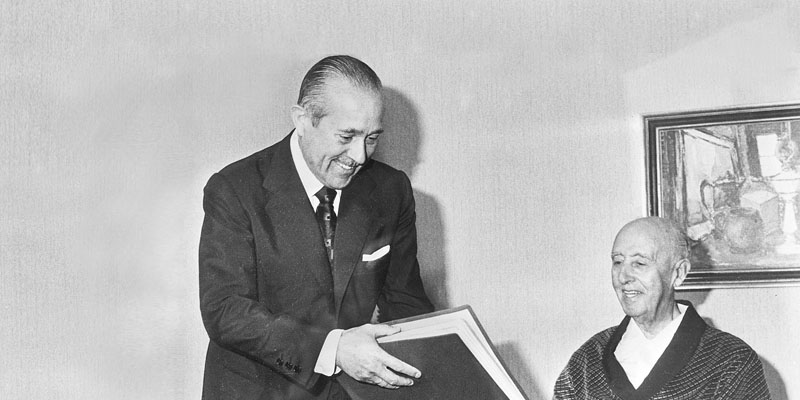
The first moments of Juan Carlos I’s monarchy were characterized by indefinition. Many suspected that the new monarchy would be a continuation of Franco without Franco. However, The king surrounded himself with a group of advisors among which Torcuato Fernández Miranda, that designed a political change plan.
This reform plan I was looking to apply controlled changes that will guarantee the permanence of Francoist officials and military and that will lead to a democratic system from the Francoist laws themselves.
In the beginning the king chose to keep Carlos Arias Navarro at the forefront of the Government, who had presided over the Executive in the final phase of the dictatorship. The Government included Manuel Fraga in the position of Minister of Interior and young figures from the National Movement (Francoist Organization), such as Adolfo Suárez either Rodolfo Martín Villa.
The Arias Navarro government failed when implementing reforms and responded with repression of social protests. A wave of strikes spread throughout the country in January 1976. The repressive response culminated with the incidents of Vitoria, in March 1976, when Five workers died at the hands of the police .
That same month, The entire opposition was grouped into democratic coordination (also known as Platajunta), which reinforced protests against the Government of Arias Navarro. Finally, The king dismissed Arias Navarro in July 1976.
Adolfo Suárez’s government and the Political Reform Law
In July 1976, Adolfo Suárez a young politician from the national movement, He was appointed new president of the Government . Although the new government was formed by opening ministers, many thought that Suarez was not the right man to lead the process towards democracy.
A short time later, in September 1976, Suárez presented the bill for political reform . It was the legislative concretion of the dismantling process of Francoism carried out from the regime itself. At the same time, Suarez began some contacts with the democratic opposition.
The most immobilistic (conservative) sectors of Francoism unhappy with political changes and with the terrorist attacks of ETA and Grapo (Antifascist resistance groups first of October), They started conspiring to organize a military coup Against the reform process. In September 1976, Suarez appointed Vice President of the Government to Lieutenant General Manuel Gutiérrez Mellado, who was a key figure to control the coup risk in the army.
Despite the coup conspiracies and the attacks of ETA, the awareness that the changes were inevitable led the Francoist Courts to approve In November 1976 The Political Reform Law .
Opposition advances in 1976 and 1977
Little by little, The opposition was coming out of clandestinity . In December 1976, the PSOE celebrated its XXVII Congress in Madrid, which was attended by important international leaders. On the other hand, the communist leader Santiago Carrillo gave a clandestine press conference in Madrid in which he claimed the right of the PCE to be legalized. He was arrested on December 22, 1976 and released eight days later.
In December 1976 A popular referendum on the Political Reform Law was held . The answer was overwhelming: with 77.7 % participation, the 94.1 % of the votes were positive .
The opposition, which initially had distrusted Suárez, went on to accept that the end of Francoism would not be carried out through what they called the “democratic breakup” (with the immediate formation of a provisional government, an amnesty, the legalization of all parties and free elections). From now on, Much of the opposition went on to support a reform process which led in a manner agreed to the establishment of a democratic regime.
The 1977 elections
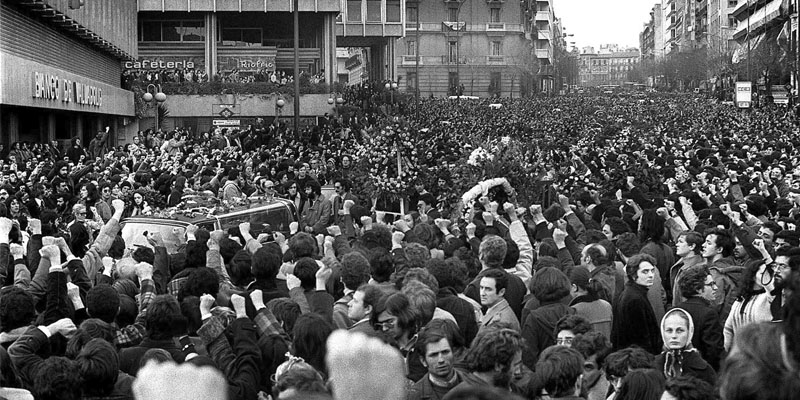
The transition reform process was threatened by two forces opposite that fed each other: The attacks of terrorism and the coup threat . This situation reached a critical moment in January 1977, when the Atocha killing was added to ETA and Grapo: the murder of five communist lawyers committed by a group of extreme right. This situation increased the coup threat.
The answer was a great manifestation of rejection in Madrid that he developed peacefully and which showed a general will to continue the changes without violence .
From then on, Adolfo Suárez adopted measures that allowed the passage to a democratic regime, such as the legalization of the PCE in April 1977 and the amnesty to political prisoners. In June 1977, the first democratic elections were held since the Second Republic .
The winning party with 34.5 % of the votes, It was the Union of Democratic Center (UCD) organized by Suárez, in which the openings of Francoism were grouped with some moderate sectors of the democratic opposition.
The second most voted game was Felipe González’s PSOE With almost 30 % of the votes. Before the surprise of many, the PSOE stayed with the hegemony on the left, and the PCE was behind with 9.4 %. Convergence and Union by Jordi Pujol (Catalonia) and the PNV (Basque Country) were constituted as the main nationalist forces.
The Pacts of La Moncloa (1977)
Suárez’s new government dedicated himself to face the two main challenges of the moment: Prepare a Constitution to politically organize the new democratic system and face ETA terrorism and coup danger .
This political process should be done in a context of deep economic crisis . The 1973 oil crisis had hit Spain, where unemployment and inflation grew. To stabilize the situation, The main political forces signed in October 1977 the pacts of La Moncloa a series of agreed measures To deal with economic difficulties .
The Spanish Constitution of 1978
The Cortes formed from the 1977 elections They had to write a new constitution . Seven speakers, belonging to the main political parties (UCD, PSOE, PCE, Popular Alliance and the Catalan and Basque minorities), known as “Parents of the Constitution”, were in charge of the writing.
The Spanish Constitution of 1978 was approved in October and ratified in a referendum in December 1978 . Since then, it is the Magna Carta of the Spanish State. Its implementation led to the need to convene elections according to the new constitutional order.
The constitutional governments of the UCD
The Constitutional Government of Adolfo Suárez (1979-1981)
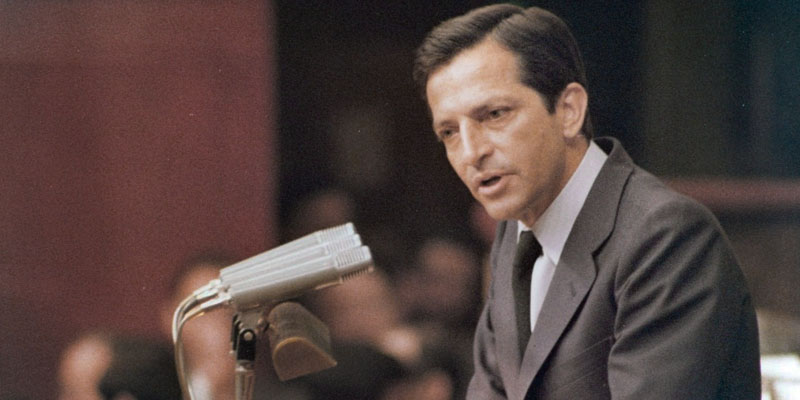
After the Constitution was approved, the Courts were dissolved and In the new elections held on March 1, 1979 Adolfo Suárez UCD triumphed again . However, in the municipal elections (the first democratic municipal elections since the Second Republic), the left He won the main municipalities thanks to the alliance between the PSOE and the PCE.
Despite this alliance, the leader of the PSOE, Felipe González, forced a political and ideological turn in his party after the celebration of his XXVIII Congress. In September 1979, The PSOE abandoned Marxism As an official ideology And it was configured as a moderate left match that could aspire to power in some next elections.
In 1979 a process of political deterioration began which led to the throat of 1981. Various factors explain this political crisis:
- The growing terrorist campaign of ETA, which caused 77 dead in 1979 and 95 dead in 1980. They were the most lethal years in the history of the organization.
- The uneasiness in the military circles of extreme right, They started contacts for the preparation of a blow.
- The end of political consensus with the beginning of a hard opposition campaign by the PSOE.
- The approval of the Autonomy Statutes of the Basque Country and Catalonia At the end of 1979 and the consequent regional elections, which gave the majority to the nationalist forces: convergence and union of Jordi Pujol (Catalonia) and the PNV (Basque Country).
- The internal crisis of the UCD because disagreements and internal criticisms, in a party that was born artificially, were weakening the position of Suárez.
All these factors They precipitated Suárez’s resignation on January 29, 1981 . Another leader of the UCD, Leopoldo Calvo Sotelo, was appointed candidate for the presidency. After not obtaining sufficient majority in a first vote, the second vote for his investiture was set for February 23.
That day There was a failed attempt with a coup d’etat , Directed by some military like Jaime Milans of Bosch and Alfonso Armada. A group of civil guards led by Lieutenant Colonel Antonio Tejero starred in the assault on the courts and the kidnapping of the government and the legislative body. The blow failed with the intervention of King Juan Carlos I and Calvo Sotelo was able to replace Suárez at the head of the government.
The Government of Leopoldo Calvo Sotelo (1981-1982)
Leopoldo Calvo Sotelo ruled only a year and a half . This period was marked by the decomposition of his own party the approval of the law of divorce with a remarkable opposition of the Church and the scandal unleashed by mass poisoning for denatured rapeseed oil.
In May 1982, with the opposition of leftist parties, Spain entered the North Atlantic Treaty Organization (NATO) . The PSOE promised a popular referendum on this adhesion if he won the elections.
In October 1982, Calvo Sotelo convened elections. The PSOE got an overwhelming triumph, with more than ten million votes and the absolute majority in the Congress of Deputies. The UCD was far behind and the main party on the right became the Popular Alliance of Manuel Fraga.
Democratic governments since 1982
The governments of Felipe González (1982-1996)
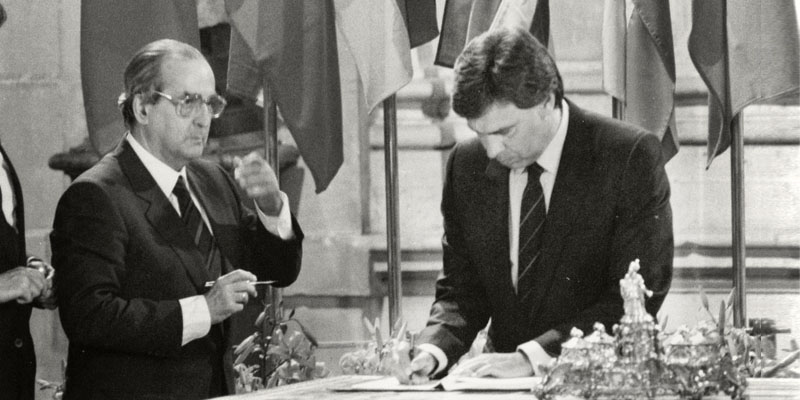
In the First Socialist Legislature (1982-1986), the government of Felipe González had to face a difficult economic situation. The socialist cabinet approved a strict economic stabilization plan which implied an industrial reconversion process and the closure of many industries. These measures caused the bewilderment among the union centrals.
In addition, the socialist government He had to face the ETA terrorist campaign and reform the army To end the danger of coup. This reform was one of the great hits of the cabinet.
Other measures were the approval of the University Reform (LODE), which established free and mandatory education until sixteen, and a partial decriminalization of abortion.
On the other hand, Spain managed to access the European Economic Community (CEE) On January 1, 1986. As a counterpart, Felipe González changed his speech about NATO: the refusal to admission to the Western Military Alliance became support. González maintained his promise to convene a referendum and requested the affirmative vote to the permanence in NATO. The triumph of the position defended by González consolidated his position as a political leader.
In these years, the map of the autonomous communities of Spain ended up being designed with the approval of the various statutes of autonomy.
In 1986, the PSOE won the elections again by absolute majority. The Second Socialist Legislature (1986-1989) was marked by an important economic development that lasted until 1992. At this stage An ambitious public investment policy was completed In infrastructure, favored by the transfer of funds from the EEC.
Educational, health and pension services grew significantly, voted by a relatively progressive fiscal system. For the first time you could talk about a “welfare state” in Spain .
Economic growth and liberalizing measures caused an increase in differences in wealth between the various social groups. Workers and UGT commissions unions organized a general strike on December 14, 1988. The country was paralyzed and Felipe González had to negotiate the partial withdrawal of his liberalizing program .
In the 1989 elections, the PSOE won again by absolute majority. In this third legislature of the PSOE (1989-1993), Spain celebrated in 1992 two international events, the Olympic Games in Barcelona and the Expo de Sevilla, which showed an image of modern country very different from the Spain of Franco’s dictatorship.
However, the world recession initiated in the early 1990s hit Spain hard. The economic crisis triggered inflation and unemployment which reached the figure of three million unemployed.
In the 1993 elections, the PSOE expired again but this time without an absolute majority, so he needed the parliamentary support of the Convergence and Union of Pujol. The right -wing forces had reorganized in the Popular Party (PP) directed since 1989 by Jose María Aznar.
During the fourth legislature of Felipe González (1993-1996), economic difficulties, corruption scandals and the harsh opposition campaign led to the call to new elections in 1996.
The governments of José María Aznar (1996-2004)
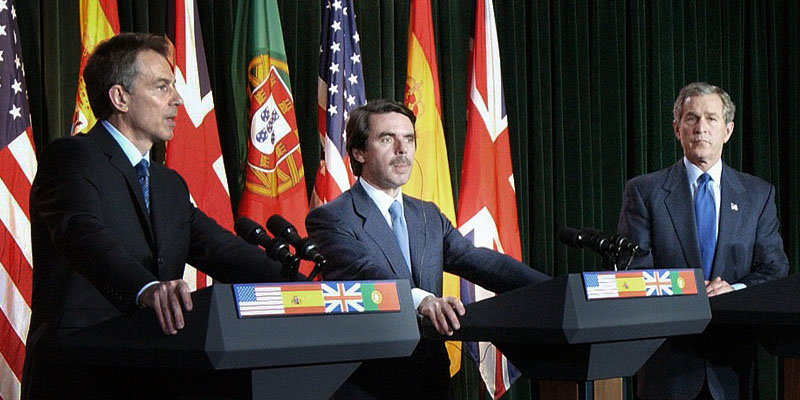
Jose María Aznar of the Popular Party (PP) did not get the absolute majority and He was forced to agree with nationalist minorities to access the presidency of the government. The right turn was corroborated with the victories of the PP in the regional and municipal elections. The socialist cycle under the leadership of Felipe González was over.
Aznar He focused his efforts on implementing an orthodox economic policy to reduce the public deficit and reactivate private economic activity. The great objective was to meet the convergence criteria established in the 1992 Maastricht Treaty (limits to the inflation rate, public debt and fiscal deficit) that, once achieved, would allow Spain to join the new European currency: The euro.
Economic activity was reactivated, unemployment descended and the sanitation of the economy allowed Spain to participate in the birth of the euro in 1999.
On the other hand, the government of Aznar, with the support of the socialist opposition, launched a hardness policy with ETA After the popular reaction to the murder of councilor Miguel Ángel Blanco in 1997. All the Basque nationalist forces, from the PNV to ETA, agreed in 1988 the Lizarra-Estella pact to move towards independence. A few days later, ETA declared an indefinite truce without conditions .
The contacts between the Aznar and ETA government did not give any results and, A year later, ETA returned to armed activity . Aznar then reinforced his confrontation policy with Basque nationalism in all his trends.
The elections convened in 2000 marked the peak of the PP and Aznar. The new century began with an absolute majority of the PP in the courts. Aznar presided over the Government of Spain until April 2004 .
At the end of 2001, the Aznar government decided to send troops to Afghanistan in the context of the invasion headed by the United States after the attacks of September 11, 2001. In 2003, Spain also participated in the coalition that Iraq invaded, which caused mass manifestations of protest.
On March 11, 2004, a series of terrorist attacks occurred in Madrid committed by jihadist militants, which caused 193 dead. Three days later general elections were held and the PSOE expired, which took José Luis Rodríguez Zapatero to Spain.
See more in: Conflicts in the Middle East
The governments of José Luis Rodríguez Zapatero (2004-2011)
The first measure adopted by Rodríguez Zapatero was the withdrawal of the Spanish troops of Iraq . Other policies of the first Rodríguez Zapatero Legislature (2004-2008) were the same-sex marriage law, the Organic Law of Education and the Historical Memory Law.
In 2006, Rodríguez Zapatero agreed a new statute of autonomy for Catalonia, in which Catalonia was recognized as a “nation.” He also began conversations with ETA, which declared a permanent fire in March 2006 but restarted his armed activity in December of the same year. The cessation of armed activities became really effective in 2011 and ETA announced its dissolution in 2018 .
Rodríguez Zapatero’s second legislature (2008-2011) was marked by the economic crisis which exploded in 2008 from the real estate and banking sectors and caused high unemployment rates and evictions. The measures implemented by the Government increased the fiscal deficit but failed to deal with the crisis or lower unemployment.
The increase in public debt led credit agencies to demand from the Spanish government the application of adjustment measures as of 2010. On May 15, 2011, the “Los Indignados” movement was born (also called 15-M) : Self -consisting groups that demonstrated peacefully against the dominant parties and the great banks.
In November 2011, early elections were held and the PP won, which put Mariano Rajoy in the presidency of the Government.
The governments of Mariano Rajoy (2011-2018)
Mariano Rajoy promoted a policy of cuts in social expenses, labor reforms and tax increase To reduce the fiscal deficit, which caused strikes and mobilizations. Also He received a partial rescue from the European Union and the International Monetary Fund (IMF), which allowed the economy to stabilize, but unemployment continued to be elevated.
In these years, separatist movements in Catalonia and the Basque Country increased their autonomy demands. Besides, In 2014 the Left party was formed we can which began to gain prominence from his criticisms of Rajoy’s austerity policies. In 2014, King Juan Carlos I abdicated in his son, Felipe VI.
In the 2015 elections, the PP was winner but lost the parliamentary majority, while the PSOE ended second but lost many votes regarding the previous elections. Podemos and the Centrodecha Citizens party channeled many of those votes .
The new situation caused the PP to not form a government and was summoned again to elections with similar results. Finally, in October 2016, the abstention of socialism in the motion of trust to Rajoy allowed this to initiate his second period in the presidency of the Government.
In October 2017, a referendum for the independence of Catalonia convened by the Catalan government, caused situations of violence When the police repressed the elections, considered illegal by the Spanish government. Rajoy invoked an article of the Spanish Constitution, intervened politically Catalonia and summoned new elections for December 2017.
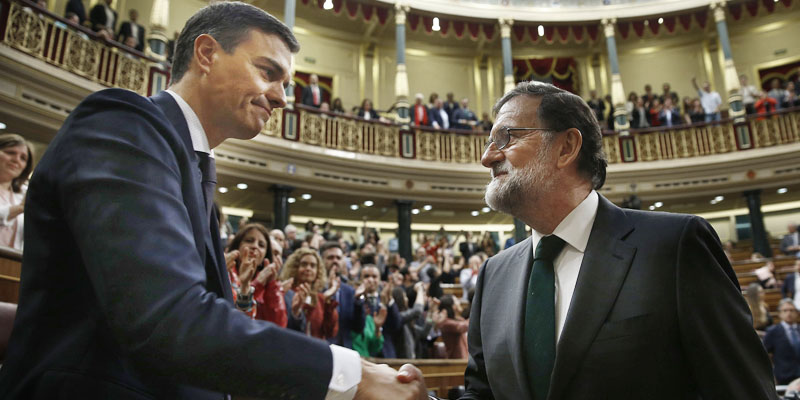
Despite its determination in the Catalan matter, Rajoy’s weakness was combined with some corruption scandals Of previous years that allowed the PSOE leader, Pedro Sánchez, to present a motion of censure against the president.
This motion of censure was voted affirmatively by Unidos Podemos and the Catalan and Basque nationalist parties on June 1, 2018. Rajoy was forced to leave the government.
The governments of Pedro Sánchez (2018-currentity)
Pedro Sánchez assumed the government on June 2, 2018 . In the elections of April 2019, the PSOE was the party with the greatest number of votes but did not get the sufficient number of deputies to form government.
In November 2019, new elections were held and The PSOE agreed to the formation of a coalition government with Unidas Podemos . Pedro Sánchez’s second government began in January 2020.
The 1976 Political Reform Law
In September 1976, President Adolfo Suárez presented to the Spanish Courts the bill for political reform. The project was the legal expression that disarmed the Franco system. Although the following months were marked by the riots (Francoist conspiracies and ETA attacks), finally in November 1976 the Cortes approved the Political Reform Law.
The law highlights the fundamental principles of democracy and the inviolability of human rights. The legislative function to the Cortes is awarded and the power of their sanction is subject to the monarchy. In addition, the Courts are reorganized as a bicameral parliament composed of a Congress of Deputies and a Senate.
In the following fragments of the text presented to the Cortes you can see the most important elements of the proposal.
Law proposal for the political reform of the President of Government Adolfo Suárez González
November 24, 1976
“The tenth article of the succession law lists the fundamental laws and provides that ‘to repeal them or modify them will be necessary, in addition to the Cortes Agreement, the Referendum of the Nation (…)’.
The bill for political reform, of fundamental rank, approved by the Spanish Courts in its plenary session on the 18th of this month and whose literal text is as follows:
Art. 1
1. Democracy in the Spanish State is based on the supremacy of the law, expression of the sovereign will of the people. The rights of the person are inviolable and link all the organs of the State.
2. The power to elaborate and approve the laws resides in the Cortes. The king sanctions and promulgates the laws.Art. 2.
1. The Courts are composed of the Congress of Deputies and the Senate.
2. The deputies of the Congress will be elected by universal, direct and secret suffrage of the Spaniards of legal age.
3. The senators will be chosen on behalf of the territorial entities. The king may designate for each legislature in number not exceeding the fifth of the elected part. 4. The duration of the mandate of deputies and senators will be four years (…).Art. 5.
The king may directly submit a political option of national interest, whether or not of constitutional nature, so that he decides through referendum, whose results will be imposed on all the organs of the State (…).Final disposition
Art. 1st. This law will have a rank of the fundamental law.Art. 2. The referendum will be carried out with subject to the procedure established in the Royal Decree of the Presidency of Government 2636/1976, of 1 9/XL, and will take place on December fifteenth of the current year.
Art. 3 The consultation will be carried out formulating the following question: ‘Does the bill for political reform approve?’“
Continue with:
References
- Carr, R. et al. (2022). Spain. Britannica Encyclopedia. https://www.britannica.com/
- Casanova, J. & Gil, C. (2012). Brief history of Spain in the twentieth century. Ariel.
- Pinilla García, A. (2021). The transition in Spain. Spain in transition. Alliance.
- Powell, C. (2001). Spain in Democracy 1975-2000. Square & Janés.


