
We explain what the generation of 98 and its origin was. In addition, its characteristics and its main representatives.
What was the generation of 98?
The generation of 98 was a literary and cultural movement that predominated in Spain during the first decades of the twentieth century. It was made up of A group of Spanish writers, poets and thinkers that they were born during the 1860s and 1870s and that were morally and intellectually affected by the defeat of Spain in the Spanish-American War.
In 1898, Spain lost its last lands in the American continent: Cuba became independent, while Puerto Rico and the Philippines were held by the United States. This situation generated a social and political impact in Spain, which was sometimes manifested as A cultural opposition to the order of the Bourbon Restoration .
The generation of 98 was forced to rethink the identity and place of Spain in the world, and to explore its internal political and social problems. While it was not a homogeneous school or movement, in general its exponents They assumed a critical position on social norms and political situation of the time. At the same time, they sought to break the classic and conservative forms of literature.
The historical context
In 1874, Spain lived the restoration of the Bourbon monarchy after the ephemeral experience of the First Spanish Republic (1873-1874). The latter had been the result of a democratic period initiated with the 1868 revolution.
With the Bourbon restoration, a system of political alternation was introduced under the monarchical authority, promoted by the conservative leader Antonio Cánovas del Castillo, while the social inequalities derived from economic exploitation caused the agitation of workers and peasants sectors .
In this context, the Spanish defeat in the Spanish-American War of 1898 caused Spain to lose the last possessions it retained in America and The idea of a Spain will be popularized . Some intellectuals, mostly contrary to the conservative imprint of monarchical restoration, reacted to this historical context thinking about the need for Spanish regeneration.
The origin of the generation of 98
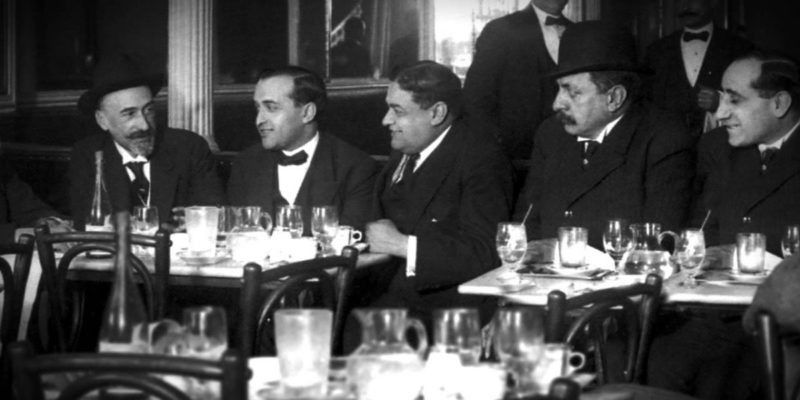
The term “generation of 98” was initially used imprecisely, but the Spanish writer José Martínez Ruíz, known as Azorín, He prepared it and spread it in various critical essays published in newspapers that were compiled in the book Classic and modern 1913.
Before the defeat of Spain in the Spanish-American War of 1898, some intellectuals perceived that part of Spanish society proclaimed a moral and cultural rebirth of the country. This sense of disappointment and hopelessness inspired many authors to spread new ideas and values.
The writers of the generation of 98 They worried about the inheritance of Spain and its position in the modern world . They learned of foreign literary trends and dedicated themselves to reconsider Spanish values in the world context.
The result was The awakening of a national conscience in thought and literature as well as the abandonment of classic and realistic styles in favor of a simpler language and an interest in the landscape of the peoples of Spain. The essay as a literary genre also became important.
Precursors and exponents of the generation of 98
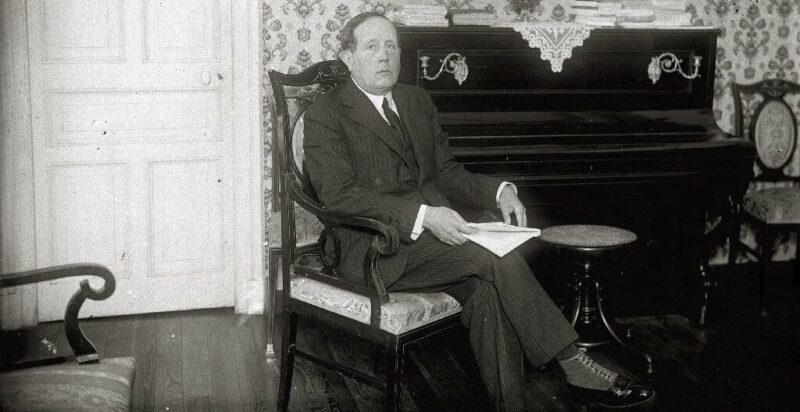
The list of exponents of the 98 generation is made up of some of the most important names of Spanish literature. Among its precursors is the intellectual Joaquín Costa (1846-1911), who represented regenerationism that proposed to overcome the “decline” of Spain. However, other personalities are sometimes considered precursor and sometimes included in the generation of 98, such as Miguel de Unamuno and Ángel Ganivet.
Between The main exponents of the 98 generation They stand out:
- Ángel Ganivet (1865-1898)
- Miguel de Unamuno (1864-1936)
- José Martínez Ruiz, better known as Azorín (1873-1967)
- Ramiro de Maeztu (1874 or 1875-1936)
- Pío Baroja (1872-1956)
- Vicente Blasco Ibáñez (1867-1928)
- Ramón María del Valle-Inclán (1866-1936)
- Antonio Machado Ruiz (1875-1939)
- Manuel Machado Ruiz (1874-1947)
Characteristics of the 98 generation

The generation of 98 It was characterized by using simple language But expressive. The writers of the movement replaced the recharged and detailed rhetoric that dominated in those years, by concise and simple phrases, in which the socio-political content was highlighted over the beauty of the style and abundance of information.
The use of simple language was not an impediment to conveying complex ideas and content. Authors such as Azorín and Miguel de Unamuno, who were influenced by thinkers like Friedrich Nietzsche and Arthur Schopenhauer, evidenced their intention to disseminate philosophical currents in Spain of European irrationalism.
In those years, a literary movement that emerged in Latin America was also important, called Modernism. This movement also proposed a renovation of literary style, both in poetry and in prose, and some scholars have recognized relations of modernism with the generation of 98. However, these movements differentiated in the importance awarded by modernism to aesthetic enjoyment.
The writers of the 98 generation had in common the following characteristics:
- National concern . They saw the moment that Spain was going through as a stage of backwardness or decline, and considered that social regeneration depended on an intellectual regeneration. They gave importance to the life and traditions of peoples, and expressed interest in recognizing the identity and “being” of Spain.
- The creation of new forms of literary expression . They sought to abandon or modify literary styles, for which they created their own forms, such as the impressionist novel by Azorín or the Valle-Inclán’s ages. Sometimes they rescued traditional or peasant speech.
- The use of simple language . They preferred simple and expressive phrases, before the grandiloquence or detail of other styles such as realism. They gave more importance to content and naturalness than to rhetorical beauty.
- Pessimism . They expressed a pessimistic vision of Spanish reality, which sometimes entailed a criticism with reformist nuances and in others led to skepticism. The anguish, fears and questions about existence explored in their works. Some received the influence of the work of the pessimistic philosopher Arthur Schopenhauer or Nihilist philosopher Friedrich Nietzsche.
The end of the 98 generation
The period of More important activity of the 98 generation reached approximately 1915 . In the following two decades, the exponents of this movement continued to dominate the literary scene and publishing works of great importance, but some critics argue that most of them had experienced changes and that the initial creative impulse had remained in the past.
Meanwhile, The problem of national regeneration of Spain was disound . From now on, other young writers, such as José Ortega y Gasset (1883-1955) and Ramón Pérez de Ayala (1880-1962), who dedicated themselves to rethinking the “problem of Spain” and preceded the writers of the so-called “Generation of 27”.
Continue with:
References
- Ortega y Gasset, J. (1981). Essays on the “generation of 98” and other contemporary Spanish writers. Alliance.
- Shaw, D. (1982). The generation of 98. Chair.
- Trapiello, A. (1998). The grandchildren of the CID: the new golden age of Spanish literature (1898-1914). Planet.
- “Generation of 1898” at https://www.britannica.com/
- “Precursors of the 98” generation at http://www.hispanoteca.eu/


